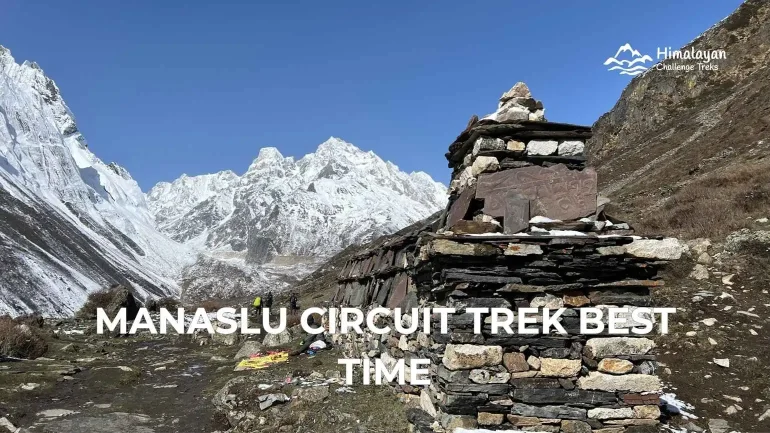
The Manaslu Circuit Trek best time is spring (April to May) and autumn (mid-October to mid-November). These periods generally bring clearer skies, more stable weather, and better mountain visibility, making the Larkya La (5,106 m) crossing safer and more predictable. March, September, and late November are shoulder months. They can still be good for trekking, but conditions are less predictable as the monsoon leaves or winter approaches.
The trek is also possible in winter and monsoon, but conditions become more demanding. Winter can bring heavy snow and freezing temperatures, while the monsoon brings rain, muddy trails, and landslide risks. These seasons are better suited to experienced trekkers with flexible plans and a good understanding of mountain weather.
Disclaimer: Mountain weather patterns in the Himalayas are inherently unpredictable. The general seasonal trends outlined in this guide do not guarantee specific daily conditions. Always consult your licensed mountain guide and review up-to-date regional trail reports before your pass-crossing day.
Manaslu Circuit Trek in Autumn, September to November

Autumn is the season most travelers name when they are asked for the best time for the Manaslu Circuit Trek. As the monsoon rains clear out, the trail trades exhausting mud for crystal-clear views that last through November. But your daily experience changes completely depending on the month you pick.
September
September is the monsoon-exit month for the Manaslu Circuit Trek. The monsoon typically withdraws between late September and the first week of October, but the exact timing varies each year. Until it clears, expect rain, cloud, and slippery trails below Jagat, along with a higher risk of landslides, flash floods, and damaged bridges on the approach.
By late September, conditions can start to improve. The valleys are green, waterfalls are full, and the trails remain quieter than during peak autumn. However, weather and trail conditions can still change quickly. Choose September only if you have flexible dates, and check the latest trail report before departure.
October
October is the best month of the year for the Manaslu Circuit Trek experience. It is often the most reliable time. Weather settles into the year’s most predictable, clear pattern, providing optimal conditions for crossing Larkya La Pass. Days range from 13°C to 25°C, down to 12°C in Samagaun. The trails become much drier, making this the best month to safely explore all high side-excursions. Additionally, the villages of Nubri come alive with vibrant local harvests.
However, teahouses run at full capacity, especially in Dharamsala where lodging is limited. Pre-booking is a must. Otherwise, you’ll likely have to share rooms with other trekkers.
November
November again trades the crowds for crisp, clear days, but the days become shorter. Days are still sunny; however, temperatures plunge after sunset. It often drops below -10°C at night above 3,500 meters. The main circuit stays open, but high side-excursions become physically punishing as trails turn to hard ice and early winter snow accumulates. You’ll need microspikes and heavy thermal layers to attempt safely.
Local Tip: Dashain and Tihar, Nepal’s major festivals, usually fall around October and November. Some jeep drivers and porters may head home to celebrate, so pre-booking your transport early will help avoid unnecessary delays.

Manaslu Circuit Trek in Spring, March to May

Spring is the other primary peak window for the Manaslu Circuit Trek, bringing longer daylight hours and vibrant rhododendron blooms to the lower forest paths. While the valleys offer warmer walking conditions than late autumn, spring brings its own high-altitude realities that can vary a lot from month to month.
March
March offers quiet trails as the region begins to wake up from winter. Lower valleys are relatively comfortable, but deep winter snow often lingers above 4,000 meters, keeping high camps like Dharamsala bitterly cold. With heavy snow accumulation still present, you need a high tolerance for cold during the Larkya La Pass crossing. Steep side excursions to Manaslu Base Camp (4,800 m) or Pungyen Gompa are generally blocked, frozen, or avalanche-prone.
April
April brings the most balanced trekking conditions of the spring season. Lower Manaslu Circuit trail comes alive with red and pink rhododendrons, while valley temperatures hover between 15°C and 22°C. Teahouses run near full capacity, especially around Dharamsala. The intense spring sun melts away much of the deep ice on the pass, making the Larkya La crossing more predictable. Similarly, side trails to Birendra Lake and Pungyen Gompa clear out completely for safe exploration.
May
May is the warmest month for trekking, appealing to hikers who want to avoid freezing nights at high camps. The valley temperatures often climb past 25°C. The trade-off is mountain visibility, as rising pre-monsoon heat can build atmospheric haze and afternoon clouds. The pass and all high side trips are entirely snow-free and accessible, but you should prepare for humid lower sections and afternoon rain showers late in the month.
Local Tip: Spring conditions depend heavily on how much snow fell over winter, so pass accessibility can change week to week. Always ask your operator for a live trail report from the ground before you lock in your international flights.
What Makes Spring Different From Autumn?
| Feature | Spring (March to May) | Autumn (September to November) |
|---|---|---|
| Scenery Focus | Rhododendron blooms lower down; afternoon cloud and pre-monsoon haze increase by May. | Maximum post-monsoon clarity; sharp, dust-free views of Mount Manaslu. |
| High Camps | Lingering winter snow/ice on the pass; high-camp teahouses gradually reopen. | Fully active lodges; dry trails but severe room congestion at Dharamsala. |
| Daylight & Temp | Longer daylight; warmer valley walking (15°C to 25°C+). | Shorter daylight; rapid sunsets and bitter cold (-10°C) above 3,500m. |
| Selection Criteria | Warmth-seekers wanting floral color who accept haze and lingering snow on side paths. | Photographers chasing blue skies and more reliable conditions on the pass. |
Manaslu Circuit Trek in Monsoon, June to August

You can trek the Manaslu Circuit during the monsoon season but only if you can accept wet trails, insect pressure at lower elevations, frequent cloud cover, and a higher chance of road disruption. While the region transforms into a lush, green landscape with much quieter trails, conditions can vary significantly as the rainy season peaks.
June
June marks the start of the summer monsoon, bringing hot, humid days that can quickly turn into heavy downpours by mid-month. The lower trail from the trailhead to Jagat, below 1,500 meters, can become muddy, slippery, and full of mosquitoes. As you climb higher, leeches become more common in the forested areas between 1,500 and 3,000 meters, particularly around Deng and Namrung.
Early June can still offer occasional morning views of Mount Manaslu, but cloud cover increasingly takes over the afternoons as the month goes on. Higher side excursions to Manaslu Base Camp (4,800 m) and Pungyen Gompa also become harder to manage as sudden mudslides and deteriorating trail conditions make the routes less predictable.
July
July is the wettest and most challenging month on the Manaslu Circuit. Most parts of the region get continuous heavy rain, increasing the risk of flash floods and landslides, especially along the steep canyons of the Budhi Gandaki River. The bigger problem is often getting to the trailhead, as the approach roads from Kathmandu to Machha Khola can be badly affected by rain and landslides. Mountain visibility also drops significantly, and high-side trails become riskier due to rockfall and unstable snow conditions on the upper peaks.
August
August continues the peak monsoon pattern, leaving the mountain terrain saturated and the trails slick. However, rainfall starts shifting toward nighttime showers toward the very end of the month. Daytime conditions can still be wet and demanding, though. Teahouses may operate with limited staff, while crossing the Larkya La Pass (5,106 m) requires extra caution due to low visibility, thick fog, and unpredictable trail conditions. That said, high-altitude side trips remain impractical and dangerous.
Local Tip: If you must trek during the monsoon, ask your operator about current trail conditions and keep your itinerary flexible. Set aside extra money for possible vehicle delays or helicopter transfers. Do not assume a few clear social media posts represent the whole monsoon season.

Manaslu Circuit Trek in Winter Season, December to February
The winter season from December to February brings empty lodges, sharp light on clear days, and serious cold. While the clear skies and crowd-free trails can make for excellent photography, winter brings a major drop in temperature and a much higher risk around the pass.
December
December marks the beginning of true Himalayan winter. Early December can still be rewarding, with clear panoramic views of Mount Manaslu and daytime valley temperatures around 10°C to 15°C. However, trail traffic drops quickly by mid-month as teahouses begin to close for the season.
Above 3,500 meters, nights can easily fall below -12°C, while high camps like Dharamsala face severe water freezes that can turn communal taps and pipes into ice. The main loop is generally dry early in this month, but late December brings a higher chance of sudden heavy snow that can quickly cover the high trails.
January
January is the coldest and most challenging winter month on the circuit. High camps and the Larkya La Pass can experience severe sub-zero conditions, with nighttime temperatures dropping to -15°C to -20°C or lower. Daylight hours are also at their shortest, so you need to plan your time carefully to avoid walking in the dark.
Most teahouses above Samdo close completely as owners move to lower valleys, leaving very limited services at high camps. Furthermore, deep snow and ice can cover the pass and make a normal crossing impractical without previous winter trekking experience and specialized gear.
February
February starts with conditions similar to January, although lower valleys can begin to warm slightly toward the end of the month. Despite the daytime thaw at lower elevations, high-altitude trails remain deep in winter conditions. The Larkya La Pass can still hold heavy snow from the previous months, making the crossing difficult to track. Strong alpine winds can also strip heat quickly from exposed ridges. Teahouse teams only begin returning late in the month, so emergency backup options along the route remain limited.
Local Tip: Winter trekking on the Manaslu Circuit is limited and best suited to experienced trekkers. Pack a -20°C sleeping bag, microspikes, and insulated gloves, and keep a clear plan to turn back if conditions worsen.
Manaslu Circuit Trek Month by Month Summary
| Month | Season | Weather & Views | Larkya La | Lodges & Side Trips | Best For |
|---|---|---|---|---|---|
| January | Deep Winter | -15°C to -20°C nights; clear skies | High Risk: Deep snow and ice | Most high lodges closed; side trips blocked | Experienced winter trekkers |
| February | Deep Winter | Extreme cold; strong winds | High Risk: Heavy snow and ice | Limited services; side paths buried | Experienced winter trekkers |
| March | Early Spring | Mild valleys; freezing high camps | Challenging: Snow and cold winds | Teahouses reopen; side trips may stay frozen | Cold-tolerant trekkers |
| April | Peak Spring | 15°C to 22°C; rhododendrons | Good: Snow melts with spring sun | Lodges active; side trips open | Best spring month |
| May | Late Spring | 25°C+ in valleys; haze increases | Open: Mostly snow-free | Lodges active; trails clear | Warmth-seekers |
| June | Monsoon Onset | Hot, humid; leeches and mosquitoes | Unstable: Wet and slippery | Limited staffing; side trips risky | Flexible trekkers |
| July | Monsoon Peak | Heavy rain; poor visibility | High Risk: Washouts and mudslides | Few trekkers; roads affected by rain | Experienced trekkers |
| August | Monsoon Peak | Wet, humid; dense fog | High Risk: Unstable conditions | Quiet lodges; side trips risky | Experienced trekkers |
| September | Early Autumn | 20°C lower down; lush valleys | Unreliable until the monsoon clears; check the latest report | Quiet lodges; flood and landslide risk on the approach | Late-Sept crowd-avoiders |
| October | Autumn Peak | 13°C to 25°C; clear skies | Excellent: Reliable conditions | Heavy congestion at Dharamsala; side trips open | Best overall month |
| November | Late Autumn | Clear views; -10°C nights above 3,500m | Good early: Snow risk rises later | Lodges thin out; side paths turn icy | Clear-view seekers |

Best Time for the Manaslu Circuit Trek Based on What You Want
The best time for the Manaslu Circuit Trek depends on your priorities because not every trekker wants the same thing from the Manaslu Circuit. Some trekkers want clear mountain views, while others prefer warmer weather, fewer crowds, or a quieter winter experience.
- First-time trekkers → October or April: Both months offer stable weather, open teahouses, and good conditions for crossing Larkya La Pass.
- Mountain photographers → Mid-October to early November: Post-monsoon skies offer the clearest views of Mount Manaslu. Pack warm layers for freezing nights at high camps.
- Warm-weather trekkers → Late April to early May: Lower valleys are warmer and comfortable, although afternoon clouds and haze become more common as May progresses.
- Crowd-avoiders → Late September or early November: These shoulder periods bring quieter trails and teahouses while staying within the main trekking seasons. Keep your plans flexible for changing conditions.
- Experienced winter trekkers → December to February: Expect very cold conditions, closed high-altitude lodges, and possible heavy snow around Larkya La. Proper winter gear and experience are essential.
- Monsoon trekkers → June to August: Expect wet trails, leeches, mosquitoes, landslide risks, and possible road disruptions. Flexible dates and a backup budget are essential.
Why Timing Matters for the Manaslu Circuit
Season choice on this trek is more than a personal preference. It determines if the Larkya La Pass crossing will be tough, rewarding, or a point where you need to turn back.
- Environmental Conditions: Heavy monsoon rains increase landslide risks along the steep valley cliffs, while winter freezes can turn trails into slick ice. Mountain visibility also changes with the season, affecting whether you get clear horizons or views hidden behind clouds.
- Operational Logistics: Trail infrastructure changes with the season. Teahouse availability, crowd levels, local jeep transport, technical gear, and daylight hours can all vary depending on when you trek.
- Remoteness: Unlike the more developed Everest or Annapurna routes, the Manaslu region has limited lodging options at high camps such as Dharamsala. A sudden storm that might be a minor inconvenience elsewhere can leave you isolated here, making good seasonal planning especially important.
What the Last Five Autumns Showed
Post-monsoon weather in Nepal is less predictable than the calendar suggests. Heavy unseasonal rain in October 2021, a very wet end to the 2024 monsoon, and a snowstorm in late October 2025 each disrupted trekking. In 2025, trekkers were stranded around Samdo, Samagaun and Dharmasala while rescue flights waited for daylight. In September 2026, a flash flood at Namrung cut the main trail until temporary bridges were built. None of this makes autumn a bad choice. It means we plan October and November with a spare day before Larkya La, confirm trail status with the Gorkha District Administration Office and Manaslu Conservation Area Project before each departure, and decide on pass day based on conditions, not the calendar.
What You Need To Know Before Choosing The Best Season
Knowing weather conditions is only one part of planning a season for the Manaslu Circuit trek. There are more factors you should keep in mind before choosing, such as permit rules, acclimatization, and the timing of your Larkya La crossing, which can all affect how smoothly your trek goes.
Solo Trekker Policy Update
On 22 March 2026, Nepal’s Department of Immigration removed the rule that required at least two trekkers to obtain a Restricted Area Permit, so a single trekker can now receive the Manaslu permit. The guide requirement has not changed. Every trekker must go with a licensed guide, and the permit is applied for through a registered trekking agency. Independent trekking is still not allowed.
Mandatory Acclimatization Benchmarks
Weather is only one part of trek planning. Rushing the route to catch a clear forecast can be dangerous. Your itinerary should include an acclimatization stop around Samagaun (3,530 m) before heading toward the high camps and Larkya La Pass.
Seasonal Permit Fee Fluctuations
The framework stays year-round, but the Manaslu Restricted Area Permit (MRAP) cost shifts dynamically by season:
- Peak Autumn: USD 100 per person for the first 7 days, then USD 15 per day thereafter.
- Spring, Winter & Monsoon: USD 75 per person for the first 7 days, then USD 10 per day thereafter.
- Fixed Fees: The MCAP and ACAP conservation fees stay constant at NPR 3,000 each per person all year.
Lodge & Labor Pressures
Season changes demand more than they change fixed permit math. Peak autumn and strong spring weeks raise lodge pressure and booking urgency. Transportation into the trailhead and Kathmandu hotel rates can move with wider Nepal tourism patterns. Guide and porter calendars fill earlier in October.
Off-Season Trap
Cheaper off-season travel can look attractive until delays, extra lodge nights, or a failed pass attempt add cost. Budget contingency nights in every season. Restricted-area staffing already sets a floor under package pricing. Season mainly changes risk, comfort, and availability.
Pass Morning Priority
Choose the best season based on your goals and trail conditions, rather than simply following a general Nepal trekking calendar. Plan your dates around the Larkya La Pass crossing first, then build the rest of your travel plans around it.
Larkya La Pass Crossing
Larkya La at 5,106 m is the hinge of the whole circuit. The crossing usually comes after acclimatization around Samagaun and Samdo, with a night at Dharamsala before the long climb and descent toward Bhimthang. This plan works well in spring and autumn, but monsoon rain and heavy winter snow can make the same crossing much harder.
- Autumn: The pass is often cold and clear, with rock, snow patches, and strong winds being the main challenges.
- Spring: Snow can still cover parts of the trail early in the season, while conditions usually improve through April and May.
- Monsoon: Clouds, rain, and wet trails can make both the approach and the pass more difficult.
- Winter: Snow, ice, and short daylight hours can make the crossing impractical for many trekkers. When choosing your travel dates, give the Larkya La crossing the most attention. You can plan the rest of the trek around it.
How Weather Changes With Elevation On The Manaslu Trek
Weather on the circuit changes with every altitude band.
| Altitude & Key Stops | Typical Conditions | Main Weather Concerns | What to Pack |
|---|---|---|---|
| Low Valleys (700m-1,500m) Machha Khola, Jagat | Warm, humid, and subtropical. | Heat, rain, mosquitoes, and leeches during monsoon. | Lightweight clothes and insect repellent. |
| Alpine Forest Belt (2,500m-3,500m) Namrung, Lho | Cooler with changing temperatures. | Cold mornings, afternoon clouds, and rain depending on the season. | Fleece, windbreaker, and trekking pants. |
| High Valleys (3,500m-4,000m) Samagaun, Samdo | Cold and increasingly exposed. | Cold nights, strong winds, and snow in colder months. | Down jacket and thermal layers. |
| High Camps (4,460m) Dharamsala | Very cold and exposed. | Freezing nights, snow, and frozen water in winter. | Warm sleeping bag, insulated layers, and gloves. |
| Larkya La Pass (5,106m) | Cold, windy, and unpredictable. | Low oxygen, strong winds, snow, and ice depending on season. | Windproof layers, insulated gloves, and suitable traction. |
What Weather Information Should You Check Before Starting the Trek?
- Regional Mountain Forecasts: Check weather forecasts for the Manaslu / Nubri region, not just Kathmandu. Mountain weather can be very different from conditions in the capital.
- Recent Trail Reports: Ask your operator for the latest Larkya La Pass crossing reports. Recent reports can tell you whether the pass has clear rock, hard ice, or deep snow.
- Trailhead Road Status: Check the road conditions to Machha Khola, Arughat, or Besisahar before you leave. Rain and landslides can block roads even when the weather is clear higher up.
- High-Camp Temperatures: Check the expected night temperatures and winds at Samagaun (3,530 m) and Dharamsala (4,460 m). Ask your guide for an updated forecast before starting the pass crossing.
How difficult is the Manaslu Circuit Trek in peak season?
Even in the best season, this is a demanding trek. Peak-season advantage is predictability, not ease. You still need fitness, altitude awareness, and patience.
- Total Trek Distance: ~177 km (110 miles) round loop.
- Maximum Sleeping Altitude: 4,460 m (14,632 ft) at Dharamsala.
- Daily Hiking Duration: 5 to 8 hours depending on the stage elevation.
Comparative Difficulty and Trekking Seasons
- Manaslu Circuit vs. Everest Base Camp Trek: Manaslu feels quieter and more remote, especially around the high camps. The main challenge is the long Larkya La Pass day, while the EBC Trek involves more sustained time at high altitude and busier trails. Both are best in spring and autumn, but Manaslu has fewer high-altitude lodge options, so off-season weather can be more disruptive.
- Manaslu Circuit vs. Annapurna Circuit Trek: Manaslu generally feels quieter and more rugged, with fewer services and stricter permit requirements. Both routes have their main trekking windows in spring and autumn, but the Annapurna Circuit Trek has more developed infrastructure and more options when conditions change. On Manaslu, poor weather around Larkya La can have a bigger impact on your trek.
What to Pack for Trekking Conditions by Season
| Gear Category | Core Items | Why It Matters |
|---|---|---|
| Footwear & Support | High-cut waterproof trekking boots, sturdy trekking poles | Helps with steep, loose, and uneven sections, especially the descent to Bhimthang. |
| Clothing & Layers | Moisture-wicking base layers, mid-layers, comfortable trekking pants | Helps you adjust to changing temperatures as you gain altitude. |
| Sun Protection | Category 3 or 4 polarized sunglasses, high-SPF sunscreen | Protects your eyes and skin from strong alpine sunlight and snow glare. |
| Sleep System | Insulated sleeping bag, warm sleepwear | Teahouse rooms are usually unheated, so warm sleeping gear is essential. |
| Power & Packs | 20,000mAh+ power bank, waterproof backpack cover | Keeps your devices charged and your gear protected from rain and snow. |
Seasonal Gear Upgrades
Your basic gear works for any season. However, you will need a few extras depending on when you trek:
- Spring and Autumn: Add a warm down jacket, a 4-season sleeping bag rated to -15°C, windproof gloves, and a hard shell for the cold winds around Larkya La.
- Late Autumn: Add thick wool sleep socks, a fleece sleeping bag liner, and a stainless-steel thermal flask to help prevent your water from freezing at Dharamsala.
- Early Spring: Pack microspikes and breathable gaiters for snow and icy sections around the pass.
- Monsoon: Bring dry bags for electronics, quick-dry clothes, strong DEET insect repellent, and anti-leech spray or salt for wet forest trails.
- Winter: Upgrade to a -20°C-rated sleeping bag, insulated mitts, liner gloves, hand warmers, and extra thermal layers. Plan your hiking hours so you reach shelter before dark.
Sample Decision Checklist Before You Pay Deposits

Before you book with us or any other trekking agency, complete these six quick verification steps:
- Audit the Itinerary: Ensure the route matches your planned itinerary and includes a proper acclimatization stop at Samagaun (3,530 m).
- Ask for Recent Pass Reports: Ask the agency about recent Larkya La Pass conditions during the same month you plan to trek.
- Confirm Solo Permits: If traveling solo, confirm how the agency will arrange your restricted-area permit and guide requirements.
- Review Delay Protocols: Clarify who covers extra food and lodging costs if unexpected snow or bad weather delays your pass crossing.
- Buy High-Altitude Insurance: Choose a policy that explicitly covers emergency helicopter evacuation at the altitude you will reach, and check the policy’s altitude limit carefully.
- Lock Flights Last: If possible, buy international flights only after your trekking dates are confirmed in writing, and your permit arrangements are clear.
Plan Your Trek
Spring and autumn are the best times for the Manaslu Circuit Trek. Within these seasons, April and mid-October to early November are the most favorable windows. Late September and late November can work too, but the retreating monsoon, early snow, or flood-damaged bridges can force short-notice changes. Monsoon and winter trekking are also possible, but they require more caution, appropriate gear, and flexibility, as trail and weather conditions can be tougher.
However, trail conditions can change in any month, so how you prepare matters more than chasing a supposedly perfect date. Use these timing notes to choose the right time for your Manaslu Circuit Trek based on your priorities and comfort.