Nepal has returned to normal after the recent protests. Book your trek with confidence.

Everest Three Passes Treks

Popular

5.0 (6)

17 Days Trip Days
$2415 $1785 Price From
Region Everest Region
Destination Nepal
Activity Treks in Nepal
Max. Altitude 5,545 M (Kala Patthar)
Group Size 10
Starting/Ending Point Kathmandu/Kathmandu
Grade Hard
Best Time To Go Spring (Mar–May) & Autumn (Sep–Nov)

17 Days Everest 3 Passes Trek Overview

In the Everest region, the Everest Three Passes Trek is one of the most challenging trekking routes. The trek offers an exciting journey in the high Himalayas. Three of the high mountain passes, Kongma La, Cho La, and Renjo La, are the major highlights of this trek. Each of them gives a unique way to view the beautiful landscape of the Everest region. At the top of these Passes, you will have panoramic views of Everest, Lhotse, Makalu, and other towering peaks. Along the trek you will also be able to explore the local culture at several Sherpa villages.

With a few challenges, this trek is a more difficult alternative to the traditional Everest Base Camp trek. It takes you through dense forests, alpine meadows, glacial moraines, and snow-covered ridges. Iconic landmarks like Dingboche, the Tengboche Monastery, and the Gokyo Lakes can also be explored on this trek. The Three Passes Trek also includes a visit to several vantage points, including the Gokyo Ri. Every viewpoint offers stunning views of the Everest massif and the surrounding Himalayan peaks.

However, the Everest Three Passes trek is mostly suitable for experienced trekkers due to its demanding nature. It requires good physical fitness and acclimatization to tackle the altitude. The 17-day Everest Three Passes Trek will test your limits challenging you on every step throughout the journey. For those seeking an unforgettable adventure, the Everest Three Passes Trek is the go-to option. At the end of this 17-day journey, you will have an extreme sense of accomplishment and a sack full of memories to take back home.

Everest Three Passes Treks Highlights

  • The thrill of crossing three of the world’s highest mountain passes, Kongma La, Chola, and Renjo La.
  • Stunning view of Mt. Everest from several viewpoints.
  • A meal at Everest View Hotel and beautiful vistas of the world’s tallest peak.
  • A short visit to the ancient monastery in Tengboche was made.
  • Passing by the highest glacier on Earth, Khumbu Glacier.
  • Standing at Kala Patthar with amazing views.
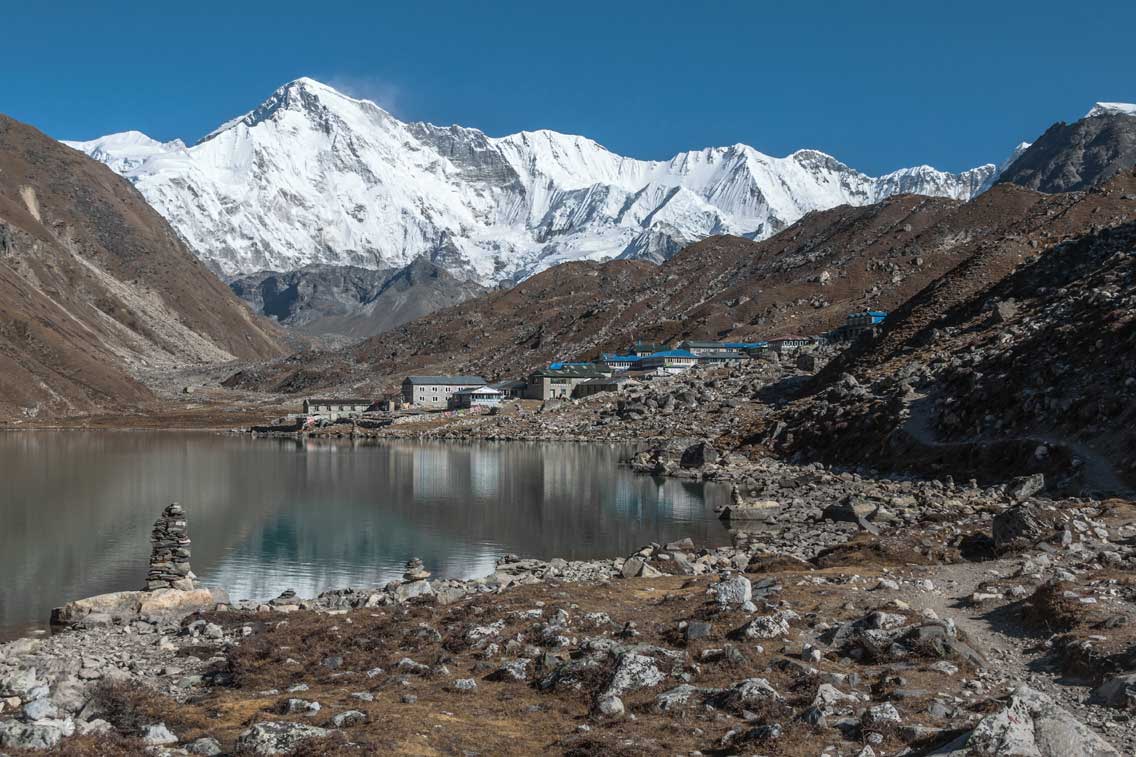
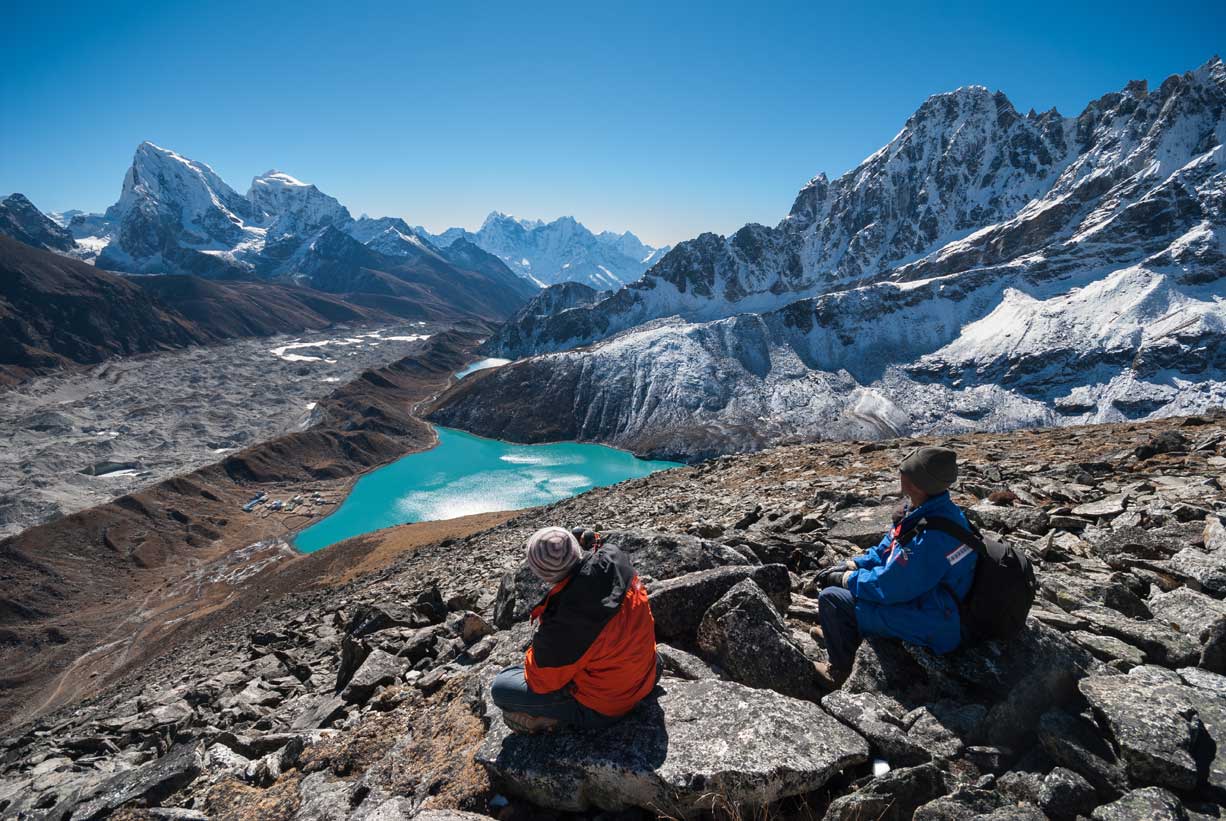
  • Take a closer look at the pristine Gokyo Lakes.
  • I have crossed through several Sherpa villages and understood their cultural heritage.

17 Days Everest 3 Passes Trek Itinerary

Day 1 | Flight from Kathmandu/Manthali to Lukla. Trek to Phakding

Your first day of the journey starts early with a short 30–40 minute scenic flight from Kathmandu domestic airport, or from Ramechhap during busy trekking months. The best mountain views are seen from the left side of the plane, with clear sights of Gaurishankar, the Langtang range, Dorje Lhakpa, the Everest range, and even the Shishapangma range of China. 

Tara Air, Sita Air, and Summit Air usually operate this route. The flight lands at the Tenzing-Hillary Airport in Lukla. After landing, we normally don’t start the trek right away. Instead, we meet our team, enjoy breakfast if we arrive early, or lunch if it’s later. We also do a short group meeting to plan the day and discuss the journey ahead. 

After the break, we’ll begin the trek toward Phakding (2,610 m). On this first walking day, we complete the national park entry and local entry processes. The trail passes Buddhist villages, where the local lifestyle is completely Tibetan-influenced. Along the way, you’ll start noticing prayer flags, carved stones, small monasteries, and Chorten (stupa) monuments. 

Note: During peak seasons, Spring (Mar–May) and Autumn (Sep–Nov), flights shift to Ramechhap due to air traffic. This adds a 4–5 hour early-morning drive from Kathmandu, followed by a 20-minute flight to Lukla.

Flight Time:

40 min (Kathmandu–Lukla), 20 min (Manthali–Lukla)

Trek Time:

3 hrs/day

Trek Distance:

7.5 km (4.6 miles)

Sleep Elevation:

2,610 m (8,562 ft)

Accommodations:

Lodge-to-Lodge

Meals:

Lunch, Dinner (L.D)

Place:

Phakding

Day 2 | Trek from Phakding to Namche Bazaar

We’ll wake up around 7:00 AM and have breakfast at 7:30 AM, with the meal pre-ordered the previous day. The trek begins around 8:00–8:30 AM. Along the trail, you’ll pass small waterfalls and see farmland where locals grow vegetables for trekkers. You’ll cross the Dudh Koshi River several times on high suspension bridges. Just before the final climb, you will walk across the Hillary Bridge, the highest suspension bridge on the route. 

Before ascending Namche, the trail passes Monjo (2,835 m), the entry point for Sagarmatha National Park, where your permits are checked. Beyond Monjo, there are no vegetable farms, and the scenery becomes more rugged. After crossing the final high bridge, the trek changes as you start the steep climb known as “Namche Hill,” which can take a couple of hours. 

During the walk, you may get your first glimpse of Mount Everest, visible through a gap behind the Lhotse-Nuptse ridge, if weather conditions are clear. This climb is the most demanding part of the day, but the views of the mountains, the river below, and the surrounding forest make the effort rewarding.

Trek Time:

5–6 hrs/day

Trek Distance:

7.4 km (4.5 miles)

Sleep Elevation:

3,440 m (11,286 ft)

Accommodations:

Lodge-to-Lodge

Meals:

Breakfast, Lunch, Dinner (B.L.D)

Place:

Namche Bazaar

Day 3 | Rest day to acclimatize at Namche Bazaar

Today is a rest day for acclimatization at Namche Bazaar  (3,440 m). We’ll wake up early at 6:00 AM to enjoy the best views of the mountains. Breakfast will be at 6:30 AM. By 7:00–7:30 AM, you’ll start hiking to Everest Viewpoint. The hike takes about 1.5 hours. From the viewpoint, you can see Everest (8,848.86m), Lhotse (8,516 m), Nuptse (7,861 m), Ama Dablam (6,812 m), Kangtega (6,782 m), Thamserku (6,608 m), and Kusum Kanguru (6,367 m), and more.

 In this region, Khumbu Yul Lha is a sacred mountain, and climbers are not allowed to summit it. After the viewpoint, we continue to Khumjung village (3,790 m), where you’ll visit the skull of a yeti, and Khunde village, which has the largest hospital in the region, built by Sir Edmund Hillary. We’ll also visit the Syangboche Yak Farm and Breeding Center.

Later, we visit Syangboche Airport, located at 3,780 m, one of the highest airports in the world. We will also explore the Sagarmatha National Park Museum to learn about Sherpa history and Everest climbers. Namche’s largest gumba is on the itinerary, and if visiting on Friday or Saturday, you can see the local market. Namche is the best place to buy or hire last-minute trekking gear, as flights allow only 15 kg per person. It is also the last place to enjoy full facilities before heading to remote areas.

Trek Time:

3–4 hrs/day (optional)

Trek Distance:

8 km (4.9 miles)

Sleep Elevation:

3,440 m (11,286 ft)

Accommodations:

Lodge-to-Lodge

Meals:

Breakfast, Lunch, Dinner (B.L.D)

Place:

Namche Bazaar

Day 4 | Trek from Namche Bazaar to Thame

After a rest day at Namche Bazaar, we will get back on the trail on the fourth day. Today, we will trek towards Thame, leaving behind the Everest Base Camp (EBC) trek route. The trail will lead us through murals of Green Tara, Guru Rinpoche(Padmasambhava), Thangton Gyalpo, and a few Sherpa villages like Sanasa (2,200 m). Moving forward, we will also cross the powerful Bote Koshi River on a suspension bridge. Along the route, we can also stop by the beautiful monastery in Thame. Finally, in the late afternoon, we will arrive at Thame (3,800 m) for an overnight stay.

Trek Time:

6 hrs/day

Trek Distance:

8.5 km (5.3 miles)

Sleep Elevation:

3,800 m (12,467 ft)

Accommodations:

Lodge-to-Lodge

Meals:

Breakfast, Lunch, Dinner (B.L.D)

Place:

Thame

Day 5 | Trek from Thame to Lungden

The trek continues on the fifth day as we will head towards Lungden after breakfast at Thame. The trial that we follow today mostly passes through remote villages that offer a glimpse into the local lifestyle. While enjoying the view of the landscapes, vegetation, and mountains, we will arrive at the village of Marlung (4,200 m). After a short break at Marlung, we will continue our hike until we reach our destination for today, Lungden (4,380 m).

Trek Time:

6 hrs/day

Trek Distance:

8.2 km (5 miles)

Sleep Elevation:

4,380 m (14,370 ft)

Accommodations:

Lodge-to-Lodge

Meals:

Breakfast, Lunch, Dinner (B.L.D)

Place:

Lungden

Day 6 | Trek from Lungden to Gokyo Lake via Renjola Pass

On the sixth day, the most exciting part of our journey begins. Today, we will cross one of the three passes, the Renjo La Pass (5,360 m), to reach Gokyo Lake. Waking up early, we will start hiking towards the Gokyo Lakes region. As we continue, the vegetation and terrain start to change. We might encounter yak herders and possibly see wild animals in the area. With a final push on a steep climb, we will reach Renjo La Pass.

At the pass, we will have stunning views of Mt. Everest, Lhotse, Makalu, and Cho Oyu. After taking in the view, we will start descending towards Gokyo Valley to view the Gokyo Lakes. The descent might be a bit challenging due to snowy paths. In the evening, we will reach Gokyo Valley (4,750 m) and spend the night in a lodge or a teahouse.

Trek Time:

8 hrs/day

Trek Distance:

9 km (5.6 miles)

Sleep Elevation:

4,750 m (15,584 ft)

Accommodations:

Lodge-to-Lodge

Meals:

Breakfast, Lunch, Dinner (B.L.D)

Place:

Gokyo Valley

Day 7 | Rest day to acclimatize at Gokyo. Early morning at Gokyo Ri Viewpoint

The seventh day is the second acclimatization day of our journey. With increasing altitude, the air becomes thinner, so it is important to rest and acclimatize to the altitude. On this rest day, we will take a short hike to the Gokyo Ri (5,357 m). From this viewpoint, we can see beautiful views of the Everest region. We will also get the first sight of the Ngozumpa Glacier. Next, we head towards Scoundrel’s Viewpoint to enjoy the sights of Cho Oyu, Lhotse, Makalu, Nuptse, and Everest.

In the late afternoon, we will return to our lodge and spend the remaining time exploring the valley. As the daylight fades away, we will return to the lodge for dinner and a restful sleep.

Trek Time:

2–4 hrs/day

Trek Distance:

2 km (1.2 miles)

Sleep Elevation:

4,750 m (15,584 ft)

Accommodations:

Lodge-to-Lodge

Meals:

Breakfast, Lunch, Dinner (B.L.D)

Place:

Gokyo Village

Day 8 | Trek from Gokyo to Thangnak

On the eighth day, we will wake up early, have breakfast, and get back on the trail. The trial that we follow today will lead us towards Thangnak. Along the route from Gokyo to Thangnak, we will also cross the Ngozumpa Glacier, while taking a closer look at it. As the trek continues, the trail starts to get a bit challenging, with several ups and downs. Crossing through all the sections, we will arrive at Thangnak (4,700 m), a small settlement known for its huge collection of lodges. This place is going to be our resting stop for the day before crossing the Cho La pass.

Trek Time:

3 hrs/day

Trek Distance:

4 km (2.5 miles)

Sleep Elevation:

4,700 m (15,419 ft)

Accommodations:

Lodge-to-Lodge

Meals:

Breakfast, Lunch, Dinner (B.L.D)

Place:

Thangnak

Day 9 | Trek from Thangnak to Dzongla via Cho La Pass

The trek becomes more challenging on the night day as we trek towards Dzongla. After an early morning breakfast, we will leave Thangnak behind and get on the trail. The trek begins on a rocky path and passes through glacial moraines. To reach Dzongla, we will also have to cross Cho La Pass, which sits at 5,420 m. At the pass, we can enjoy spectacular views of Everest and other Himalayas. After enjoying the views, we will then descend towards Dzongla (4,830 m). Before nightfall, we will reach this charming village for a well-deserved rest.

Trek Time:

8 hrs/day

Trek Distance:

9.5 km (5.9 miles)

Sleep Elevation:

4,830 m (15,846 ft)

Accommodations:

Lodge-to-Lodge

Meals:

Breakfast, Lunch, Dinner (B.L.D)

Place:

Dzongla

Day 10 | Trek from Dzongla to Lobuche

The tenth day takes us further into the Everest region. Today, we will trek from Dzongla to Lobuche (4,940 m) on a challenging yet scenic route. As we move higher, the path gets rocky, making it hard to walk. Along the way, we will see stunning views of surrounding peaks like Nuptse and Pumori. After about 4 hours of trekking, our destination, Lobuche, comes into sight. The village is quite peaceful and offers great views of the Himalayas. We will spend the night here, acclimatizing to the altitude and preparing for the next stages of the trek.

Trek Time:

4 hrs/day

Trek Distance:

6 km (3.7 miles)

Sleep Elevation:

4,940 m (16,207 ft)

Accommodations:

Lodge-to-Lodge

Meals:

Breakfast, Lunch, Dinner (B.L.D)

Place:

Lobuche

Day 11 | Trek from Lobuche to Everest Base Camp and back to Gorak Shep

Today is another exciting day as we trek to Everest Base Camp via Gorak Shep. The hike takes us through rocky terrain and past beautiful glaciers. Every step we take today will get us closer to the foot of the world’s highest peak. Upon reaching base camp, we will take a moment to enjoy the stunning view of Everest’s massive face. Afterward, we will retrace our steps to Gorak Shep (5,164 m), a small settlement where we will rest and sleep. Before going to bed, we will explore the area for a bit and chat with our guide about the next day’s trek.

Trek Time:

7–8 hrs/day

Trek Distance:

12.5 km–14 km (7.7 miles–9 miles)

Sleep Elevation:

5,164 m (16,942 ft)

Accommodations:

Lodge-to-Lodge

Meals:

Breakfast, Lunch, Dinner (B.L.D)

Place:

Gorak Shep

Day 12 | Hike to Kala Patthar Viewpoint, trek to Lobuche

This morning, we will wake up early to hike to Kala Patthar (5,545 m). Kala Patthar is one of the best spots for a panoramic view of Mount Everest. The climb is steep, and the altitude makes it a bit challenging, but the views at the top are absolutely worth it. Upon reaching Kala Patthar, we can clearly see Everest, Lhotse, and other towering peaks in front of us. After spending time enjoying the view, we descend back to Lobuche. The descent is easy and doesn’t require much effort. At Lobuche, we will have dinner and rest for the night.

Trek Time:

7–8 hrs/day

Trek Distance:

11.5 km (7.1 miles)

Sleep Elevation:

4,940 m (16,207 ft)

Accommodations:

Lodge-to-Lodge

Meals:

Breakfast, Lunch, Dinner (B.L.D)

Place:

Lobuche

Day 13 | Trek from Lobuche to Chhukung via Kongma La Pass

Today, we begin our trek towards Chhukung (4,730 m), passing through the challenging Kongma La Pass. The pass sits at 5,535 m and offers dramatic views of the Himalayas. This day of all is going to be a tough one because of the steep climb and high altitude. However, reaching the pass is a rewarding experience. After descending from the pass, we continue our way to Chhukung. At the village, we will rest and adjust to the altitude before our next hike.

Trek Time:

8 hrs/day

Trek Distance:

11 km (6.8 miles)

Sleep Elevation:

4,730 m (15,518 ft)

Accommodations:

Lodge-to-Lodge

Meals:

Breakfast, Lunch, Dinner (B.L.D)

Place:

Chhukung

Day 14 | Trek from Chhukung to Tengboche

After spending several days at high altitude, on the fourteenth day, we will leave behind Chhukung and trek downhill to Tengboche. The trail is easier today, but the scenery is just as stunning. Along the way, we will also cross the charming village of Dingboche. Resting at Kharkas (highland sheds) at Tsura, Orsho (4,910 m), and Shomare (4,010 m), we will finally arrive at Tengboche. At this village, we will visit the Tengboche Gompa, the oldest monastery in the Everest region. The peaceful surroundings and the view of Mount Everest in the distance make it a great place to relax.

Trek Time:

6 hrs/day

Trek Distance:

10 km (6.2 miles)

Sleep Elevation:

3,860 m (12,664 ft)

Accommodations:

Lodge-to-Lodge

Meals:

Breakfast, Lunch, Dinner (B.L.D)

Place:

Tengboche

Day 15 | Trek from Tengboche to Namche Bazaar

Today’s trek takes us from Tengboche down to Namche Bazaar, the heart of the Khumbu region. The path is scenic, passing through forests and across rivers. While descending, we will have beautiful views of the mountains and the surroundings. With every step, the trek becomes easier because of the decreasing altitude and easy paths. Arriving at the village in the late afternoon, we will spend the rest of our day enjoying the cool atmosphere and exploring the town.

Trek Time:

5–6 hrs/day

Trek Distance:

9.2 km (5.7 miles)

Sleep Elevation:

3,440 m (11,286 ft)

Accommodations:

Lodge-to-Lodge

Meals:

Breakfast, Lunch, Dinner (B.L.D)

Place:

Namche Bazaar

Day 16 | Trek from Namche Bazaar to Lukla

Our trek today takes us from Namche Bazaar to Lukla, where we started. The descent is gradual, passing through lush forests and small villages along the way. As we get closer to Lukla (2,860 m), the mountain views start to fade away, giving us a sense of accomplishment. The night in Lukla will be quite restful after several days of hiking.

Trek Time:

8–9 hrs/day

Trek Distance:

14.9 km (9.2 miles)

Sleep Elevation:

2,860 m (9,383 ft)

Accommodations:

Lodge-to-Lodge

Meals:

Breakfast, Lunch, Dinner (B.L.D)

Place:

Lukla

Day 17 | Fly to Kathmandu/Manthali from Lukla

On the final day of our adventure, we will take a flight from Lukla back to Kathmandu or Manthali (474 m). The flight to Kathmandu will take around 40 minutes, while the one to Manthali will only take about 20 minutes. As we fly back, we will be treated to spectacular aerial views of the Everest region, including the peaks we have seen up close during our trek. This marks the end of our Everest Base Camp trek, a truly unforgettable adventure.

Flight Time:

40 min (Lukla–Ktm), 20 min (Lukla–Manthali)

Sleep Elevation:

1,400 m (4,593 ft)

Accommodations:

Not Included

Meals:

Breakfast, Farewell Dinner (B.D)

Place:

Kathmandu/Manthali

Optional Add on

Kathmandu Stay

To respect the varied accommodation preferences of our guests, the Kathmandu stay has been kept optional, so you can freely choose a hotel that best suits your comfort and budget. However, if you would like us to arrange your accommodation, we would be more than happy to assist. Let us know your preference (3-star, 4-star, or 5-star) at the time of booking, and we will include it as an add-on without any hassle.

What's Included?

  • Vehicles pick up and drop off at international and domestic airports.
  • A highly experienced government-licensed guide and porter.
  • 1 porter provided for each trekker, with a maximum personal luggage allowance of 20 kg.
  • Meal options available for Vegetarian, Vegan, and Lactose-Free diets.
  • All Domestic Flights and Bus Tickets.
  • Three meals a day (Breakfast, Lunch, and Dinner) during the trek.
  • Wages, accommodation, meals, gear, and medication for all the staff.
  • All Administrative expenses and government taxes.
  • All trekking permits that are required for the trip.
  • Assistance for emergency Rescue.
  • A participation Certificate.
  • Farewell dinner after the trip.

What's Excluded?

  • International flight tickets.
  • Nepali entry visa fee.
  • All accommodation and meals in Kathmandu.
  • Personal expenses. (hot shower, wifi, battery charge, cold drinks, alcohol, extra porters, shopping snacks, personal clothing & gear)
  • Travel insurance.
  • Tips for guides and porters.
  • Excess Baggage Charges.

Choose a Depature

Dates for 2025 - 2026

  • Guaranteed Departure
  • Limited Space

Mar 2 to Mar 18, 2026

S M T W T F S
01020304050607
08091011121314
15161718192021
17 Days / 16 Nights
Per Person from $2415
Book Now Open

Upgrades Avaliable

Private Journey

Have a group already?

Make it a private trip by taking over one of our dates, or you can choose your own date. Prices are sliding scale to suit the number of travellers.

Why Choose the Everest Three Passes Trek?

The Everest region is one of the most popular trekking destinations in Nepal. It is home to several treks, including the Everest Base Camp, the Gokyo Lakes trek, the Pikey Peak trek, and the Everest Three Passes Trek. With several options, choosing the best one can be difficult. While most of these treks offer similar experiences, the Everest Three Passes Trek stands out because of its extreme adventure. Here are a few reasons to choose the Three Passes trek over other treks in the region:


Scenic Views

A trek is incomplete without scenic views of the mountains. The Everest Three Passes trek offers some of the most beautiful views of the Everest Region. You will be treated to breathtaking views of the Himalayan giants like Mt. Everest, Cho Oyu, Ama Dablam, Lhotse, and Makalu from several viewpoints. These views are otherworldly when seen from a close distance. The trek also offers a peak into alpine valleys, pristine lakes, and Glacial valleys, making your trip more memorable.

High Altitude Adventure

Although most of the treks in the Everest region are known for their adventure, the thrill of the Three Passes Trek is unmatchable. The trek takes place in a high-altitude area with several challenging sections. Crossing three different passes at such a high altitude itself is an adventure of a lifetime. In addition to that, the quick rise in altitude and the change in trail conditions make it an adventurous journey in the Himalayas.

Unique Cultural Experience

Along with offering some of the best views in the Everest region, the Everest Three Passes Trek also lets you experience the local culture to the utmost. Passing through several Sherpa Villages, the trek lets you explore the lifestyle and traditions of the local people. Along the trek you can also visit ancient monasteries and take part in festivals. Additionally, interacting with the locals will help you understand their connection to the mountains.

Majestic Vantage Points

The best part of trekking the Three Passes is obviously the opportunity to stop by at several vantage points. These vantage points include iconic spots like Kala Patthar, Gokyo Ri, and all three passes. Each one of these viewpoints offers never-before-seen views of the surroundings. With beautiful views of the Gokyo Lakes and wonderful vistas of the Himalayan giants, these vantage points make the trip more memorable.

Physical Challenge and Achievement

With an unmatchable adventure and stunning vistas, the Three Passes Trek challenges trekkers physically and mentally. The high altitude passes, and unpredictable weather conditions will push you to your limit. Completing the trek despite these challenges offers a sense of achievement. Moreover, crossing the three world’s highest passes while trekking through difficult terrain will always remain a huge achievement of your life.

Distance, Elevation, and Duration of Everest High Passes Trek

Day Itinerary Distance  Elevation Duration
1 Fly from Kathmandu/ Manthali to Lukla. Trek to Phakding 7.5 km (Trek) 2,610 m 20/40 minutes + 3 hours trek
2 Trek to Phakding to Namche Bazaar 7.4 km 3,440 m 5–6 hours
3 Acclimatization Day at Namche Bazaar 8 km (optional hike) 3,880 m 3–4 hours
4 Trek from Namche Bazaar to Thame 8.5 km 3,800 m 6 hours
5 Trek from Thame to Lungden 8.2 km 4,380 m 6 hours
6 Trek from Lungden to Gokyo via Renjo La Pass 9 km 4,750 m 8 hours
7 Rest day at Gokyo 2 km (optional hike) 5,357 m 2–4 hours
8 Trek from Gokyo to Thangnak 4 km 4,700 m 3 hours
9 Trek from Thangnak to Dzongla via Cho La Pass 9.5 km 5,420 m 8 hours
10 Trek from Dzongla to Lobuche 6 km 4,940 m 4 hours
11 Trek from Lobuche to Everest Base Camp and back to Gorak Shep 12.5 km–14 km 5,164 m 7–8 hours
12 Hike to Kala Patthar and trek back to Lobuche 11.5 km 5,545 m 7–8 hours
13 Trek from Lobuche to Chhukung via Kongma La Pass 11 km 5,535 m 8 hours
14 Trek from Chhukung to Tengboche 10 km 3,860 m 6 hours
15 Trek from Tengboche) to Namche Bazaar 9.2 km 3,440 m 5–6 hours
16 Trek from Namche Bazaar to Lukla 14.9 km 2,860 m 8–9 hours
17 Fly from Lukla to Kathmandu/Manthali 1,400 m 20/40 minutes flight

How difficult is the Everest Three High Passes Trek?

The Everest Three High Passes Trek is considered one of the most challenging treks in the Everest region due to its demanding terrain and high altitudes. You will need to cross three major mountain passes: Kongma La, Cho La, and Renjo La, each of which requires good physical fitness and strong endurance. The trek involves long days of hiking over rocky and steep paths, which can be tiring and physically demanding.

Everest Three Passes Trek Difficulty

Altitude is another major factor making the trek difficult. Reaching heights above 5,000 m puts you at risk of altitude sickness, so acclimatization days are essential. The unpredictable weather can make the trek further more challenging. At higher altitudes, you can encounter cold temperatures, strong winds, and sudden snowstorms, especially in the higher passes. The Everest Three High Passes Trek is suitable for experienced trekkers who are ready for a physically and mentally challenging adventure.

Best Time for Everest Three-Pass Trek

The Everest Three Passes Trek is perfect to explore during spring (March to May) and Autumn (September to November). During these seasons, you will get clear views, stable weather, and mild temperatures. Besides these two seasons, we generally do not recommend trekking during winter (December to February) and summer (June to August).

January to February

If you plan to trek during January and February, be prepared for the coldest months of the year. Heavy snowfall and very low temperatures, especially at night, can make trekking challenging. Temperatures during the day can reach around 5°C but drop to -15°C or lower at night.

While the views of snow-capped peaks under clear skies are beautiful, the harsh winter conditions can make the trek difficult and risky, so it’s best suited for experienced trekkers.

March to April

March and April offer one of the best times to embark on the Everest Three High Passes Trek. You will find the weather warm and pleasant, with daytime temperatures reaching 18°C and nighttime temperatures dropping to -12°C.

This spring season brings life to the region. During this time of the year, the flowers start to bloom, and the wildlife begins to appear on the trail. The clear skies provide perfect conditions for trekking, along with breathtaking views of the mountains.

May to Early June

You will enjoy a great trekking experience from May to early June before the heavy monsoon rains begin. The weather is pleasant, with temperatures ranging from 25°C during the day to -5°C at night. During this period, the spring and early summer seasons provide clear views and lush green landscapes.

However, keep in mind that as June approaches, rain can start affecting the trails, so it is wise to plan your trek earlier in this period to avoid the coming monsoon season.

July to August

When July and August arrive, the monsoon season peaks, bringing heavy rainfall, especially at altitudes below 3,500 m. Be prepared for flight cancellations to and from Lukla due to weather conditions. The trails can become muddy and slippery, making trekking challenging.

However, if you choose to trek during this period, you will be rewarded with stunning views of waterfalls and lush, vibrant greenery. Expect daytime temperatures around 27°C and cooler nights at 5°C, but be prepared for difficult conditions.

September to October

September and October are some of the best months for the Everest Three High Passes Trek. The monsoon season ends, leaving behind clear skies and ideal weather for trekking. You will experience pleasant daytime temperatures around 20°C and cooler nights at 5°C.

This season offers perfect trekking conditions, and the views of the mountains are spectacular. Additionally, you will have the opportunity to experience the festive atmosphere as many Hindus celebrate their important festivals during this time.

November to December

As winter sets in during November and December, the region experiences colder temperatures, ranging from 20°C during the day to -5°C at night. November is still popular for trekking due to its clear skies and beautiful mountain views, but by December, the temperatures drop further, and heavy snowfall becomes common.

Nights can be extremely cold, making the trek more difficult, especially at higher elevations. This season is best suited for those who are well-prepared for the winter conditions and want to enjoy a quieter trekking experience.

Comfort During Everest Three Passes Trek

Comfort during the Everest Three Passes Trek can be limited compared to more accessible trails, but you can still find a reasonable level of comfort with proper planning. Teahouses and lodges along the route provide basic accommodations, often with twin-sharing rooms and shared bathroom facilities. While the rooms might be simple, they offer a warm and cozy place to rest after a long day of trekking.

Some teahouses in lower elevations provide more amenities, and you can expect a communal atmosphere where you can connect with fellow trekkers. To increase comfort, bring appropriate gear such as a good sleeping bag, warm clothing, and layers to manage cold temperatures, especially at higher altitudes. Staying well-prepared with snacks, extra layers, and essentials will help you feel more comfortable during the trek.

True Tales from the Three Passes Trail

Trip Advisor Logo

Three Passes Journey, Challenge and Camaraderie

I went into this trek looking for a physical challenge and came back with so much more. I hiked solo, but the group I joined (organized by HC Treks) was full of wonderful humans from all over. We pushed each other, cheered each other on, and shared stories over dal...
Trip Advisor Logo

Three Passes Journey, Challenge and Camaraderie

I went into this trek looking for a physical challenge and came back with so much more. I hiked solo, but the group I joined (organized by HC Treks) was full of wonderful humans from all over. We pushed each other, cheered each other on, and shared stories over dal bhat every night. Crossing Renjo La at sunrise was a spiritual moment I’ll never forget. If you want to feel truly alive, do this trek.

Trip Advisor Logo

Everest Trek That Changed My Perspective

Wow, where do we even start? As a couple who love to travel, we thought we’d seen it all, but the Everest Three Passes Trek took us to a whole new level! It was a wild ride that pushed us both mentally and physically, but honestly, it brought us closer...
Trip Advisor Logo

Everest Trek That Changed My Perspective

Wow, where do we even start? As a couple who love to travel, we thought we’d seen it all, but the Everest Three Passes Trek took us to a whole new level! It was a wild ride that pushed us both mentally and physically, but honestly, it brought us closer together in ways we never expected. HC Treks made sure everything was seamless, and our guide’s infectious energy kept the whole group buzzing with excitement. Seriously, we were all like a little family out there!

And let’s talk about the views, absolutely mind-blowing! It felt like we were walking through a postcard every single day. One of the highlights? The sunrise at Gokyo Ri. I can’t even describe how peaceful it was; it’s one of those moments that just sticks with you. We still chat about it, and it always brings a smile to our faces. If you’re looking for an adventure that’ll challenge you and create unforgettable memories, this trek is it! Trust us, you won’t regret it!

Trip Advisor Logo

Three Passes, Endless Thrills

Honestly, I wasn't sure what to expect when I signed up for this adventure, but the experience completely blew me away. Joining a HC Treks group turned out to be the best decision we clicked instantly, like hiking with long-lost friends. Our guides struck that perfect balance between being completely...
Trip Advisor Logo

Three Passes, Endless Thrills

Honestly, I wasn't sure what to expect when I signed up for this adventure, but the experience completely blew me away. Joining a HC Treks group turned out to be the best decision we clicked instantly, like hiking with long-lost friends. Our guides struck that perfect balance between being completely professional while making everything feel effortless. And the moments? Oh, the moments were magic: waking up to watch the sunrise paint the peaks gold, sharing laughs with the surprisingly sassy yaks along the trail (those guys have personality!), or warming up with sweet milk tea in a cozy mountain teahouse halfway across the world.

This wasn't just another trek, it was like hitting the reset button for my soul. Watching morning mist curl through silent valleys, swapping stories with fellow adventurers under star-packed skies (seriously, you've never seen stars like this), and pushing beyond my comfort zone only to discover I could go further than I ever imagined. If you're looking for more than just pretty views (though trust me, those alone would be worth it), and want an experience that'll stick with you long after your boots dry out, this is it.

Trip Advisor Logo

Not Just a Trek, a Mind-Blowing Everest Experience

I’ve done a handful of treks before, but let me tell you, nothing compares to the Everest Three Passes Trek. Seriously, it took my breath away both literally and figuratively! One moment, I was wandering through lush, pine-scented valleys, and the next, I was staring up at towering ice walls....
Trip Advisor Logo

Not Just a Trek, a Mind-Blowing Everest Experience

I’ve done a handful of treks before, but let me tell you, nothing compares to the Everest Three Passes Trek. Seriously, it took my breath away both literally and figuratively! One moment, I was wandering through lush, pine-scented valleys, and the next, I was staring up at towering ice walls. And those glacial lakes? They looked like something straight out of a dream so stunning and glassy, I half-expected to see a mermaid swimming by!

I signed up for this adventure solo, but I quickly found myself part of an amazing little group through HC Treks. We clicked right away! We laughed, struggled, and shared snacks like we were old friends. It felt like an adult adventure camp, but with epic mountain views! Our guide was an absolute gem, he knew the route like the back of his hand and could sense when we needed a break, a chocolate bar, or just a little pep talk. Seriously, he was like our personal cheerleader!

By the end of the trek, I didn’t just check off a bucket-list item; I walked away with a crew of lifelong friends and memories that’ll stick with me forever. Would I do it again? Oh, in a heartbeat! If you’re looking for an adventure that’ll leave you breathless in the best way possible, this is it. Trust me, you won’t regret it!

Trip Advisor Logo

Team Vibes, Tough Trails, Everest Made It Worth It

We were a group of five (family + a friend), and this trek blew us away. We were worried it might be too much for us, but HC Treks kept the pace just right and encouraged us all the way. The mix of challenge, culture, and nature is perfect. Everest...
Trip Advisor Logo

Team Vibes, Tough Trails, Everest Made It Worth It

We were a group of five (family + a friend), and this trek blew us away. We were worried it might be too much for us, but HC Treks kept the pace just right and encouraged us all the way. The mix of challenge, culture, and nature is perfect. Everest Base Camp was amazing, but honestly, the passes were the real stars, especially Cho La with its icy trail and jaw dropping views. We’ve done other group hikes, but this one felt special from start to finish.

Trip Advisor Logo

Beyond the Ordinary, into the Heart of Three Passes

This isn’t your average trek, it's physically demanding, especially at the passes, but that’s what made it unforgettable. I trekked solo but ended up joining a group organized by HC Treks, and it was such a supportive environment. Our guide was a legend, calm, funny, and incredibly knowledgeable about the...
Trip Advisor Logo

Beyond the Ordinary, into the Heart of Three Passes

This isn’t your average trek, it's physically demanding, especially at the passes, but that’s what made it unforgettable. I trekked solo but ended up joining a group organized by HC Treks, and it was such a supportive environment. Our guide was a legend, calm, funny, and incredibly knowledgeable about the region. Every day felt like an accomplishment, and the scenery was unreal. Gokyo Lakes and Renjo La were personal highlights.

Food and Accommodation

Food

Throughout the trek, all meals, including breakfast, lunch, and dinner, will be provided. You can savor various dishes, including traditional Nepali food, Tibetan, Indian, and popular continental cuisines. Breakfast and dinner will be served at the guesthouses where you stay, while lunch will be on the trail. Meals like dal bhat, mo:mo, and other hearty options will help keep your energy levels up. Additionally, welcome and farewell dinners will be part of the experience. Eating well-cooked meals and staying hydrated is essential to maintain energy and avoid stomach problems during the trek.

Accommodation

Your stay in Kathmandu will be at a  hotel and during the trek, you will be accommodated in teahouses. Rooms are provided on a twin-sharing basis, and single rooms can be arranged upon request for additional pay. HC Treks will try to secure rooms with attached washrooms when available, but some teahouses may only have shared toilets and washing facilities. While single rooms are easier to find in Kathmandu and lower trekking areas, they may be limited at higher altitudes. Even with basic amenities at higher elevations, teahouses create a welcoming and communal environment.

How to Prepare Yourself For This Journey

Prepare Yourself Physically

The trek can be as mentally demanding as it is physically challenging. So, it is important that you prepare yourself mentally as well. You will need to develop a positive mindset and resilience to handle unexpected situations. Practicing mindfulness, meditation, or deep breathing exercises can help with that a lot.
You are also free to add some lower-body strengthening exercises like squats and lunges. We generally recommend you to not forget core workouts to enhance your balance and overall stability. Practice hiking with a weighted backpack to simulate the conditions of the trek, and get used to carrying your gear over long distances.

Panoramic Himalaya view Everest Three Passes Treks


Prepare Yourself Mentally

Mental preparation means you developing a positive mindset and resilience to handle unexpected situations. You can also practice mindfulness, meditation, or deep breathing exercises to stay calm and manage stress.
Visualize your success and remind yourself of your motivation for taking on this adventure. Set achievable goals, remain flexible in your approach, and you shall be focused against bad weather or a heavy section of the trek. Being mentally prepared means being determined and enjoying the journey, no matter what challenges come your way.


Travel Insurance for Everest Three Passes Trek

Getting travel insurance is highly recommended if you are taking this challenging adventure towards the Three Passes Treks. Travel insurance can be quite helpful during emergencies and other unexpected situations. It protects your travel investments and provides coverage for cancellation, interruption, baggage loss, and delays.
Whenever you are getting travel insurance, it is important to consider a reputable company. Make sure you check all the policies mentioned in the contract and do not miss out on checking the coverage of the insurance. For getting hands-on with a better plan, you can also consider looking at reviews of fellow travelers. If you have any difficulties finding one, you can contact us for assistance.

Things to Know

Communication and Drinking Water

During the Everest Three Passes Trek, communication can be limited in remote areas. Mobile network coverage is available in most villages, but the signal may be unreliable or weak at higher altitudes. Wi-Fi can be found in some teahouses and lodges, but it may not be dependable or fast. For continuous connectivity and emergencies, it is recommended to use satellite phones or portable communication devices.

Safety Tips

Stay safe on the Three Passes Trek by giving your body time to adjust at higher altitudes and drinking plenty of water while avoiding alcohol. Always travel with a skilled guide who can handle emergencies and navigation. Pack warm clothes, sturdy boots, trekking poles, and a first-aid kit. Check weather updates often, stick to marked trails, and descend quickly if altitude symptoms appear. Carry all required permits and identification to avoid any issues on the trail.

Cash or Cards

For this trek, you must rely mostly on cash because the trail is remote and most teahouses above Namche do not accept cards. ATMs only work reliably in Lukla and Namche, and even there, they may run out of money or have connection problems. Exchange enough Nepalese Rupees in Kathmandu, as it offers the best rates. A backup card is useful for emergencies, but cash handles almost everything on the trail.

Visa Requirements

You’ll need a valid Nepal tourist visa that covers your full stay, as the trek usually takes 17 days. You can get a visa on arrival at Kathmandu Airport, and a 30-day visa is the safest choice because it gives buffer time for delays and acclimatization. You must have a passport photo and cash in major currencies (USD, EUR, GBP) for the visa fee.

Packing Essentials for Everest Three Pass Treks

Packing is essential for a successful trek. Carrying only what you need ensures comfort and safety. Keeping your pack light, ideally under 9 kg, helps prevent fatigue and allows you to move easily. Proper packing also helps you stay organized and prepared for any situation. Here is a short list of what you can pack for a safe and enjoyable trekking experience:

Clothing and Gear

  • Trekking Boots
  • Warm Layered Clothing
  • Waterproof Jacket and Pants
  • Down or Synthetic Sleeping Bag
  • Gloves and a Warm Hat
  • Thermal Base Layers
  • Quick-Dry Clothing
  • Trekking Poles
  • Headlamp with Extra Batteries

Essentials and Personal Items

  • First-Aid Kit
  • Water Bottle and Hydration Bladder
  • Sun Protection (Sunglasses, Sunscreen, Hat)
  • High-Energy Snacks
  • Personal Toiletries
  • Power Bank/Portable Charger
  • Camera or Smartphone
  • Maps and Trekking Guidebook
  • Personal Identification and Permits

Safety and Additional Items

  • Medication for Altitude Sickness
  • Cash in Local Currency
  • Multi-tool or Swiss Army Knife
  • Climbing Gear (for Island Peak, if applicable)
  • Backpack with Rain Cover
  • Personal Cooking Utensils (optional)
  • Emergency Communication Device (optional)

Temperature through the months at Three Passes

Altitude Variations During 17 Days Everest 3 Passes Trek

Altitude in:

FAQs For Everest Three Passes Treks

Why Book With Us

HCTreks offers unforgettable Himalayan adventures with expert guidance and 24/7 support.

expert travel guides

Expert Travel Guides

Experienced, licensed guides ensuring safety and memorable journeys.

safety

Safety First

Your safety is our top priority throughout the journey.

customizable-trips

Customizable Trips

Tailor your trek based on preferences, fitness, and time.

Sustainability

Eco-Friendly Tourism

We promote sustainable, zero-waste, eco-friendly trekking experiences.

competitive-price

Competitive Price

Top-notch service at affordable, transparent, and competitive rates.

route-updates

Route Updates

Receive daily weather forecasts and route updates for safety.