
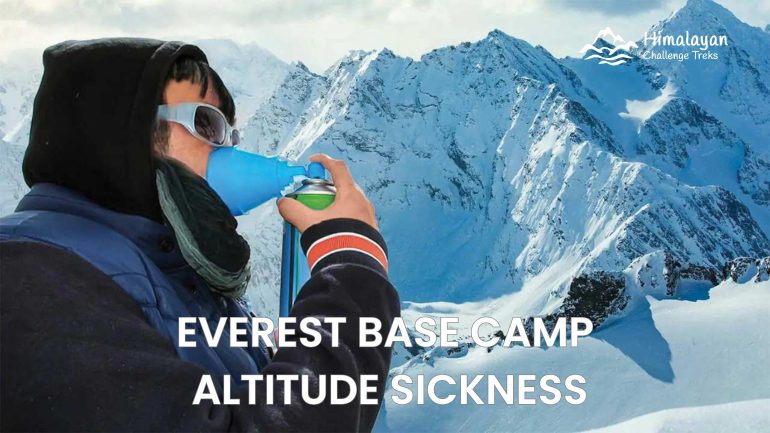
Everest Base Camp altitude sickness affects a large number of trekkers every year, and the risk begins once you cross roughly 2,500 meters (8,200 feet). At Everest Base Camp (5,364 meters) and Kala Patthar (5,545 meters), oxygen availability (partial pressure) drops to nearly half of sea–level conditions. Even highly fit trekkers can fall sick (Fitness improves stamina, but it does not prevent altitude sickness). The real factor is how your body adapts to low oxygen pressure.
Symptoms usually appear within 6 to 24 hours after altitude gain. Most cases are mild and manageable if caught early. Problems start when trekkers move too fast, skip acclimatization days, or ignore early symptoms. In those cases, Acute Mountain Sickness (AMS) can escalate into serious conditions like HAPE or HACE.
This guide explains everything practically, how altitude sickness develops, how to prevent it, and what decisions actually matter on the trail.
Important safety note: This content is for informational purposes only and does not replace medical advice. Always follow guidance from licensed medical professionals and established field organizations such as the Himalayan Rescue Association (HRA) and international high–altitude medical guidelines.
What Are the Symptoms of Altitude Sickness on the Everest Base Camp Trek?
Altitude sickness does not arrive suddenly in most cases. It builds gradually, and early signs are often subtle. The key is recognizing patterns rather than isolated symptoms. Symptoms usually appear within 6 to 24 hours after gaining altitude. If they improve with rest, it is usually mild AMS. If they worsen, the risk increases.
Mild Symptoms (AMS)
Mild altitude sickness is extremely common and usually the first warning that your body is struggling to adapt. You may experience:
- Headache that feels dull or pressure–like
- Unusual fatigue even after rest
- Light dizziness when walking or standing
- Reduced appetite
- Difficulty sleeping (insomnia or disturbed sleep)
- Unusual breathlessness compared to your level of exertion
At this stage, the correct response is not panic but control. You stop ascending, rest at the same altitude, hydrate properly, and allow the body time to adjust. Most trekkers recover within 24–48 hours if they do not gain further elevation.
Moderate Symptoms
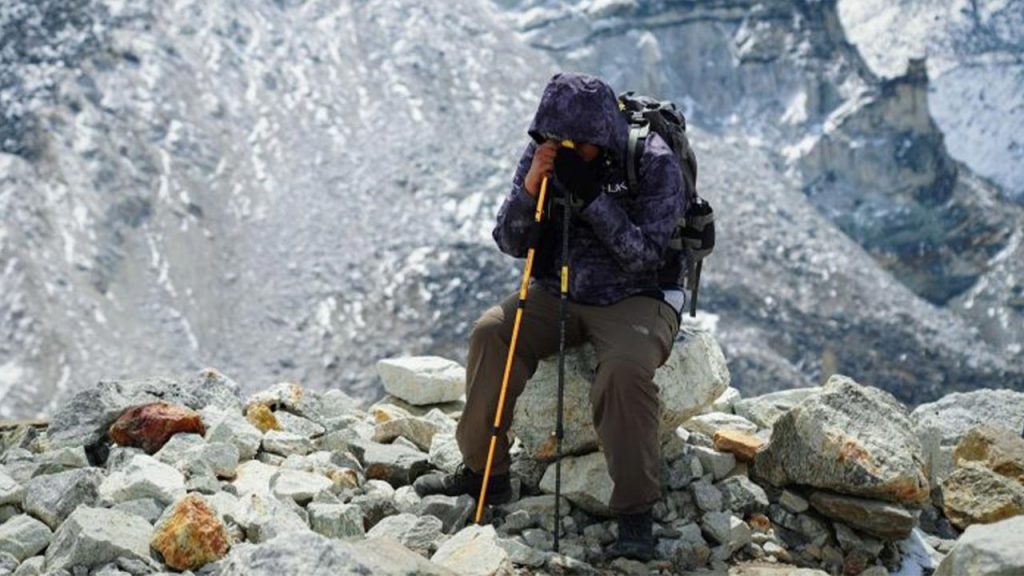
Moderate AMS means the body is no longer coping efficiently with reduced oxygen levels. Symptoms often include:
- Persistent headache that does not improve with rest or medication
- Vomiting or strong nausea
- Difficulty walking in a straight line
- Noticeable exhaustion during simple movement
- Increasing breathlessness during light activity
At this point, continuing upward becomes unsafe. The correct response is to stop ascent completely and observe changes closely. If symptoms remain stable or improve, you may continue trekking cautiously. But if they worsen, descending becomes important.
Severe Symptoms (Medical Emergency)
Severe altitude sickness involves two life–threatening conditions: HAPE (High Altitude Pulmonary Edema) and HACE (High Altitude Cerebral Edema). HAPE involves fluid buildup in the lungs, while HACE involves brain swelling due to hypoxia. These conditions require immediate descent and emergency response. Warning signs include:
- Confusion, disorientation, or unusual behavior
- Ataxia (loss of coordination or inability to walk properly)
- Severe breathlessness even while resting
- Persistent coughing or chest tightness
- Fluid–like breathing sounds (rales) or extreme weakness
At this stage, no amount of rest is enough. Oxygen and medication may provide temporary support, but immediate descent is the only definitive treatment. If the trekker isn’t evacuated within 12–24 hours, HAPE or HACE can become fatal.

When Does Altitude Sickness Usually Start on the EBC Trek?
Clinically, this risk begins the moment you cross 2,500 meters. On the EBC route, because your flight lands directly at Lukla (2,860 m), you bypass this threshold on day one. As a result, mild symptoms most frequently manifest during your first overnight stay in Namche Bazaar (3,440 m).
Namche Bazaar (3,440 m)
Namche is the first major altitude checkpoint and a natural stress test for the body. Here, you may notice:
- Mild headaches
- Slight fatigue during walking
- Restless sleep
- Reduced appetite
This is why Namche is never treated as a simple stop. It is an acclimatization zone where the body begins its real adjustment. Skipping rest here is one of the most common mistakes that leads to altitude sickness later in the trek.
Dingboche (4,410 m)
Dingboche marks a deeper physiological challenge. Oxygen levels are lower, and energy consumption increases noticeably even during basic movement. Common symptoms include:
- Headaches that linger longer than usual
- Reduced appetite becomes more noticeable
- Increased fatigue during short walks
- Mild nausea or dizziness in some cases
You spend another acclimatization day here. You can hike down to Pheriche and visit the Himalayan Rescue Association (HRA) in Pheriche for field guidance. If the symptoms get worse, hold altitude until symptoms stabilize, and do not assume “pushing through” will help.
Lobuche to Gorak Shep
From Lobuche (4,940 m) onward, the challenge becomes cumulative rather than sudden. The body is already under stress from previous days of altitude exposure. You may experience:
- Heavy breathing even at a slow pace
- Reduced coordination or slower reaction time
- Head pressure or persistent fatigue
- Overall physical slowdown
Gorak Shep (5,164 m) is the highest overnight point of the trek. A significant number of altitude-related evacuations occur here due to thin air and fatigue buildup.

How to Prevent Everest Base Camp Altitude Sickness
The altitude sickness prevention is not complicated, but it requires discipline and patience. Once symptoms become severe, prevention is no longer possible.
Follow a Proper Acclimatization Schedule
Above 3,000 meters, ascent speed becomes the most important safety factor. A safe trekking pattern includes:
- Gradual elevation gain (ideally 300–500 meters per day in sleeping altitude)
- Planned rest days
- “Climb high, sleep low” strategy
This structure aligns with widely accepted high–altitude safety principles used in Himalayan trekking guidelines and field–based medical recommendations.
Walk Slower Than You Think You Need To
At altitude, walking slowly is not a weakness; it is a strategy. Make sure:
- Breathing remains controlled
- A conversation is possible while walking
- No racing or sudden bursts of speed
- Frequent short breaks every 20–30 minutes
Even if you’re fit and experienced, adjust your pace. Altitude does not respect fitness levels.
Stay Hydrated
High altitude increases the risk of dehydration due to dry air and faster breathing. You should aim for around 3–4 liters per day, depending on exertion, temperature, and individual needs. You can also track hydration by checking your urine color. Light yellow urine means good hydration, while dark urine means you’re dehydrated. Avoid alcohol at all costs because it reduces oxygen efficiency and causes you to urinate more, leading to severe dehydration.
Eat Even When You Don’t Feel Hungry
Appetite reduction is normal above 3,000 meters, but you should still eat. After all, the higher you climb, the more energy you need. Eat carbohydrate–heavy meals such as rice, potatoes, pasta, and bread. You can also try eating small, frequent meals; they work better than forcing large portions. Ignoring nutrition often leads to fatigue–related AMS symptoms.
Avoid Rapid Ascents
Speed is one of the biggest hidden risks on the Everest Base Camp trek. Most altitude–related problems occur not because of a lack of fitness, but because of rapid ascent. So, do not skip acclimatization days just to compress the itinerary. Slow progression is not optional at high altitude; it is a biological necessity.

What HCT Does to Reduce Altitude Risk on the Trail
A safe Everest Base Camp trek is not just about reaching the destination but also about controlling exposure along the way. Here’s how HCT manages altitude risks to help you complete the trek safely:
Built–In Acclimatization Days
Our 14–Day Everest Base Camp itinerary includes two acclimatization days at Namche and Dingboche. On these days, you don’t just rest passively. You go on active acclimatization hikes to higher viewpoints like Everest View Hotel or Nagarjun Hill, then return to sleep at a lower village altitude. This “climb high, sleep low” approach stimulates physiological adaptations, including increased breathing rate and gradual red blood cell production, while still avoiding overload before the next day’s ascent.
Slow Altitude Progression
Our trek package is structured around internationally accepted high–altitude trekking principles used in Himalayan safety planning.
| Day | Route | Sleeping Altitude | Approx. Oxygen Level |
| Day 1 | Flight to Lukla / Trek to Phakding | 2,610 m | ~72% of the sea level |
| Day 2 | Phakding to Namche Bazaar | 3,440 m | ~66% of the sea level |
| Day 3 | Rest Day at Namche Bazaar | 3,440 m | ~66% of the sea level |
| Day 4 | Namche Bazaar to Tengboche | 3,860 m | ~62% of the sea level |
| Day 5 | Tengboche to Dingboche | 4,410 m | ~59% of the sea level |
| Day 6 | Rest Day at Dingboche | 4,410 m | ~59% of the sea level |
| Day 7 | Dingboche to Lobuche | 4,940 m | ~55% of the sea level |
| Day 8 | Lobuche to EBC / Sleep at Gorak Shep | 5,164 m | ~52% of the sea level |
Monitoring Symptoms Early
On the Everest Base Camp trail, our experienced local guides prioritize early detection over treatment by closely watching for subtle signs of hypoxia (low oxygen), including a slower walking pace, unusual fatigue, and reduced appetite. They also observe behavioral changes and track pulse oximeter readings as a trend tool to catch altitude sickness early and prevent it from worsening by making safe decisions.
- Mild symptoms → slow down and rest at the same altitude
- No improvement → hold altitude and monitor closely
- Worsening symptoms → descend immediately without delay
These principles are created by the Himalayan Rescue Association (HRA) and widely used by trekking guides across the Khumbu region.
Should You Take Diamox for Everest Base Camp?
Taking Diamox (Acetazolamide) is optional and depends on individual preference and medical advice. It works by stimulating breathing and helping the body adapt faster to low oxygen levels. However, it does not completely prevent altitude sickness and cannot compensate for rapid ascent.
It has side effects that include tingling sensations in fingers and toes, increased urination, and altered taste perception. We recommend taking a trial dose before the trek to gauge your personal tolerance. Disclaimer: Always consult a medical professional before using Diamox, especially in cases of kidney conditions, pregnancy, or sulfa allergies.
When Should You Descend Immediately?
Immediate descent is required when symptoms indicate progression rather than adaptation. You must descend if you experience:
- Confusion or altered mental state
- Loss of coordination or balance
- Breathlessness even while resting
- Worsening cough or chest tightness
- Rapidly increasing symptoms despite rest
These may indicate HAPE or HACE, both of which can become life–threatening within hours at altitude.
How Far Should You Descend?
Usually, dropping about 300–500 meters is enough to ease mild symptoms, and most trekkers feel better after that. If HAPE is suspected, you need to go lower (at least 1,000 meters) as quickly as possible. Never sleep higher while symptoms are active.
During descent, keep a steady pace and, if possible, reduce your load so your body can focus on recovery. If walking becomes difficult, local mules, yaks, or horses can help carry you down the trail. Emergency horse transport usually costs around USD 100–150 per day, plus a local handler fee depending on location.
Everest Base Camp Evacuation and Travel Insurance
Since the EBC trek involves high–altitude risks, emergency evacuation may be needed in serious cases. That’s why you should get travel insurance before the trek.
Make sure your policy includes:
- Coverage for trekking up to 6,000 meters
- Helicopter evacuation in case of emergency
- 24/7 emergency assistance hotline
- Direct payment support to hospitals or rescue operators
- Upfront payment guarantee (no delay in approvals)
- Repatriation coverage of a minimum of USD 50,000–100,000
- Coverage that accounts for limited morning–only flight windows in the Everest region
Typical Evacuation Costs
| Location | Estimated Evacuation Cost |
| Pheriche / Dingboche | USD 2,500–3,600 |
| Lobuche | USD 3,100–4,300 |
| Gorak Shep | USD 3,600–5,200 |
| Everest Base Camp | USD 4,600–6,200+ |
In severe cases, total rescue and medical expenses can exceed USD 10,000. Remember that costs vary by operator, weather conditions, and helicopter availability.

Everest Base Camp Altitude Sickness for Indian Trekkers
If you’re coming from India, you’re likely starting from low-altitude cities and plains such as Delhi, Mumbai, or Chennai, just a few hundred meters above sea level. Even though Nepal is close geographically, the altitude jump into the Himalayas creates a sharp physiological shock. Your body is suddenly exposed to much lower oxygen pressure, and at Everest Base Camp (5,364 m), oxygen levels drop to roughly half of sea level. If you ascend too quickly or push your pace, the risk of altitude sickness rises quickly, especially after crossing 3,000 meters.
Cold, dry mountain air also increases fluid loss through faster breathing, which can lead to dehydration and early AMS symptoms like headache, fatigue, poor sleep, and nausea, often first noticed around places like Namche Bazaar (3,440 m). The key is not fitness alone, but pacing. A gradual 12–14–day itinerary with proper acclimatization days, steady hydration (3–4 liters daily), and simple carbohydrate–rich meals like Dal Bhat helps your body adjust safely and reduces the risk of altitude sickness.
Can You Trek to Everest Base Camp If You’ve Never Been Above 4,000m?
Yes. Thousands of first–time trekkers complete the Everest Base Camp trek every year without any prior high–altitude experience. The route is non–technical. You don’t need mountaineering skills, ropes, or climbing equipment. It’s a trekking trail used by a wide range of people, from fit beginners to older trekkers in their 70s, as long as they pace themselves and respect altitude.
That said, the challenge begins once you reach 4,000 meters. You’ll still be walking 5–7 hours a day on rocky, uneven trails with steep climbs, suspension bridges, and thin air that makes everything feel slower and more tiring. Teahouse stays are basic and cold, and oxygen levels drop significantly, which is why even small mistakes in pacing or hydration can catch up quickly.
Success depends less on strength and more on steady ascent, acclimatization days, hydration, and paying attention to early symptoms instead of ignoring them. You can check our guide on how to prepare for the Everest Base Camp trek to build the right fitness and planning foundation before you go.
Take the Next Step Toward a Safer Everest Base Camp Trek
Altitude sickness is a predictable biological response, not a random risk. In the Khumbu region, most emergencies don’t come from technical difficulty but from rushing the ascent or ignoring acclimatization. A structured itinerary, slow and steady pace, and awareness of early symptoms greatly reduce the risk. Severe conditions like HAPE and HACE are largely preventable when trekkers follow proper acclimatization rules and don’t push beyond what their body can handle.
If you’re planning the journey, don’t shorten it for convenience. Choose an Everest Base Camp trek route built around altitude safety and gradual daily gains rather than speed.


