
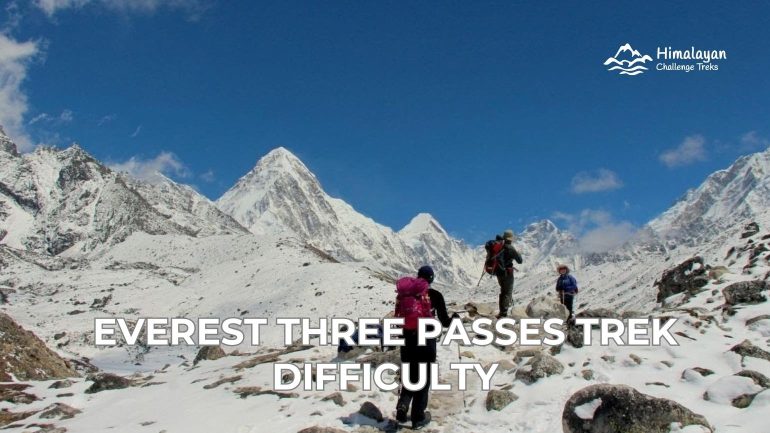
The Everest Three Passes Trek is a hard, high-altitude route that takes you across three major mountain passes in Nepal: Renjo La (5,360 m), Cho La (5,420 m), and Kongma La (5,535 m). It also includes hikes to Everest Base Camp (5,364 m) and Kala Patthar (5,545 m), adding more high-altitude walking to the journey.
The trek’s overall difficulty comes from the combination of high altitude, steep ascents and descents, rugged terrain, and consecutive long days on the trail. To complete the trek comfortably, you’ll need good physical endurance, proper preparation, and the ability to adapt to changing mountain conditions.
This is a non-technical trekking route, not a mountaineering expedition. You typically don’t need rope work or formal climbing skills, although some sections may involve snow, ice, or glacial terrain depending on the season and trail conditions.
Everest Three Passes Trek Difficulty at a Glance
| Difficulty factor | What to expect |
|---|---|
| Overall grade | Hard |
| Highest point | Kala Patthar, 5,545 m |
| Three passes | Renjo La, Cho La, Kongma La |
| Walking days | 4-8 hours |
| Pass-crossing days | Longer, more demanding |
| Terrain | Rocky, steep, uneven, possible snow/ice |
| Technical climbing | Not normally required |
| Experience | Previous multi-day hiking preferred |
| Acclimatization | Namche Bazaar and Gokyo |
This trek is difficult because of altitude and cumulative effort, not because it requires technical mountaineering.
What Makes the Everest Three Passes Trek Difficult?
There are several factors contributing to the Everest Three Passes Trek difficulty, making this route more demanding than a standard high-altitude trekking itinerary.
High Altitude and Thin Air
Altitude is one of the biggest challenges on the Three Passes Trek. The route reaches several points above 5,300 m, where the reduced air pressure makes physical exertion more demanding. Even ordinary activities, such as climbing stairs or walking uphill, can feel much harder than at lower elevations. When spending multiple days at high elevation, fatigue can build up before and between pass crossings.
On our 17-day Everest Three Passes Trek, we include two built-in acclimatization days in Namche Bazaar and Gokyo. These rest days give you time to adjust to the increasing altitude. However, acclimatization reduces the risk of altitude illness but doesn’t guarantee you’ll avoid it.
Steep Ascents and Descents
The route involves repeated climbs and descents over uneven mountain terrain. Reaching a pass is only part of the effort. The descent can be equally demanding, particularly when your legs are already tired from the climb.
For example, our Everest Three Pass itinerary climbs from Lungden to Renjo La first. After that, it descends toward Gokyo, then climbs again to Cho La and Kongma La. These climbs and descents can put considerable strain on your knees, thighs, and ankles. Many trekkers find trekking poles helpful for controlled steps and a steady pace to help manage the strain.
Three High Mountain Passes
Each pass presents a different combination of altitude, terrain, and weather exposure. None should be treated as an ordinary viewpoint hike.
- Kongma La (5,535 m / 18,159 ft): A high, rugged crossing involving steep terrain, loose rock, and a demanding descent.
- Cho La (5,420 m / 17,782 ft): A crossing where snow, ice, and glaciated terrain can affect footing and equipment needs.
- Renjo La (5,360 m / 17,585 ft): A steep, high-altitude crossing with a long descent.
Conditions vary with snowfall, temperature, visibility, and recent trail conditions. The same pass may feel manageable in clear, dry conditions and substantially more difficult after fresh snow or ice.
Long Days and Cumulative Fatigue
The Three Passes Trek isn’t difficult only because of individual climbs. The route requires you to keep walking after several days of exertion, often while sleeping at high elevation. A trekker may feel strong early in the journey but struggle more on later pass crossings because of accumulated fatigue, reduced appetite, poor sleep, or altitude-related symptoms. This is why recovery, pacing, nutrition, hydration, and a realistic itinerary matter as much as basic fitness.
Remote and Rugged Trail Conditions
The higher sections are more remote than the main lower Khumbu trail. You encounter more rugged terrain on the approaches to Kongma La between Chhukung and Lobuche, Cho La between Dzongla and Thagnak, and Renjo La between Gokyo and Lungden. These sections include rocky and uneven paths, loose moraine, and limited facilities between settlements.
Similarly, teahouse accommodation at higher elevations is generally more basic, and services are not available at every point during a pass-crossing day. You should also be prepared for cold mornings, strong winds, changing weather, and possible delays or route adjustments if conditions become unfavorable.

How Difficult Are Renjo La, Cho La, and Kongma La?
The three high passes are often discussed as though they have one fixed difficulty ranking. In reality, they challenge trekkers in different ways, and conditions can change the experience considerably.
Renjo La Pass: Steep but non-technical high-altitude trekking
At 5,360 m, Renjo La Pass connects the Thame and Gokyo sides of the Everest region. On the HCT clockwise itinerary, you approach the pass from Lungden before you descend toward Gokyo.
The main challenges of this pass are the sustained climb to the pass, the altitude, and the descent over uneven mountain terrain. It is generally described as a non-technical crossing, but that doesn’t make it any easier. Cold, wind, snow, or icy sections can make the trail more demanding, especially in early spring or late autumn when winter conditions may linger at higher elevations.
The descent is an important part of the day. After climbing above 5,300 m, you still need to continue walking downhill, often on rocky or uneven ground. Trekking poles can help you maintain balance and keep your footing on steeper sections.
What to prepare for:
- A sustained uphill climb at high altitude.
- Reduced walking speed and the need for regular breaks.
- A long descent that can fatigue your legs.
- Possible snow or ice depending on conditions.
- Limited services during the crossing.
Practical takeaway: Renjo La is not a technical climb, but it is a serious high-altitude pass day. Don’t underestimate its difficulty just because it is generally considered less technically involved than Cho La.
Cho La Pass: Snow, ice, and careful footing
Cho La Pass reaches 5,420 m and connects the Everest Base Camp side of the Khumbu with the Gokyo Valley. On the HCT clockwise itinerary, you cross it from Thangnak toward Dzongla.

The approach involves steep, rocky terrain, while the upper section can include snow- or ice-covered glaciated ground. The exact surface varies with season, recent snowfall, and temperatures. This makes Cho La different from a typical rocky mountain trail.
Cho La is often described as the most technically involved of the three passes because of its glaciated section. However, technical trekking is not the same as technical mountaineering. Under normal trekking conditions, the standard crossing doesn’t require formal climbing skills or rope work. It does require careful footing, appropriate footwear, and equipment suited to the conditions.
What to prepare for:
- A steep approach over rocky and uneven terrain.
- Snow or ice on the upper section, depending on conditions.
- Careful movement across potentially slippery ground.
- Cold, wind, and limited shelter during the crossing.
- A long day where early starts may be necessary.
Practical takeaway: Cho La is difficult because it combines high altitude with variable snow, ice, and terrain. Treat it as a serious mountain crossing, not simply a high viewpoint.
Kongma La Pass: High, rugged, and physically demanding
Kongma La is the highest of the three passes, at 5,535 m. On our 17-day Everest three high passes trek itinerary, it comes later in the journey, after the Everest Base Camp and Kala Patthar section, and connects Lobuche with Chhukung.
Its difficulty comes primarily from the combination of altitude, steep terrain, rough footing, and the length of the crossing. The route can involve rocky and moraine sections, and the descent can be particularly tiring after the climb.
By the time you reach Kongma La, you may be well acclimatized, but you’ve already spent many days trekking. This cumulative fatigue can make the long climb and descent feel more demanding
What to prepare for:
- A high-altitude climb above 5,500 m.
- Steep and uneven terrain.
- Loose rock and moraine sections.
- A demanding descent toward Chhukung.
- Fatigue from the preceding days of trekking.
Practical takeaway: Kongma La is the highest pass, but elevation alone doesn’t determine difficulty. Its demanding terrain and late position in the HCT clockwise itinerary make it worth preparing for.
Which Of The Three Passes Is The Hardest?
Frankly, there’s no single hardest pass for everyone. Kongma La is often considered the most physically demanding because of its high altitude, steep terrain, and rugged descent. Cho La can feel more technically challenging when snow, ice, or glaciated sections affect the crossing. Renjo La involves a sustained high-altitude climb followed by a long descent and can feel harder depending on your acclimatization and trek direction.
So, all three are complicated. All three have their own challenges:
- Kongma La: More physically demanding, with high altitude and rugged terrain.
- Cho La: More technically involved when snow and ice affect the crossing.
- Renjo La: A steep, high-altitude crossing with a long descent.
Weather, snow conditions, route direction, acclimatization, and individual fitness can all affect how difficult each pass feels. So rather than preparing for one “hardest” pass, prepare for the different demands of all three.
What Are the Hardest Days on the HCT 17-Day Itinerary?
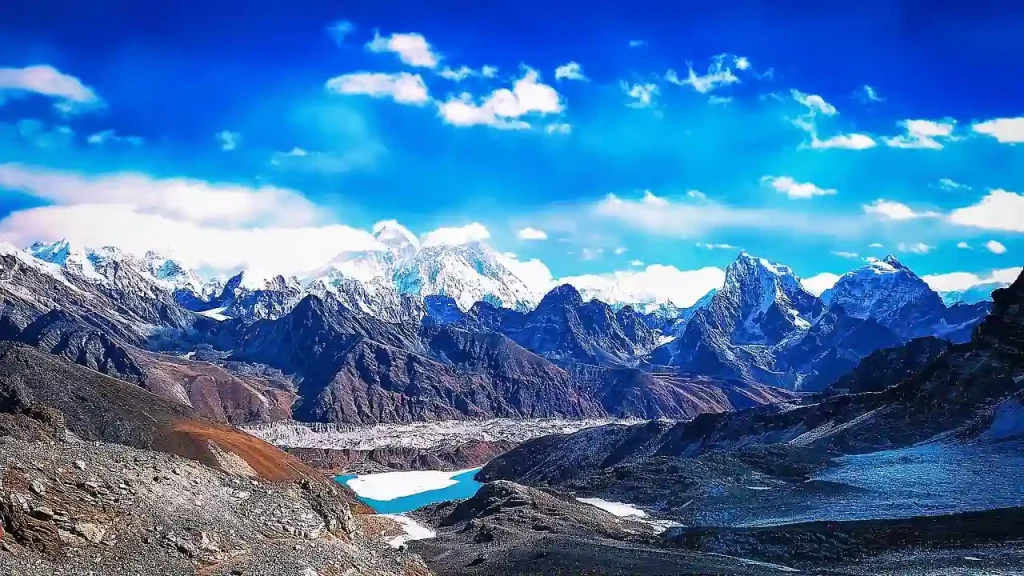
The HCT itinerary isn’t equally difficult every day. The pass-crossing days are the most obvious challenges, but altitude and cumulative fatigue also matter during the Everest Base Camp and Kala Patthar section.
| Itinerary section | Main challenge | What to expect |
|---|---|---|
| Lungden → Gokyo via Renjo La | High-altitude ascent and descent | A demanding pass day with steep terrain and changing conditions |
| Thangnak → Dzongla via Cho La | Snow/ice conditions and altitude | Careful footing, steep terrain, and potentially an early start |
| Lobuche → Chhukung via Kongma La | High altitude, rough terrain, and fatigue | A demanding crossing followed by a long descent |
| Everest Base Camp / Kala Patthar section | Altitude and accumulated fatigue | Physically tiring even without a high-pass crossing |
Why this matters
A six-hour walk at sea level will not feel the same as a six-hour day at 5,000 m. At high altitude, your walking pace may be slower, breaks may be more frequent, and recovery can take longer. That is why the acclimatization days at Namche Bazaar and Gokyo in the HCT itinerary are an important part of the route rather than simply extra rest days.
When preparing, focus on the hardest sections of the trek rather than the average walking day. The three pass crossings involve the highest elevations, steep climbs and descents, and more demanding terrain.
Is the Everest Three Passes Trek Harder Than Everest Base Camp?
Yes, the Three Passes Trek is generally more demanding than a standard Everest Base Camp trek. It combines the Everest region’s high-altitude trails with three mountain-pass crossings, additional steep ascents and descents, and a more complex circuit route.

This difference doesn’t diminish the difficulty of the Everest Base Camp Trek. EBC is also a demanding high-altitude trek. It simply means that the Three Passes route involves more rugged terrain, pass-crossing effort, and route complexity.
| Factor | Everest Base Camp Trek | Everest Three Passes Trek |
|---|---|---|
| Route style | Main Khumbu Valley route | High-altitude circuit |
| High passes | No major pass crossings on the standard route | Renjo La, Cho La, and Kongma La |
| Terrain | Established trekking trails with steep sections | More rugged, steep, and variable sections |
| Altitude challenge | High | Higher cumulative exposure and multiple crossings |
| Daily effort | Challenging | More demanding on pass days |
| Experience | Prepared first-time high-altitude trekkers may manage it | Better suited to experienced or well-prepared trekkers |
| Technical climbing | Not normally required | Not normally required, but some sections may involve snow/ice |
| Route planning | More straightforward | More dependent on pass conditions and itinerary direction |
Choose EBC if you want a more straightforward introduction to the Everest region. Choose Three Passes if you want a longer, more demanding circuit that includes Gokyo, the three passes, Everest Base Camp, and Kala Patthar.

Is the Everest Three Passes Trek Difficult for Beginners?
Yes, the Everest Three Passes Trek is difficult for beginners. We don’t recommend it for a first multi-day high-altitude trek because it involves long walking days, steep terrain, high elevations, and several demanding pass crossings.
However, being a first-time visitor to Nepal is not the same as being a first-time trekker. Someone with strong hiking experience, the ability to manage long days on hilly terrain, and proper preparation may still be able to take on the route with a guided itinerary.
Can a first-time trekker complete the Three Passes Trek?
Yes, a first-time trekker may be able to complete the Three Passes Trek, but it is not an ideal first trek. The distinction matters:
- First-time visitor to Nepal: You may still have substantial hiking experience.
- First-time multi-day trekker: You have not yet tested your endurance across consecutive trekking days.
- First-time high-altitude trekker: You may not know how your body responds to elevation.
- Experienced hiker: You may already be comfortable with steep terrain and long days, but altitude remains an independent risk.
A useful preparation benchmark is being comfortable walking 6-8 hours on hilly terrain on consecutive days, including uphill and downhill sections. This indicates a suitable fitness base but doesn’t guarantee that you will tolerate high altitude well.
Who should reconsider the trek?
You should reconsider or seek professional advice if you:
- Have never completed a multi-day hike.
- Struggle with long consecutive walking days.
- Are uncomfortable with steep or uneven terrain.
- Expect a relaxed sightseeing holiday.
- Are unwilling to allow for weather or acclimatization changes.
- Have a medical condition that may affect high-altitude travel without first discussing it with a qualified medical professional.
Note: According to the U.S. Centers for Disease Control and Prevention (CDC), physical fitness doesn’t determine a person’s susceptibility to altitude illness. Gradual acclimatization and recognizing symptoms are important when trekking at high elevations.
What Fitness Level Do You Need for the Everest Three Passes Trek?
You need good physical fitness and strong endurance to handle the difficulties of the Everest Three Passes Trek. You should be able to walk for several hours on consecutive days, manage steep uphill and downhill sections, and carry a daypack comfortably.
A useful preparation target is:
- 6-8 hours of walking on hilly terrain.
- Comfort with repeated uphill and downhill sections.
- Ability to carry a 5-7 kg daypack, depending on your arrangement.
- Experience walking on uneven or rocky trails.
- Ability to recover well enough to walk again the following day.
Basic fitness alone is not enough. You also need to prepare for altitude, cold, long days, and the mental demands of a multi-day mountain route.
A simple self-assessment checklist
Before booking, ask yourself these questions:
- Can I comfortably walk for 6-8 hours on hilly terrain?
- Can I manage steep descents without excessive knee or thigh pain?
- Can I walk long days on consecutive days?
- Can I carry my expected daypack for several hours?
- Have I completed a multi-day trek or similar hiking challenge?
- Am I prepared to walk slowly and take breaks at high altitude?
- Do I understand that fitness doesn’t guarantee altitude tolerance?
If you answer “no” to 3 or more questions, you may need more preparation or a less demanding trek first.
How to Train for the Everest Three Passes Trek
Ideally, begin preparing 12-16 weeks before the trek. Focus on building endurance gradually rather than trying to complete extreme hikes immediately before departure.
A Practical Training Progression
| Period | Training focus | What to do |
|---|---|---|
| Weeks 1-4 | Build consistency | Walk regularly and add basic cardio and leg-strength exercises such as brisk walking, cycling, step-ups, and squats. |
| Weeks 5-8 | Improve uphill endurance | Add hills, stairs, longer walks, and moderate pack carrying. Include exercises that build strength for steep climbs. |
| Weeks 9-12 | Prepare for consecutive days | Include longer weekend hikes and occasional back-to-back walking days. Practice with a daypack similar to what you expect to carry. |
| Final weeks | Maintain fitness and recover | Keep training consistent, avoid sudden increases in intensity, and prioritize sleep and recovery before departure. |
Your training should build cardiovascular endurance, uphill strength, downhill control, and consecutive-day endurance. Controlled downhill walking and leg-strength exercises can help prepare your knees and thighs for long descents, while gradually increasing pack weight helps you get used to carrying your daypack.
Remember: Training improves physical conditioning, but it doesn’t replace acclimatization or eliminate altitude-related risks.
Altitude, Acclimatization, and Safety on the Three Passes Trek
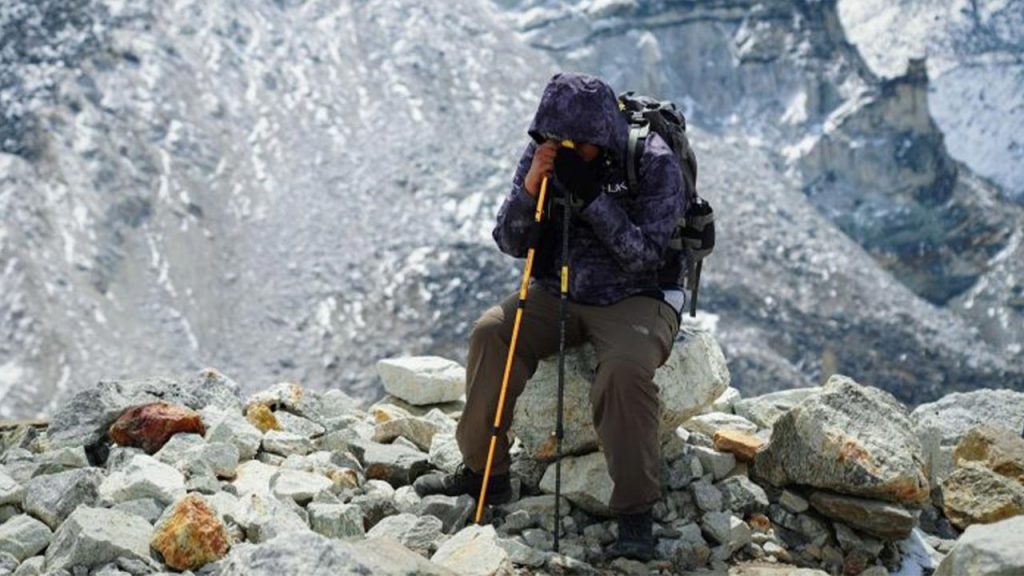
Altitude is one of the most important risks to understand before attempting the Everest High Passes Trek. At elevations above 5,000 m, the reduced oxygen availability can make exertion difficult even for fit people. Acute Mountain Sickness (AMS) can affect people regardless of their fitness level or previous hiking experience.
What are the symptoms of altitude sickness?
Possible symptoms of altitude sickness include:
- Headache.
- Nausea or reduced appetite.
- Dizziness.
- Unusual fatigue.
- Sleep disturbance.
More serious symptoms, such as confusion, loss of coordination, or severe breathlessness at rest, require urgent attention.
What should you do if symptoms appear?
If you notice symptoms during a trek, take them seriously rather than trying to push through them. Acting early can help prevent altitude sickness from worsening, especially when you are gaining altitude quickly.
- Notify Your Guide: Tell your guide as soon as symptoms develop so they can monitor you closely.
- Stop Ascending: Don’t continue to a higher sleeping altitude while experiencing symptoms of altitude illness.
- Descend If Symptoms Worsen: If symptoms worsen despite rest or treatment at the same elevation, descend to a lower altitude.
- Get Emergency Help: Seek urgent medical help or arrange evacuation for severe symptoms such as confusion, breathlessness at rest, or extreme lethargy.
If symptoms are mild, your guide can help you decide whether to rest at the same altitude or descend. Never continue ascending while altitude-illness symptoms are worsening.
Why acclimatization days matter
The itinerary includes dedicated acclimatization days at Namche Bazaar and Gokyo, giving your body time to adjust to the increasing elevation before you reach the highest sections of the route. These are active rest days rather than complete days off. At Namche, for example, you may hike toward the Everest View Hotel (3,880 m), while the Gokyo acclimatization day includes a hike toward Gokyo Ri (5,357 m).
These hikes help you gain altitude during the day, then return to a lower elevation to sleep. Proper acclimatization can reduce the risk of acute mountain sickness (AMS), but it doesn’t guarantee that you will avoid altitude illness. Your guide may also adjust the itinerary based on your symptoms, weather, or trail conditions.
How Do Seasons Affect Three Passes Trek Difficulty?
The Three Passes Trek is generally undertaken during the spring and autumn trekking seasons, when conditions are usually more favorable. However, high-altitude weather can change quickly in any season.
| Season | How it can affect difficulty |
|---|---|
| Spring (March-May) | Generally favorable trekking conditions, but early spring can still bring snow and cold at high passes. |
| Autumn (late September-November) | Generally favorable visibility and trekking conditions, though high-altitude weather remains variable. |
| Winter (December-February) | Colder temperatures, shorter daylight, and greater potential for snow or icy crossings. Passes may become more difficult or require itinerary changes. |
| Monsoon (June-September) | Rain, cloud, wet lower trails, and possible travel disruptions. Visibility and pass conditions may be less predictable. |
Which season is easiest for the Three Passes Trek?
Spring and autumn are generally the easiest seasons for the Three Passes Trek, as they usually offer more stable weather and better trail conditions. However, conditions can still vary at high elevations. Early spring may have lingering snow around the passes, while late autumn can bring colder temperatures and icy sections. Your trek guide will check current trail and weather conditions before each pass crossing.
Tips to Make the Everest Three Passes Trek More Manageable
You cannot remove the challenges of high-altitude trekking, but you can reduce avoidable physical strain and prepare better for the route.
- Train for the hardest days, not just the average walking day.
- Walk at a steady pace instead of starting too quickly.
- Practice downhill walking, not only uphill fitness.
- Carry a realistic daypack during training.
- Use trekking poles if they help with balance and steep descents.
- Keep warm layers accessible, especially for early starts and exposed passes.
- Wear broken-in trekking boots with good grip.
- Ask your guide about traction equipment if snow or ice is expected.
- Eat and drink regularly, even when your appetite decreases.
- Tell your guide about symptoms early rather than waiting for them to worsen.
- Allow flexibility for weather and acclimatization changes.
- Don’t treat the itinerary as a race or rush a pass crossing to save time.


