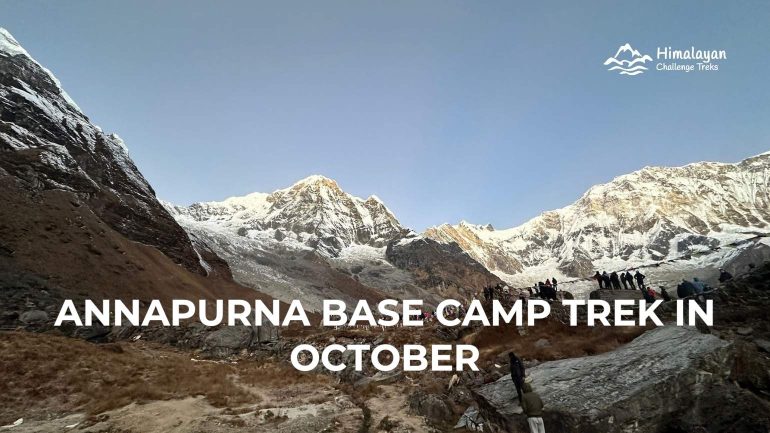
The Annapurna Base Camp Trek in October takes place just after the monsoon, when the Annapurna region usually has clearer skies and drier trail conditions. The route passes through green hills, rhododendron forests, traditional villages, and the Annapurna Sanctuary before reaching Annapurna Base Camp at 4,130 meters. For many trekkers, this is the most appealing time to experience the route because the mountains are usually clearly visible and the walking conditions are comfortable.
October is also the busiest part of the Annapurna trekking season. You will meet more trekkers along the trail, and popular teahouses can fill quickly. Even so, the combination of good weather, clear mountain views, and manageable trail conditions makes October one of the best times for the Annapurna Base Camp Trek.
Is October a Good Time for Annapurna Base Camp Trek?
Yes, October is one of the best times to trek to Annapurna Base Camp. The monsoon has usually cleared, so the trail is generally drier, and the skies are clearer than they are during the summer months. This gives you a better chance of enjoying uninterrupted views of Annapurna I, Machhapuchhre, Annapurna South, and the surrounding peaks.
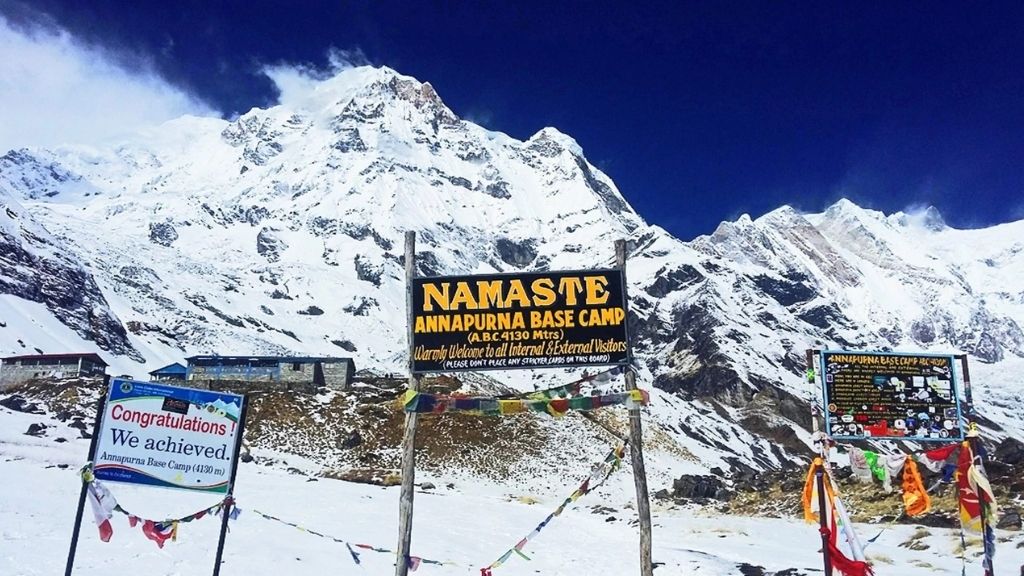
October also offers comfortable conditions for most of the walking days. The main drawback is that many other trekkers choose the same month, so the route and teahouses can be busy. If you prefer reliable weather and mountain views over solitude, October is a strong choice. If you want a quieter trail, November can be worth considering.
Why Is October One of the Best Months for ABC Trek?
The main advantage of October is the combination of relatively stable weather and good visibility. By the middle of the month, the effects of the monsoon have usually faded, leaving clear skies and dry trails. This makes October trekking in Nepal particularly popular, especially on routes such as Annapurna Base Camp.
The clear conditions also make a difference to the mountain views. On a good day, you can see the surrounding peaks more clearly from different points along the trail, with the best views coming as you enter the Annapurna Sanctuary.
What Makes October Different From Other Trekking Months?
October falls between the wetter monsoon season and the colder winter months, which gives it a useful balance for trekking. September can still have some rain early in the month, while November is generally colder even though the weather remains favorable. Winter brings colder nights and a greater possibility of snow at higher elevations.
Spring is another popular period for the ABC Trek, especially when the rhododendron forests are in bloom. However, October is particularly attractive if your priority is clear mountain scenery and generally dry trail conditions.
How Crowded Is Annapurna Base Camp in October?
October is peak trekking season, so you can expect more trekkers. Popular overnight stops generally have higher demand for teahouse rooms. The trail can also see more domestic trekkers, especially around the Dashain and Tihar holidays, when many people in Nepal travel and take time off for trekking and holidays.
The trail itself does not become impossible to walk, but accommodation at higher altitude stops has limited capacity. If you are trekking independently, plan your overnight stops in advance for more peace of mind. You can also start your walking days early so you can avoid some of the busiest periods on the trail.
If you want October’s favorable conditions without as many people, early November can be a reasonable alternative, although the exact crowd levels depend on the holiday calendar and trekking conditions that year.
What Is the Weather Like on the ABC Trek in October?
The Annapurna Base Camp weather in October is generally dry and stable, especially after the first part of the month. The monsoon has largely withdrawn, so rainfall becomes much less common, and mountain visibility usually improves.

Similarly, the temperature on the Annapurna Base Camp trail changes considerably with altitude. Lower parts of the route can still feel warm during the day, while temperatures around Deurali and the base camps are much colder, particularly after sunset.
| Location | Day temperature | Night temperature | Typical conditions |
|---|---|---|---|
| Pokhara (820m) | 22-28°C | 14-18°C | Warm, with some humidity early in October |
| Ghandruk (1,940m) | 15-20°C | 6-10°C | Clear mornings with occasional mist |
| Chhomrong (2,170m) | 14-19°C | 5-9°C | Generally comfortable for walking |
| Deurali (3,230m) | 8-14°C | 0-4°C | Cold mornings and strong midday sun |
| Machhapuchhre Base Camp (3,700m) | 5-10°C | -2 to -5°C | Colder evenings with increasing wind |
| Annapurna Base Camp (4,130m) | 5-10°C | -5 to -8°C | Very cold after sunset |
Note: These temperatures are for planning purposes. Conditions can vary from day to day, especially at higher elevations, so pack layers for colder weather.
Will There Be Snow at Annapurna Base Camp in October?
Snow is possible at Annapurna Base Camp in October, particularly later in the month, but it is not something you should expect every day. A fresh snowfall can make the trail colder and more slippery, so warm layers and suitable footwear are important.
Does It Rain on the Annapurna Base Camp Trek in October?
Rain is much less common in October than during the monsoon months. The first part of the month can still bring an occasional shower, but conditions generally become drier as October progresses.
It is still worth carrying a waterproof jacket because weather in the mountains can change quickly. A dry forecast does not mean you can leave your rain gear at home.
What Should You Do if the Weather Turns Bad?
Weather can change quickly as you gain altitude. If clouds build up, visibility drops, or strong winds develop, your guide can assess the conditions and decide whether you should wait, slow down, or descend to a lower elevation.
The Annapurna Base Camp Trek difficulty does not come only from the distance you walk. Steep sections, altitude, cold temperatures, and changing weather can all make the trek more demanding. If conditions become unsafe, adjusting your pace or itinerary is better than pushing ahead simply to stay on schedule.

Early, Mid, and Late October: Which Is Better?
There is no single best week for everyone, but the first week of October is often a good choice if you want a balance of clear weather and fewer crowds, while the middle of the month is better if you want to experience Dashain and do not mind busier trails. By the last week, the weather is generally cooler and clearer, but temperatures at Annapurna Base Camp can drop further at night.
Annapurna Base Camp Trek in Early October
Early October can still see some leftover effects of the monsoon, particularly in the first few days. You may encounter occasional afternoon clouds or light rain at lower elevations, but conditions generally improve as the month progresses.
Crowds are usually lighter than later in October, which can make it easier to find accommodation at popular stops. If your priority is a quieter trail while still trekking during the main autumn season, the first week of October is a good option.
Annapurna Base Camp Trek in Mid-October
Mid-October is often considered the sweet spot for the ABC Trek because the monsoon is usually well behind you and the weather tends to be stable. Clear skies provide good mountain views, while daytime temperatures remain manageable for trekking.
This period can also overlap with Dashain, Nepal’s biggest festival, bringing more domestic travel and trekkers to popular routes. Teahouses and trails can therefore be particularly busy. If you want to experience Nepal during Dashain, the extra activity can be part of the experience. Otherwise, early October may be more comfortable if you prefer fewer people.
Annapurna Base Camp Trek in Late October
Late October usually brings cooler temperatures and crisp, clear conditions. Rain is unlikely, and the mountain views can be excellent, making this a good period for trekkers who prioritize stable weather. Higher elevations will feel noticeably colder, especially at night, so you’ll need adequate warm layers. Crowds can also start to ease toward the end of the month, although October remains a peak trekking period overall.
For most trekkers, the first or second week of October offers the best balance of weather, temperatures, and crowds. Choose the first week for a quieter experience, or mid-October if you want the most established autumn conditions and do not mind the Dashain crowds.
What Does the Annapurna Base Camp Trail Look Like in October?
The Annapurna Base Camp trail in October is usually greener at the lower elevations and drier than it was during the monsoon. As the route climbs through forests, villages, and the Annapurna Sanctuary, the landscape gradually changes from lush hills to rocky mountain terrain. Clearer skies also mean you can often see the surrounding peaks more clearly.
After the monsoon, most of the heavy rain has passed, so the trail is generally firmer and less muddy. Some wet or slippery sections can still remain, especially after rainfall and in forested areas where the ground takes longer to dry. Sections around Bamboo, Himalaya, and Deurali can still feel damp in places.
You should still expect uneven paths, stone steps, rocky sections, and steep climbs. Good trekking shoes with reliable grip are useful, particularly if the trail is wet. Overall, October offers more favorable trail conditions than the monsoon months, although conditions can still change after rain.
What Can You Expect From Teahouses in October?
Teahouses are fully operating during October, but they also receive some of their highest demand of the year. You can generally expect meals, shared dining areas, charging facilities, and hot showers where available. Facilities become more basic at higher elevations, so comfort levels can vary between villages.
Since October is peak season, popular stops can fill up quickly. To book teahouses during peak season in October, you can arrange accommodation through your trekking agency or guide, who can contact the teahouses and secure rooms ahead of time.
Independent trekkers can also contact teahouses directly or arrange their next night’s stay through their current teahouse. It’s better to plan ahead rather than rely on finding a room after arriving late in the afternoon during the busiest weeks.
Is the ABC Trek Difficult in October, and Is It Suitable for Beginners?
The ABC Trek is moderately difficult in October. The route still involves long walking days, steep stone steps, and steady altitude gain up to 4,130 meters, so October does not remove the physical challenge. What makes this month easier is the generally dry and stable weather. With less rain and fewer muddy or slippery sections, you can usually walk more comfortably than during the monsoon months.

The higher sections still require more effort, particularly around Deurali, Machhapuchhre Base Camp, and the final climb to Annapurna Base Camp. Temperatures also drop considerably at altitude, and the effects of gaining elevation can make the later days feel harder even when the weather is good. A steady pace and proper acclimatization are therefore still important.
Is the ABC Trek Suitable for Beginners in October?
Yes, October is the best time for a reasonably fit beginner to attempt the ABC Trek. The favorable trail and weather conditions make the route more manageable, and you do not need technical climbing experience. However, you should be prepared for several hours of walking each day and repeated uphill and downhill sections.
Beginners should also take altitude seriously. Annapurna Base Camp reaches 4,130 meters, so the risk of altitude sickness remains even in October. Take your time as you gain elevation. Pay attention to symptoms such as headache, dizziness, or nausea, and tell your guide if you feel unwell rather than trying to push through.
Altitude Sickness on ABC Trek, What You Need to Know
October’s clear and stable weather can make the Annapurna Base Camp Trek feel easier, but it does not remove the risk of altitude sickness. The trek reaches 4,130 meters at Annapurna Base Camp, and altitude-related symptoms can occur as you climb above around 2,500 meters. Your risk depends more on how quickly you gain altitude and how well your body adjusts than on whether you trek in October or another month.
You may notice symptoms such as headache, nausea, dizziness, unusual tiredness, or loss of appetite as you gain elevation. Do not assume a headache is simply from a long walking day, especially after reaching higher sections such as Deurali, Machhapuchhre Base Camp, or ABC. If symptoms are mild, stop ascending and allow your body time to adjust. If they worsen or don’t improve, descend and seek medical help.
Note: Serious altitude sickness such as HACE and HAPE is rare on the ABC trek, but it can still happen if you ignore symptoms for too long.
Annapurna Base Camp Trek Cost in October
For a solo trekker, a guided ABC Trek costs generally around $1,000 to $1,600 or more, depending on trek duration, group size, services included, and level of comfort. At HC Treks, we offer three Annapurna Base Camp packages. The prices below are solo rates, and we also provide group discounts, so the per-person cost can be lower when you trek with others:
- Short Annapurna Base Camp Trek: 5 days, from $1,400 $1,195 per person
- Standard Annapurna Base Camp Trek: 7 days, from $1,600 $1,390 per person
- Annapurna Base Camp Trek via Poon Hill: 11 days, from $1,800 $1,630 per person
The final price can vary depending on availability and the services included in your selected package. If you are traveling with a group, contact us for the applicable group rate.

Is ABC Trek More Expensive in October?
Yes, it can be. October is peak season for trekking in the Annapurna region, so demand for teahouses, transportation, and other services is higher. However, traveling in October does not automatically mean your trekking package will cost more. The total price mainly depends on your itinerary, group size, and the services included.
What Additional Expenses Should You Budget For?
Even when your main trekking costs are covered, you should keep some extra money for personal expenses. At HC Treks, we don’t include the following expenses in the package:
- International flights
- Nepal visa fee
- Kathmandu and Pokhara accommodation and meals
- Snacks, drinks, Wi-Fi, hot showers, and battery charging
- Travel insurance
- Guide and porter tips
- Extra porter services
- Personal trekking gear and clothing
- Excess baggage charges
How to Prepare for Annapurna Base Camp Trek in October?
Trekking to Annapurna Base Camp in October requires a little more planning because it is one of the busiest trekking months in Nepal. You’ll need to arrange your accommodation, transport, permits, and other essentials ahead of time, while also packing for the temperature changes along the route.
Whether you trek independently or with an agency, planning early can make the experience much smoother.
Step 1: Prepare for Peak-Season Crowds
October is peak trekking season, so arrange your trek and accommodation early.
- With an agency: Book ahead so your guide, porter, transport, and accommodation are arranged before you arrive.
- Independently: Plan your overnight stops and book teahouses in advance, especially around busy festival dates.
- Expect more trekkers and domestic travelers around Dashain and Tihar.
Step 2: Get Your Permits and Documents Ready
Arrange the required trekking permits before heading into the Annapurna region. Keep your passport, travel insurance details, permits, and emergency contacts easily accessible. If you are trekking with an agency, confirm the required permits and documents before arrival.
Step 3: Train for October’s Trekking Conditions
October’s dry trails can make walking easier than during the monsoon, but the route still has steep stone steps, long walking days, and significant altitude gain.
- Start regular walking, stair climbing, and strength training several weeks before the trek.
- Include longer hikes to get used to walking for several hours.
- Practice walking uphill and downhill, not just flat-ground cardio.
Step 4: Prepare for Altitude and Cold
The weather may be pleasant at lower elevations, but temperatures drop sharply as you approach Annapurna Base Camp at 4,130 meters.
- Ascend steadily and follow your planned itinerary.
- Learn the symptoms of altitude sickness before the trek.
- Stay hydrated and eat regular meals.
- Be prepared for very cold nights at MBC and ABC.
Your detailed clothing and equipment needs are covered in the What to Pack for Annapurna Base Camp Trek in October section just below.
Step 5: Plan for Limited Services at Higher Elevations
Exchange enough Nepalese Rupees in Kathmandu for personal expenses, as payment options become limited higher on the trail. For our packages, NPR 1,500-3,000 per day is a reasonable budget for showers, Wi-Fi, charging, snacks, drinks, and other small expenses. Independent trekkers should budget around NPR 4,000-6,000 per day to cover food and accommodation as well.
You may also bring a power bank to charge your phone, and a local SIM can help with communication where mobile coverage is available. Finally, check your embassy or consulate’s travel guidance before leaving and share your itinerary with someone at home.
What to Pack for Annapurna Base Camp Trek in October?
The biggest packing challenge for the Annapurna Base Camp Trek in October is the large temperature swings as you gain altitude. Pokhara can still feel warm during the day, while nights at Annapurna Base Camp can drop below freezing. Instead of carrying lots of heavy clothes, pack light layers that you can add or remove as the temperature changes.
Warm nighttime gear is especially important at higher elevations. You should also be ready for strong sun, cool winds, and occasional rain, as mountain weather can change quickly.
Clothing
- Moisture-wicking base layers for your upper and lower body
- Fleece or light down jacket for warmth
- Waterproof and windproof outer jacket
- Comfortable trekking trousers
- Warm hat, gloves, and buff or neck gaiter
Sleeping and footwear
- Warm sleeping bag suitable for temperatures around -10°C
- Broken-in waterproof trekking boots with good grip
- Lightweight camp shoes or sandals for evenings
Sun and weather protection
- High-SPF sunscreen and lip balm
- UV-protective sunglasses
- Headlamp with spare batteries
- Small waterproof cover or dry bags to protect important items
Health and first aid
- Basic first-aid kit and blister plasters
- Water purification tablets or another suitable water treatment method
- Personal medicines
- Diamox only if recommended or prescribed by your doctor before the trek
Pros and Cons of Annapurna Base Camp Trek in October
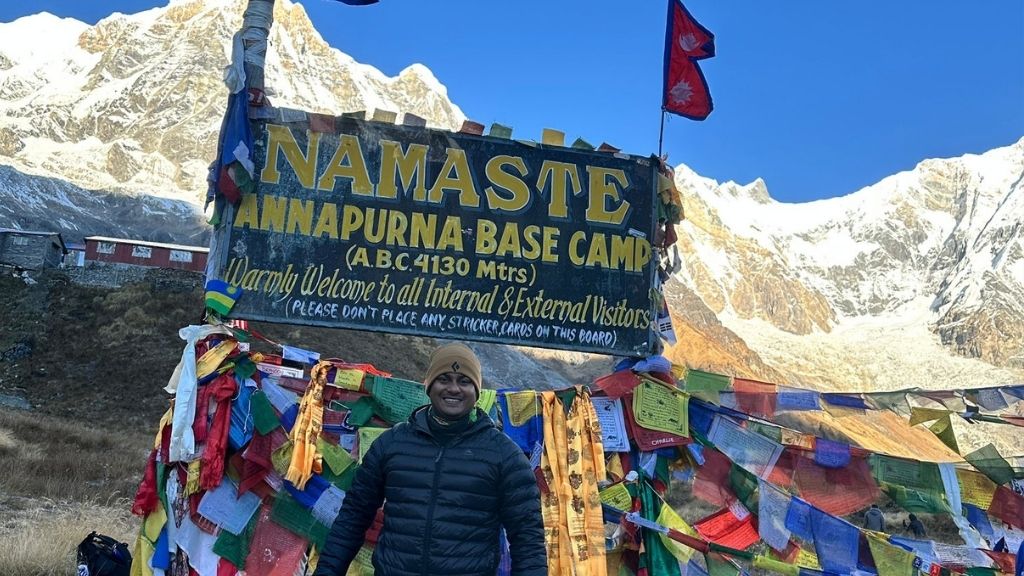
October is one of the most popular months for the Annapurna Base Camp Trek because of its generally dry weather and clear mountain views. However, those same conditions attract many trekkers, so crowds and limited accommodation are part of the experience.
| Pros | Cons |
|---|---|
| Clear mountain views and generally stable weather | Peak-season crowds on the trail |
| Mostly dry and comfortable trail conditions | Teahouses can fill up quickly |
| Comfortable daytime temperatures at lower and mid elevations | Higher demand can mean higher local prices |
| Teahouses are fully operating with regular services | Cold nights at higher elevations |
| Good conditions for first-time trekkers | Less solitude than quieter months |
| Chance to experience Dashain and Tihar | Popular stops can feel busy during festival periods |
October is a good choice if clear mountain views and reliable trekking conditions are your priorities. If you prefer fewer people, lower costs, and a quieter trail, another month may suit you better.

Annapurna Base Camp in October vs Other Months
October falls within the main Annapurna trekking season, but each month offers a different experience. November is generally cooler and quieter, while spring brings warmer conditions and rhododendron blooms. Winter is much colder at ABC, and the monsoon months bring more rain and less reliable mountain views.
| Month/Season | Weather & Views | Crowds | Main Advantage | Main Drawback |
|---|---|---|---|---|
| October | Dry, clear, stable | High | Best balance of weather and views | Crowded and colder at altitude |
| November | Dry and clear, increasingly cold | Moderate | Clear views with fewer trekkers | Colder nights |
| March-May | Mild, generally clear | Moderate to high | Rhododendron blooms | More afternoon cloud and variable weather |
| December-February | Cold, possible snow | Low | Quiet trails | Very cold nights and possible snow |
| June-September | Wet, cloudy, lush | Low | Green landscapes and fewer trekkers | Rain, leeches, and less reliable views |
Overall: Choose October for the best chance of clear mountain views and dry trails. Choose November for a quieter alternative, spring for flowers, winter for solitude, or monsoon for lush landscapes if you are prepared for wet conditions.
Conclusion
October earns its reputation as one of the best months for the Annapurna Base Camp Trek because of its dry trails, low rain risk, and clear views of Annapurna I, Machhapuchhre, and the surrounding peaks. The main trade-offs are the peak-season crowds, higher demand for teahouse rooms, and much colder conditions as you gain altitude.
If you plan to trek in October, book your trek and accommodation early, budget for peak-season expenses, and pack for the large temperature change between the lower elevations and ABC. Check the latest trail conditions before you travel, and give yourself enough time to adjust to the altitude along the way.
October is almost here. Book your Annapurna Base Camp Trek now to secure your preferred dates and avoid peak-season availability issues!