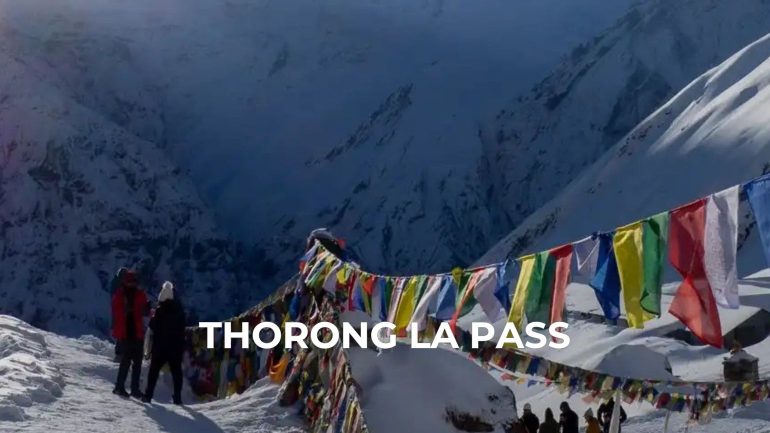
Thorong La Pass is the highest point on the Annapurna Circuit, and the moment many trekkers look forward to most. Standing at 5,416 meters (17,769 feet) between the Manang Valley and the Mustang region, it marks the transition from lush mountain valleys to the dry, windswept landscapes beyond.
Reaching the pass is a true test of endurance, as it lies around 50 meters higher than Everest Base Camp. The trail itself is non-technical, but the thin air makes every step challenging. You need to start before sunrise and cross from Manang to Muktinath, relying on proper acclimatization rather than speed to reach the top safely.
Quick Facts About Thorong La Pass
- Elevation: 5,416 meters (17,769 feet)
- Location: Between Manang and Mustang on the Annapurna Circuit
- Crossing Direction: East to west (Manang to Muktinath)
- Crossing time: 7-9 hours, starting between 3 AM and 5 AM
- Best seasons: Spring (March to May) and autumn (September to November)
Where Is Thorong La Pass Located?
Thorong La Pass sits in central Nepal on the northern side of the Annapurna massif, connecting the Manang Valley with the Mustang region. It marks the transition between two very different Himalayan landscapes. You start from the eastern side through alpine meadows, glacial valleys, and traditional villages influenced by Tibetan Buddhist culture.
After crossing the pass, the scenery changes quickly to the dry, windswept landscapes of Mustang. The route is designed for gradual acclimatization, with overnight stops that help your body adjust to the increasing altitude before the final ascent.
Distance From Major Trekking Stops
The final approach to Thorong La is spread over several days rather than one long climb. While the daily distances are relatively short, the increasing altitude makes each stage more demanding.
| Route | Distance | Walking Time | Notes |
|---|---|---|---|
| Manang to Yak Kharka | 8 km | 3-4 hours | A gradual climb that begins the final acclimatization phase before the pass. |
| Yak Kharka to Thorong Phedi | 6 km | 3-4 hours | A steady ascent through increasingly exposed terrain. |
| Thorong Phedi to High Camp | 1 km | 1-1.5 hours | An optional climb for trekkers choosing to spend the night at High Camp before crossing. |
| Thorong Phedi/High Camp to Thorong La Pass | 6-8 km | 4-5 hours | The longest and most demanding day of the trek usually starts between 3 AM and 5 AM. |
| Thorong La Pass to Muktinath | 8 km | 3-4 hours | A long, steep descent into the Mustang region after reaching the summit. |
The distances may seem short, but high altitude makes every kilometer more demanding. Walking slowly and allowing time to acclimatize is far more important than covering distance quickly.


Current Road Connectivity & Impact on the Trail
Although motor roads now reach much of the Annapurna Circuit, they don’t eliminate the Thorong La Pass crossing itself. Most trekkers still complete the final approach on foot, following the traditional trail from Manang through Yak Kharka, Thorong Phedi, and over the pass to Muktinath. The road mainly affects the lower sections of the circuit, allowing trekkers to shorten the itinerary by driving to villages like Chame or Manang before beginning the high-altitude trek.
How Motor Roads Have Changed the Thorong La Approach?
Road access has made the Annapurna Circuit more flexible, but it also comes with trade-offs. Many trekkers now take a jeep to Chame or Manang to save several days of walking. While this reduces trekking time, it also means gaining altitude more quickly, which can increase the risk of acute mountain sickness (AMS) if you don’t allow enough time to acclimatize.
If your main goal is crossing Thorong La safely, spend at least one acclimatization day in Manang and follow the standard trekking itinerary from there. Even if you use a jeep on the lower sections, avoid rushing from Manang to the pass in just a day or two. A slower ascent gives your body time to adjust and improves your chances of a safe, enjoyable crossing.
Why is Thorong La Pass Considered One of the World’s Greatest Trekking Passes?
For many trekkers, standing at Thorong La Pass beneath the fluttering prayer flags is the defining moment of the Annapurna Circuit. Reaching 5,416 meters after days of gradual climbing brings a genuine sense of achievement, and standing beneath the colorful prayer flags at the summit is a milestone many remember long after the trek ends.
The scenery also changes dramatically along the way. You leave behind the green valleys and traditional villages of Manang, climb through a stark alpine landscape of rock, snow, and ice, then descend into the dry, desert-like terrain of Mustang. Few treks offer such a dramatic change in landscapes over such a short distance.
Unlike many high Himalayan passes, Thorong La requires no technical climbing. With good fitness, proper acclimatization, and favorable weather, most trekkers can safely complete the crossing, making it one of the world’s most accessible high-altitude trekking passes.
How Challenging Is the Thorong La Pass Crossing?
Thorong La is physically demanding, but not because of technical climbing. The trail itself is straightforward, with no ropes or mountaineering experience required. What makes the crossing difficult is the combination of high altitude, long hours of walking, and rapidly changing mountain weather.
Can Beginners Cross Thorong La Pass?
Yes, many first-time trekkers successfully cross Thorong La Pass every year. You don’t need previous high-altitude trekking experience, but you should have a good level of fitness and allow enough time for acclimatization. Following the standard Annapurna Circuit itinerary, walking at a steady pace, and listening to your guide greatly improve your chances of a safe and enjoyable crossing.
Why Altitude Is the Biggest Challenge?
At 5,416 meters (17,769 feet), the oxygen level is much lower than at sea level, making even gentle uphill sections feel exhausting. Headaches, shortness of breath, and fatigue are common if you ascend too quickly. That’s why the Annapurna Circuit includes gradual elevation gains and acclimatization stops before reaching the pass. Good preparation and patience are far more important than speed or endurance.
What Is Summit Day Like?
Most trekkers begin the final ascent between 3 AM and 5 AM to reach the pass before strong late-morning winds and changing weather develop. Depending on whether you stay at Thorong Phedi or High Camp, the climb to the summit usually takes 4 to 6 hours, followed by a long, steep descent to Muktinath.
Conditions can change quickly at this altitude. Temperatures before sunrise are often well below freezing, while snow and ice can make parts of the trail slippery. Trekking poles provide extra stability on the descent, and microspikes can be useful when icy conditions develop, especially during colder months or after fresh snowfall.
Hydration is another challenge that’s easy to overlook. Water bottles and hydration hoses can freeze in the early morning cold, so many trekkers carry insulated bottles or keep their water inside their backpacks to prevent freezing.
The Tactical Dilemma: Sleep at Thorong Phedi (4,450 m) or Thorong High Camp (4,880 m)?
One of the biggest decisions before crossing Thorong La is where to spend your final night. Most trekkers stay either at Thorong Phedi (4,450 m), the last main settlement before the pass, or continue another hour uphill to Thorong High Camp (4,880 m). Both options are common, but each comes with different advantages and trade-offs.
Staying at Thorong Phedi: Better Sleep Quality & Lower Risk of AMS
Thorong Phedi is the preferred choice for many guides because you’ll sleep at a lower altitude, giving your body a better chance to recover before summit day. Although you’ll have a longer climb the following morning, the lower sleeping elevation generally improves sleep quality and may reduce the risk of developing more serious altitude-related symptoms.
Staying at High Camp: Saving 430 Vertical Meters on Crossing Day vs. Freezing Temperatures
High Camp reduces the amount of climbing on summit day, making the morning ascent shorter. However, sleeping nearly 430 meters higher often means colder temperatures, thinner air, and a greater chance of poor sleep or altitude-related discomfort. During peak trekking seasons, High Camp can also become crowded, making it harder to find a quiet room.
Many experienced guides recommend staying at High Camp only if you’re well acclimatized and feeling strong after reaching Thorong Phedi. Otherwise, spending the night lower and starting earlier is often the safer option.


How to Prepare Yourself for Crossing Thorong La Pass?
Crossing Thorong La Pass isn’t about being the fastest trekker on the trail. It’s about giving your body enough time to adjust to the altitude, staying well prepared, and making smart decisions along the way. A little preparation before and during the trek can make the crossing safer, more comfortable, and far more enjoyable.
Here are the most important things to keep in mind before summit day:
- Prioritize acclimatization. Spend a rest day in Manang and follow the standard itinerary. Avoid skipping overnight stops or taking jeeps that shorten the trek, as gaining altitude too quickly increases the risk of Acute Mountain Sickness (AMS).
- Build your fitness before the trek. You don’t need mountaineering experience, but you should be comfortable walking for several hours over consecutive days. Hiking, stair climbing, running, and cycling are all good ways to improve your endurance before the trip.
- Stay hydrated and eat well. High altitude can increase fluid loss, so drink water regularly even if you don’t feel thirsty. Eating enough carbohydrates also helps maintain your energy during long trekking days.
- Pack for changing mountain conditions. Temperatures before sunrise can be well below freezing, while the afternoon may feel much warmer. Dress in layers and carry essentials like warm gloves, a hat, a waterproof jacket, and a headlamp. Trekking poles make the long descent easier on your knees, and microspikes can be helpful if the trail is icy.
- Protect your water from freezing. Cold morning temperatures can freeze water bottles and hydration hoses. Carry your water in an insulated bottle or thermos, or keep it inside your backpack to prevent it from freezing.
- Start early and walk at your own pace. Most trekkers leave between 3 AM and 5 AM to reach the pass before strong late-morning winds. Walk slowly, take regular breaks, and remember that maintaining a steady pace is more important than hiking quickly.
- Listen to your guide. Never continue climbing if your symptoms are getting worse.
Best Time to Cross Thorong La Pass
The best time to cross Thorong La Pass is during spring (March to May) and autumn (September to November), when weather conditions are generally stable, and mountain views are at their best. Winter and monsoon crossings are possible but require greater flexibility due to more challenging weather.
Spring (March to May)
Stable weather, comfortable temperatures, and blooming rhododendron forests make spring one of the best seasons to cross Thorong La Pass. Afternoon haze can occasionally reduce distant mountain views, but conditions are generally excellent.
Autumn (September to November)
Autumn is the most popular season thanks to its clear skies, dry trails, and exceptional visibility. Stable weather makes it ideal for crossing the pass, although trails and teahouses are busier than in other seasons.
Winter (December to February)
Winter crossings are possible but require extra preparation. Heavy snowfall and freezing temperatures can temporarily close the pass, so it’s important to stay flexible and check current trail conditions.
Monsoon (June to August)
Monsoon is generally the least favorable season due to rain, muddy trails, poor visibility, and a higher risk of landslides on the lower sections of the Annapurna Circuit.
Why Do Trekkers Start Before Sunrise? (The 10:00 AM Rule)
Most trekking groups leave Thorong Phedi or High Camp between 3 AM and 5 AM. The goal is to reach the summit and begin the descent before 10 AM, when strong winds commonly develop across the pass. An early start also provides extra time to complete the long descent to Muktinath before afternoon weather becomes less predictable.
Weather and Temperature Throughout the Year
| Season | Daytime Temperature (Pass) | Night Temperature (Phedi/High Camp) | Typical Conditions |
|---|---|---|---|
| Spring (March-May) | -5°C to 5°C | -15°C to -5°C | Stable weather, clear mornings, occasional afternoon cloud |
| Summer/Monsoon (June-August) | 0°C to 8°C | -10°C to 0°C | Rain, poor visibility, muddy trails, and higher landslide risk |
| Autumn (September-November) | -8°C to 3°C | -20°C to -10°C | Clearest skies, driest trails, busiest trekking season |
| Winter (December-February) | -15°C to -3°C | -25°C to -15°C | Very cold, snow, and possible pass closures |
Common Myths About Thorong La Pass Crossing
Thorong La Pass has a reputation as one of the toughest trekking passes in the Annapurna region and the Himalayas, but not everything you hear is true. Here are some common myths and the facts behind them.
| Myth | Reality |
|---|---|
| You need to be an elite athlete. | Most trekkers with a reasonable level of fitness can cross Thorong La successfully. Proper acclimatization, a steady pace, and following the itinerary are far more important than being exceptionally fit. |
| Altitude sickness only affects unfit trekkers. | Anyone can develop altitude sickness, regardless of age or fitness. In fact, experienced or very fit trekkers sometimes ascend too quickly because they feel strong, increasing their risk. |
| Trekking poles are optional. | Trekking poles make the long, steep descent to Muktinath much easier by improving balance and reducing strain on your knees. |
| Thorong La requires climbing experience. | The route is a high-altitude trek, not a technical climb. Under normal conditions, no ropes or mountaineering skills are required. |
Thorong La Pass vs Other Famous Himalayan Passes
If you’re wondering how Thorong La compares to other famous trekking passes in Nepal, here’s a quick overview.
| Pass | Elevation | Trail Difficulty | Technical Climbing | Trek |
|---|---|---|---|---|
| Thorong La | 5,416 m | Moderate to challenging | No | Annapurna Circuit |
| Cho La | 5,420 m | Challenging | Some scrambling and occasional glacier crossing | Everest Three Passes |
| Kongma La | 5,535 m | Very challenging | Steep scree and some scrambling | Everest Three Passes |
| Renjo La | 5,360 m | Moderate | No | Everest Three Passes |
| Larkya La | 5,160 m | Challenging | No | Manaslu Circuit |
Thorong La is one of Nepal’s highest trekking passes, but it isn’t the most technical. Unlike Cho La and Kongma La, the route doesn’t require glacier crossings or scrambling under normal conditions. Instead, the main challenge comes from the high altitude, long summit day, and rapidly changing weather.
For most trekkers, Thorong La is demanding but achievable with good fitness, proper acclimatization, and a well-paced itinerary. That’s what makes it one of the most popular high-altitude passes in the Himalayas.
Conclusion
Thorong La Pass is more than just the highest point of the Annapurna Circuit. It’s the moment where days of steady climbing, careful acclimatization, and early mornings come together in one unforgettable crossing.
The pass doesn’t demand technical climbing skills, but it does reward preparation, patience, and respect for the altitude. Follow a well-paced itinerary, listen to your body, and give yourself enough time to acclimatize. Do that, and you’ll not only reach the colorful prayer flags at 5,416 meters, but you’ll experience one of the most rewarding trekking days in the Himalayas and a highlight of the Annapurna Circuit.