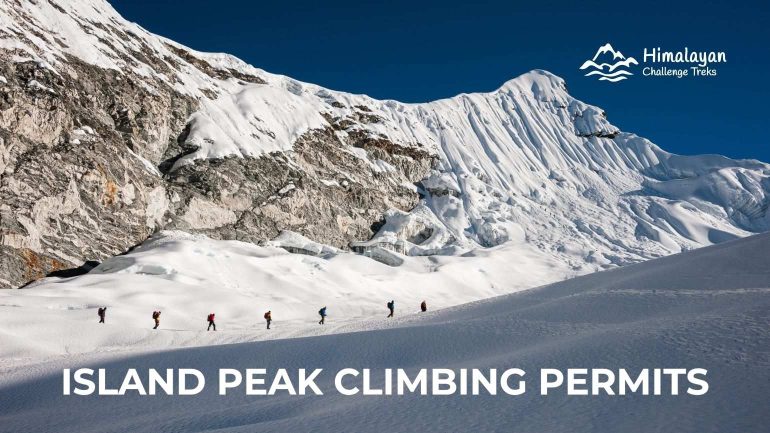
Attempting Island Peak (Imja Tse, 6,189 m) requires several mandatory government permits, with total permit costs ranging from USD 220 to USD 400 per person, depending on the season. The exact amount varies because the Nepal Mountaineering Association (NMA) charges different climbing permit fees for spring and the rest of the year, while regional entry fees remain fixed.
Foreign climbers cannot apply for permits for Island Peak Climbing independently. Under current NMA regulations, all permits must be arranged through a licensed Nepali trekking agency, which handles the application, payments, and permit collection before your expedition begins. Beyond permit fees, it’s also important to budget for additional climbing expenses such as guides and porters, insurance, equipment, and transportation.
Island Peak remains one of the most popular trekking peaks in Nepal, combining the classic Everest Base Camp trekking route with an exciting technical climb. Many adventurers choose an Island Peak Climbing with EBC package because it offers gradual acclimatization while taking care of permits, logistics, guides, and accommodation in a single itinerary.
Which Permits Are Mandatory for Island Peak Climbing?
To climb Island Peak (Imja Tse) legally, you’ll need several permits issued by different authorities. Since it’s a designated trekking peak within the Everest region, all climbing permits must be processed through a government-registered trekking agency.
You’ll need:
- Island Peak Climbing Permit: Issued by the Nepal Mountaineering Association (NMA).
- Sagarmatha National Park Entry Permit: Required to enter the national park.
- Khumbu Pasang Lhamu Rural Municipality Permit: Local permit for the Everest region.
- Refundable Garbage Deposit: An environmental deposit paid per expedition.
Each permit serves a different purpose, from granting climbing permission to supporting conservation and local infrastructure. The sections below explain the cost, purpose, and application process for each one.
Island Peak Climbing Permit
The Island Peak Climbing Permit is the primary permit required to summit Island Peak. Issued by the Nepal Mountaineering Association (NMA), it grants legal permission to climb one of Nepal’s designated trekking peaks.
Its fees vary by season. Spring is the most expensive due to ideal weather and high demand, while autumn offers similar climbing conditions at half the cost. Winter and monsoon remain cheaper because of more challenging weather and lower climber numbers.
| Season | Permit Fee (Per Person) | Climbing Conditions & Demand Context |
|---|---|---|
| Spring (March – May) | USD 350 | Peak Season / Highest Demand: Best weather, warmer summit temperatures, stable routes, and high climber traffic due to the Everest expedition season. |
| Autumn (Sept – Nov) | USD 175 | High Season / Moderate Demand: Clear skies, excellent visibility, and stable climbing conditions with colder temperatures than spring. |
| Winter (Dec – Feb) | USD 175 | Off-Peak / Low Demand: Cold temperatures, heavy snowfall, shorter days, and increased technical challenges reduce the number of climbers. |
| Summer/Monsoon (June – Aug) | USD 175 | Off-Peak / Low Demand: Heavy rainfall, poor visibility, flight disruptions, and unstable glacier conditions make climbing difficult. |
Validity: One month (climbing period above Base Camp). Extensions of up to two weeks are available at 25% of the original permit fee per additional week.
Where to get: Individual climbers cannot apply directly. A licensed trekking agency processes the application through the NMA and collects the permit in Kathmandu before your expedition begins.
Sagarmatha National Park Entry Permit
The Sagarmatha National Park Entry Permit is required for anyone entering Sagarmatha National Park, a UNESCO World Heritage Site where Island Peak is located. The permit helps fund conservation efforts, trail maintenance, wildlife protection, and park management.
| Category | Permit Fee |
|---|---|
| Foreign Nationals | NPR 3,000 (approx. USD 23) |
| SAARC Nationals | NPR 1,500 |
| Children under 10 | Free |
Validity: Valid for the duration of your stay within Sagarmatha National Park.
Where to get: Available at the Nepal Tourism Board office in Kathmandu or at the park entry checkpoint in Monjo.
Khumbu Pasang Lhamu Rural Municipality Permit
The Khumbu Pasang Lhamu Rural Municipality Permit is a local entry permit required for all trekkers and climbers visiting the Everest region. Revenue from the permit supports local infrastructure, including trails, suspension bridges, waste management, and emergency services.
| Category | Permit Fee |
|---|---|
| Foreign Nationals | NPR 3,000 |
| SAARC Nationals | NPR 2,000 |
Validity: Valid for your visit to the Khumbu Pasang Lhamu Rural Municipality.
Where to get: Issued at the Lukla entry gate or the Monjo checkpoint. It cannot be purchased in Kathmandu.
Refundable Garbage Deposit
The Refundable Garbage Deposit is an environmental security deposit required for every Island Peak expedition. It encourages responsible waste management by ensuring all non-biodegradable waste is brought back from the mountain.
| Deposit | Amount |
|---|---|
| Per expedition/team | USD 500 (Refundable) |
Validity: Applies to the entire expedition and is refunded after successful waste verification.
Where to get: Paid through your licensed trekking agency when applying for the Island Peak Climbing Permit with the Nepal Mountaineering Association (NMA).
Is a TIMS Card Required for Island Peak?
No, a TIMS (Trekkers’ Information Management System) Card is not required for Island Peak or any trek in the Everest region. The TIMS system has been replaced by the Khumbu Pasang Lhamu Rural Municipality Permit, which serves as the local entry permit for the region. If you’re climbing Island Peak, you only need the permits listed above.
If a trekking agency or outdated guidebook recommends purchasing both a TIMS Card and the Khumbu permit, the information is no longer current.

Official Documents Required for Island Peak Permit Approval
To process your permit package through the NMA and regional offices, your registered trekking operator must submit a complete set of verified documents along with the required bank deposit vouchers. Even minor errors in documentation or missing insurance details can result in immediate rejection at the NMA counter.
Mandatory Application Documents
- Passport Copy: Clear color scan of your passport bio page with at least 6 months of validity remaining.
- Passport-Sized Photos: Two recent digital passport-size photos for official records.
- Nepal Tourist Visa: Copy of the tourist visa stamp received upon arrival in Nepal.
- Personal Climbing Bio-Data Form: Form containing your personal details, emergency contact, and climbing history.
Mandatory Insurance Coverage Requirements (NMA Standard)
Your insurance certificate must clearly mention and provide the following minimum coverage amounts for all climbing members, including foreign climbers, local guides, and Sirdars:
- Accidental Insurance: Minimum coverage of NPR 2,000,000 (20 Lakhs).
- Medical Insurance: Minimum coverage of NPR 400,000 (4 Lakhs).
- Helicopter Rescue Insurance: Minimum coverage of USD 10,000.
Can You Apply for an Island Peak Permit Online Before Arriving in Nepal?
No, climbers cannot apply for an Island Peak climbing permit online by themselves. The NMA requires all permits to be processed through a licensed and registered trekking agency. However, you can start the process from home by coordinating with your chosen agency before your arrival in Nepal.
- Choose your trekking agency (Before Arrival): Select a licensed local agency (such as HC Treks) and share your passport copy, passport photos, and high-altitude insurance details online.
- Let your agency handle NMA Processing (1-2 Weeks Before Arrival): Your agency will submit your details to the NMA portal, complete the payment process, and arrange your climbing permit in advance.
- Complete final verification in Kathmandu (Day of Arrival): Once you arrive, your agency will take care of the final document verification at the NMA office and collect your climbing documents.
- Complete checkpoint procedures (During the trek): As you trek from Lukla toward Island Peak, your guide will assist with the required checkpoint formalities and arrange local entry permits at designated points.
How Long Does It Take to Obtain Island Peak Permits?
Once your agency receives your passport copy, visa copy, and travel insurance details, it takes 1 to 2 business days to process and issue the NMA climbing permit in Kathmandu. The local Khumbu municipality and National Park entry permits are issued instantly at their respective trail checkpoints.
Island Peak Permit Cost vs Total Climbing Cost
The Island Peak climbing permit is an important part of your expedition budget, but it is only one piece of the total cost. The overall expense also includes guides, accommodation, meals, transportation, equipment, insurance, and other essential services.
A complete Island Peak expedition can vary significantly in price depending on whether you choose a budget package, shared services, or a more comfortable private arrangement. Understanding these additional costs helps you plan your budget more accurately before booking your climb.
Major Expenses Beyond the Permit Fee
| Expense | Estimated Cost Range | What It Covers / Financial Nuance |
|---|---|---|
| Permits & Government Fees (Total) | USD 225 – 400 | Includes NMA Climbing Permit, Khumbu local permit, and Sagarmatha National Park entry fee. |
| Guide Fees | USD 35 – 50/day | Covers a certified high-altitude climbing guide, including salary, insurance, food, and high camp support. |
| Porter Fees | USD 20 – 30/day | Covers carrying your main duffel bag (up to 20-25 kg) between teahouses along the route. |
| Accommodation | USD 10 – 20/night | Covers twin-sharing teahouse accommodation. Base camp tents are usually included in the agency package. |
| Meals and Hot Water | USD 30 – 50/day | Covers daily meals and hot drinking water, with costs increasing at higher elevations. |
| Climbing Equipment Rental | USD 100 – 200 | Includes technical gear such as a climbing harness, double mountaineering boots, crampons, an ice axe, an ascender (Jumar), and a helmet. |
| Mandatory Travel Insurance | USD 150 – 300 | Covers high-altitude emergency rescue, medical treatment, and helicopter evacuation up to 6,500m. |
Transportation Costs for Island Peak Climbing
Transportation is another major part of the expedition budget. Since most Island Peak climbs begin with a flight to Lukla, travelers should consider the cost of reaching the airport, flight fares, baggage charges, and local transfers.
The usual route involves an overland transfer from Kathmandu to Ramechhap Airport, followed by a short flight to Lukla. However, some climbers also choose a private helicopter option for more flexibility, although it comes at a much higher cost.
| Transportation Layer | Sharing Option | Private Option | Operational Details |
|---|---|---|---|
| Manthali Overland Transfer (Kathmandu to Ramechhap) | USD 20 – 30 (Shared tourist bus/van) | USD 120 – 150 (Private 4WD Jeep/Scorpio) | Usually departs Kathmandu around 1:00 AM – 2:00 AM to match early morning flight schedules. |
| Lukla Flight (One-Way) | USD 175 – 190 (From Ramechhap) | USD 215 – 240 (From Kathmandu) | Strict 15 kg baggage limit per passenger (10 kg duffel + 5 kg hand carry). |
| Private Helicopter Charter | — | USD 2,500 – 3,000 | A premium option for flexible transfers or emergency situations. |
| Excess Baggage Fee | USD 1 – 2/kg | N/A | Charged by airlines before boarding small fixed-wing aircraft. |
| Trail Porter (Daily) | USD 20 – 30/day | N/A | One shared porter can legally carry up to 20-25 kg split between two climbers. |
| High-Altitude Yak (Daily) | N/A | USD 30 – 40/day per animal | Used beyond Chhukung to transport base camp cargo, tents, and kitchen equipment. |
| City Hub Transfers | USD 3 – 5 (Local ride-share apps) | USD 10 – 20 (Private hotel/airport sedan) | Covers transfers between Kathmandu hotels and airport terminals. |
When combined, these expenses create the real cost of an Island Peak expedition. The permit fee may only account for a small portion of the total budget, while services like guides, transportation, equipment, and insurance play a much larger role in determining the final price. So, plan for the full cost beforehand. This will help you avoid unexpected expenses during the climb.
What Costs Are Included/Excluded in the Island Peak Permit?
At HC Treks, we clearly separate what is covered under the Island Peak permit from the additional expenses you need to plan for.
- Services included in the Permit Cost: Legal authorization to climb Island Peak within the approved period, required regional trail entry permissions, and official registration and rescue database records.
- Services not Included in the Permit Cost: Refundable USD 500 team garbage deposit, personal mountaineering equipment, high-altitude travel insurance, medical and helicopter rescue expenses, tips for your Sherpa crew, and satellite communication charges.
Hidden Costs Most Climbers Forget When Budgeting
Beyond the main expedition expenses, there are a few additional costs that many climbers overlook while planning their Island Peak budget.
- Device Charging & Wi-Fi: High-altitude teahouses often rely on solar power, so charging a phone or power bank can cost USD 2-7 per device. A regional 10GB Everest Link Wi-Fi card can cost up to USD 20.
- Hot Showers: Hot showers may be available for free at lower elevations, but teahouses above Namche Bazaar usually charge around USD 4-8 for gas-heated water buckets.
- Summit Tipping: Tipping your climbing Sherpa guide is a common tradition in Himalayan expeditions. For a successful or attempted summit climb, standard tips generally range from USD 150-250 per climber, paid directly to the climbing guide.

Marcus Thompson
Calgary, Alberta, Canada
“The Real Island Peak Experience with HC Treks”
Climbing Island Peak was the highlight of my trekking life and that’s saying something. I joined a small group organized by HC Treks, and we hit it off instantly. Everyone was driven but down-to-earth, and our guide managed to keep…
Common Permit Mistakes First-Time Climbers Should Avoid
Applying for an Island Peak permit is straightforward when you work with a licensed agency, but small mistakes can still cause unnecessary delays. Avoid these common issues to keep your expedition on schedule.
- Trying to apply independently: Island Peak permits cannot be obtained directly by individual climbers. Applications must be submitted through a licensed Nepali trekking agency.
- Buying the wrong insurance: Your policy must specifically cover mountaineering up to 6,200 m and include helicopter evacuation. Standard trekking insurance may not meet NMA requirements.
- Ignoring weekends and public holidays: NMA offices are closed on Saturdays and public holidays, which can delay permit processing. Submit your documents well in advance.
- Using an unregistered or different guide: Your permit is linked to an NMA-certified climbing guide. Changing guides without updating your permit can prevent your expedition from continuing.
- Carry only digital copies: Keep printed copies of your passport and insurance documents. Some checkpoints may require physical verification, and electronic devices can fail in cold mountain conditions.
Tips to Save Money Without Compromising Safety
Climbing Island Peak doesn’t have to mean cutting corners. With a few smart planning decisions, you can significantly reduce your overall expedition cost while still maintaining proper safety standards and a quality climbing experience.
- Climb during the autumn season: Choose September to November instead of spring to reduce your permit cost from USD 350 to USD 175. Autumn also offers stable weather and excellent visibility.
- Join a group expedition: Sharing a climb with other trekkers helps split costs for guides, porters, camp logistics, and the refundable USD 500 garbage deposit.
- Rent climbing gear in Chhukung: Rent specialized equipment such as crampons, mountaineering boots, harnesses, ice axes, and ascenders instead of buying them for a single expedition. Always inspect rental gear before use.
- Book directly with a local agency: Licensed Nepali trekking agencies typically offer the same guides and services as international operators at a more competitive price. Look for agencies registered with the NMA and TAAN.
- Bring a water purification system: Carry purification tablets, a water filter, or a UV purifier to avoid buying bottled water throughout the trek. It’s a cost-effective and environmentally friendly choice.
Plan Your Island Peak Climb with Confidence
Before attempting the climb, understanding the Island Peak climbing cost, permit requirements, acclimatization, and expedition logistics will help you plan a safer and more enjoyable Himalayan adventure in 2026. With the right planning, proper acclimatization, reliable guides, and the necessary permits in place, you can focus on enjoying both the trekking and climbing experience instead of worrying about paperwork or unexpected expenses.
At HC Treks, we handle the permits, logistics, and climbing support so you can prepare with confidence and make the most of your Island Peak adventure. Contact our team to start planning your 2026 expedition today.