Everest Three Passes Trek

Popular

5.0 (6)

17 Days Trip Days
$3345 $2925 Price From (1 Person)
Region Everest Region
Destination Nepal
Activity Treks in Nepal
Max. Altitude 5,545 m (Kala Patthar)
Group Size 9
Starting/Ending Point Kathmandu/Kathmandu
Grade Hard
Best Time To Go Spring (Mar-May) & Autumn (Sep-Nov)

Everest Three Passes Trek Overview

The 17-Day Everest Three Passes Trek is a challenging high-altitude journey through Nepal’s Everest region. This demanding circuit links the Thame, Gokyo, Khumbu, and Imja valleys, taking you well beyond the standard Everest Base Camp route. Most trekking days involve 4 to 9 hours of walking, with shorter acclimatization days. You will tackle steep ascents, rocky trails, glacial moraines, and three high mountain passes, making the trek best suited to experienced trekkers with strong fitness and good preparation for high-altitude trekking.

The route follows a clockwise itinerary, beginning in Lukla before heading through Namche Bazaar and the quieter Thame Valley. From Lungden, you cross Renjo La (5,360 m) to reach Gokyo, then continue toward Cho La (5,420 m) and Dzongla. The route joins the Everest Base Camp trail at Lobuche before taking you to Everest Base Camp (5,364 m) and Kala Patthar (5,545 m). You then return to Lobuche and cross Kongma La (5,535 m) before descending to Chhukung and Tengboche.

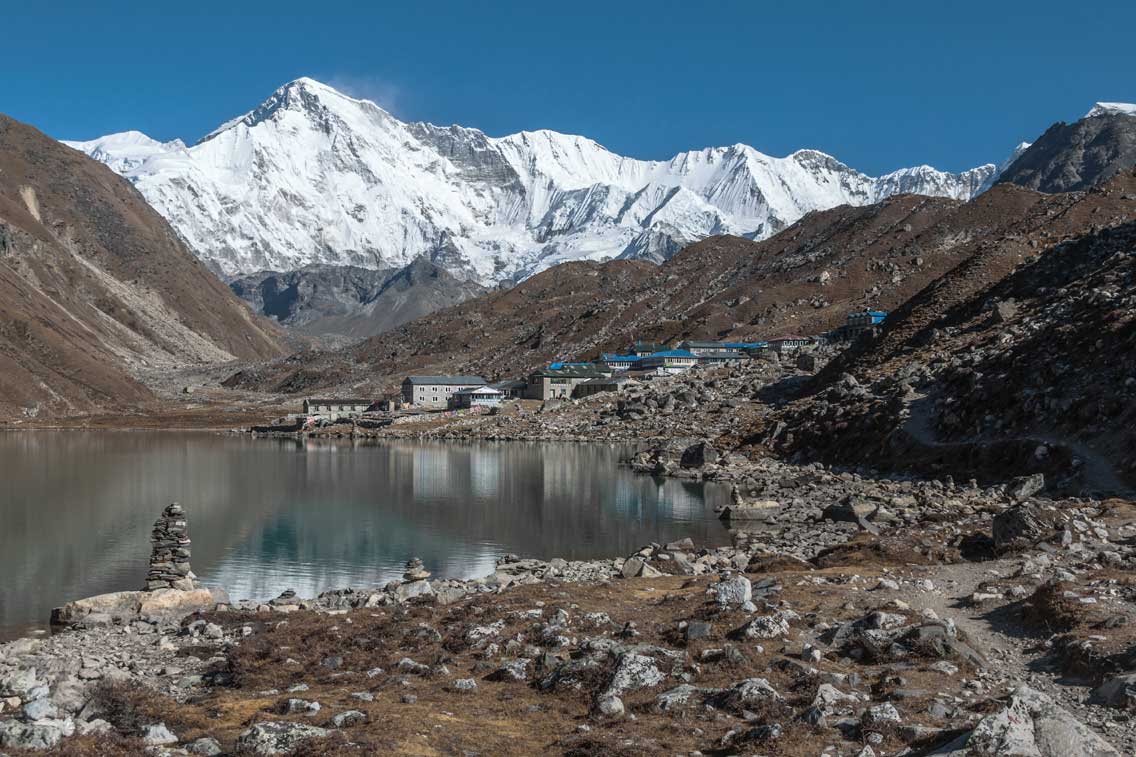
Along the way, you will experience some of the Everest region’s most spectacular mountain landscapes. The route includes Gokyo Lakes, Gokyo Ri (5,357 m), Everest Base Camp, and Kala Patthar, with sweeping views of Mount Everest, Lhotse, Makalu, Cho Oyu, Ama Dablam, and Nuptse. You will also pass through traditional Sherpa settlements including Namche Bazaar, Thame, Gokyo, Lobuche, and Chhukung, with opportunities to visit important Buddhist sites such as Thame Monastery and Tengboche Monastery.

Unlike a standard Everest Base Camp trek, the Three Passes route forms a complete high-altitude circuit through different valleys and landscapes. You experience a wider range of the Khumbu without simply retracing the same trail. The combination of three major pass crossings, Everest Base Camp, Gokyo Valley, and Sherpa culture makes it one of the most comprehensive and demanding trekking experiences in the Everest region.

Everest Three Passes Trek Highlights

  • Cross three iconic Himalayan passes, Kongma La (5,535 m), Cho La (5,420 m), and Renjo La (5,360 m), on one challenging high-altitude circuit.
  • Enjoy spectacular views of Mt. Everest (8,848.86 m) from Kala Patthar (5,545 m) and Gokyo Ri (5,357 m), along with Lhotse, Makalu, Cho Oyu, and other Himalayan peaks.
  • Stop at Hotel Everest View during your acclimatization day for panoramic views of Everest, Ama Dablam, Lhotse, and the surrounding peaks.
  • Visit Tengboche Monastery, one of the most important Buddhist monasteries in the Everest region.
  • Trek through rugged glacial landscapes around the Khumbu Glacier and Ngozumpa Glacier with dramatic mountain scenery throughout.
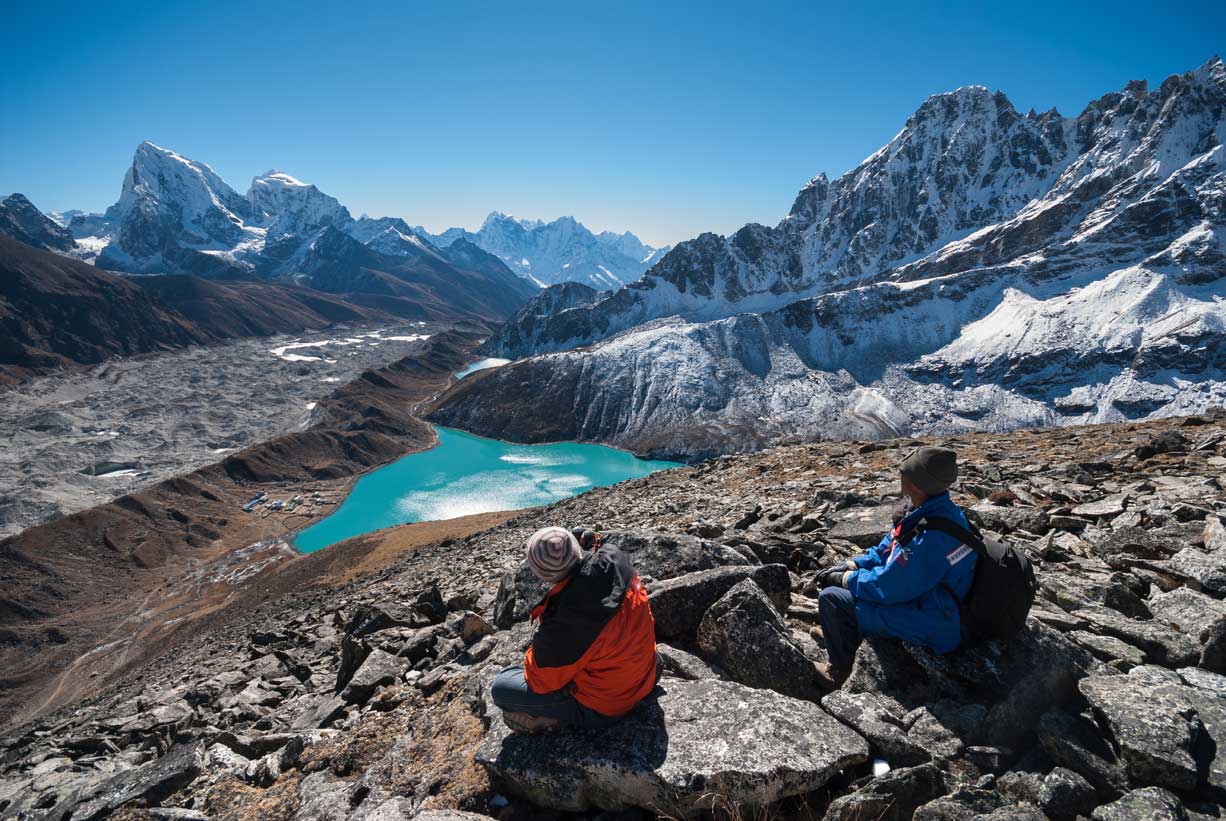
  • Explore the turquoise Gokyo Lakes surrounded by glaciers, moraines, and towering Himalayan peaks.
  • Experience Sherpa culture as you pass through traditional settlements including Namche Bazaar, Thame, Gokyo, Lobuche, Chhukung, and Dingboche.

Everest Three Passes Trek Itineray

Flight from Kathmandu/Manthali to Lukla. Trek to Phakding

Your Everest Three Passes adventure begins with an early flight to Lukla. Kathmandu to Lukla flight takes around 40 minutes, while flights from Manthali take about 20 minutes during the busy spring and autumn seasons. As you fly toward Lukla, you can enjoy views of the Himalayan foothills, including Gaurishankar, the Langtang range, Dorje Lhakpa, and the Everest region.

After landing at Tenzing-Hillary Airport, you meet your trekking team and have breakfast or lunch, depending on your arrival time. Your guide briefs you about the trail and checks the necessary equipment before you set off. The trail from Lukla to Phakding gradually descends through the Dudh Koshi Valley, passing small Sherpa settlements, mani stones, prayer flags, chortens, and Buddhist shrines.

The first day is deliberately short, giving you time to ease into the trek after the flight. You walk through villages surrounded by cultivated fields and forested hills before reaching Phakding. After checking into your lodge, you can rest, explore the village, or take a short walk along the river before dinner.

Note: During peak spring and autumn seasons, the Civil Aviation Authority of Nepal directs all Lukla flights to depart from Manthali instead of Kathmandu, to ease congestion and take advantage of calmer early-morning weather at Ramechhap. This isn’t optional or airline-specific,it applies across the board,so you’ll need to leave Kathmandu in the very early hours to reach Manthali in time for the short onward flight to Lukla.

Flight Time:

40 min (Kathmandu-Lukla), 20 min (Manthali-Lukla)

Trek Time:

3 hrs

Drive Time:

4-5 hrs (Kathmandu-Manthali, during peak seasons)

Trek Distance:

7.5 km (4.6 miles)

Sleep Elevation:

2,610 m (8,562 ft)

Accommodations:

Lodge-to-Lodge

Meals:

Breakfast, Lunch, Dinner (B.L.D)

Place:

Phakding

Trek from Phakding to Namche Bazaar

After breakfast, you follow the Dudh Koshi River continue our journey from Phakding to Namche Bazaar. The trail passes through pine and rhododendron forests and a few small villages. You’ll cross the river several times on suspension bridges, with the river getting further below as you climb higher.

You’ll pass through the Sagarmatha National Park checkpoint at Monjo, where officials check your entry permit. From there, you continue through Jorsalle and cross a few more bridges before reaching the famous Hillary Suspension Bridge (Larja Dobhan Bridge). The trail gets much steeper from here, with a series of stone steps and switchbacks leading up to Namche.

If the weather is clear, you may get your first view of Everest along the way. The climb to Namche can be tiring, but you’ll soon reach the town and settle into your lodge. In the evening, you can walk around Namche Bazaar, check out the shops and cafés, or grab something from one of the local bakeries.

Trek Time:

5–6 hrs

Trek Distance:

7.4 km (4.5 miles)

Sleep Elevation:

3,440 m (11,286 ft)

Accommodations:

Lodge-to-Lodge

Meals:

Breakfast, Lunch, Dinner (B.L.D)

Place:

Namche Bazaar

Rest day to acclimatize at Namche Bazaar

Today is your first acclimatization day, giving your body time to adjust to the increasing altitude. You won’t spend the whole day at the lodge. After breakfast, you can take a morning hike to gain some elevation before returning to Namche. This “hike high, sleep low” approach helps your body gradually adapt before you head deeper into the Khumbu.

You can hike toward the Everest View Hotel and enjoy views of Everest, Lhotse, Nuptse, Ama Dablam, Thamserku, Kangtega, and other surrounding peaks. If you feel up to it, you can continue toward Khumjung and Khunde, two traditional Sherpa villages surrounded by stone-walled fields.

You may also use this day to explore local culture. You can visit Khumjung Monastery, stop by the Sagarmatha National Park Museum, or simply wander around Namche’s shops, cafés, and bakeries. Take it easy, stay active, and give yourself plenty of time to rest before the higher sections of the trek begin.

Trek Time:

3–4 hrs (optional)

Trek Distance:

8 km (4.9 miles)

Sleep Elevation:

3,440 m (11,286 ft)

Accommodations:

Lodge-to-Lodge

Meals:

Breakfast, Lunch, Dinner (B.L.D)

Place:

Namche Bazaar

Trek from Namche Bazaar to Thame

Leaving Namche and the main Everest Base Camp trail behind, you head toward the quieter Thame Valley. This change in direction is one of the defining parts of the Three Passes Trek. Instead of following the busier route toward Tengboche and Dingboche, you enter the traditional Bhote Koshi Valley and make your way toward the old trading settlement of Thame.

The trail passes through forested sections and small Sherpa settlements, with Buddhist murals, mani walls, prayer flags, and traditional mountain houses along the way. You’ll also cross the Bhotekoshi River before continuing toward Thame.

Thame is closely associated with Sherpa mountaineering and the old trading route across the Himalayas toward Tibet. If you have time, you can visit Thame Monastery and explore the village before settling into your lodge. Take the evening to rest and recharge, as tomorrow’s walk takes you deeper into the high-altitude valley.

Trek Time:

6 hrs

Trek Distance:

8.5 km (5.3 miles)

Sleep Elevation:

3,800 m (12,467 ft)

Accommodations:

Lodge-to-Lodge

Meals:

Breakfast, Lunch, Dinner (B.L.D)

Place:

Thame

Trek from Thame to Lungden

The trail gets quieter today as you continue north through the upper Bhote Koshi Valley. You’ll leave the larger settlements behind and pass traditional villages and yak-grazing areas. The landscape also starts to change, with fewer trees and more open alpine terrain as you gain elevation.

As you reach Marlung around 4,200 m, you can take a short break before continuing toward Lungden. The increase in altitude becomes more noticeable along this section, so your guide will keep a steady pace and give you regular breaks.

By the time you reach Lungden, you’ll be well into the high alpine zone. There are few trees, the mountains feel much closer, and the air is noticeably thinner. After settling into your lodge, you can have dinner and get some rest before tomorrow’s first major pass crossing: Renjo La.

Trek Time:

6 hrs

Trek Distance:

8.2 km (5 miles)

Sleep Elevation:

4,380 m (14,370 ft)

Accommodations:

Lodge-to-Lodge

Meals:

Breakfast, Lunch, Dinner (B.L.D)

Place:

Lungden

Trek from Lungden to Gokyo Lake via Renjo La Pass

Today, you start earlier than usual, as Renjo La is a long, demanding high-altitude crossing. The trail climbs gradually from Lungden before getting steeper as you approach the pass. The landscape becomes increasingly rocky and barren, with very little vegetation at higher elevations. Depending on the season, you may also find snow along parts of the upper trail.

After a long climb, you reach Renjo La (5,360 m), marked by prayer flags and surrounded by wide Himalayan views. On a clear day, you can see major peaks including Everest, Lhotse, Makalu, and Cho Oyu. Take some time to enjoy the views before beginning the descent toward Gokyo.

The trail drops through rugged terrain, and the turquoise Gokyo Lakes gradually come into view as you get closer to the valley. After reaching Gokyo, you can check into your lodge, have dinner, and get some well-earned rest after your first major pass crossing.

Trek Time:

8 hrs

Trek Distance:

9 km (5.6 miles)

Sleep Elevation:

4,750 m (15,584 ft)

Accommodations:

Lodge-to-Lodge

Meals:

Breakfast, Lunch, Dinner (B.L.D)

Place:

Gokyo Valley

Rest day to acclimatize at Gokyo. Early morning hike to Gokyo Ri Viewpoint

Today is another acclimatization day in Gokyo. If you’re feeling up to it, you can make an early morning short hike from Gokyo village to Gokyo Ri. The distance isn’t very long, but the steep climb and high altitude make it a challenging walk, so you’ll want to take it slowly and stop for breaks along the way.

From the top, you get a wide view of the Everest region, with Everest, Lhotse, Makalu, and Cho Oyu visible on a clear day. The Ngozumpa Glacier stretches across the valley below, while the turquoise Gokyo Lakes sit among the surrounding mountains.

Once you’re back in Gokyo, you can have lunch and take the afternoon easy. You can walk around the lakeshore, explore the village, or simply relax at the lodge. It’s a good chance to rest before tomorrow’s challenging crossing of Cho La.

Trek Time:

2–4 hrs

Trek Distance:

2 km (1.2 miles)

Sleep Elevation:

4,750 m (15,584 ft)

Accommodations:

Lodge-to-Lodge

Meals:

Breakfast, Lunch, Dinner (B.L.D)

Place:

Gokyo Village

Trek from Gokyo to Thangnak

From Gokyo, you take a short walk to Thangnak. You walk along the edge of the Ngozumpa Glacier, one of the main features of the Gokyo Valley. The trail crosses rocky glacial terrain, with the surrounding peaks rising above the valley. Although the distance is relatively short, the high altitude makes the walk slower than you might expect. Your guide will keep an easy pace and allow plenty of time for breaks, especially with tomorrow’s challenging Cho La crossing ahead.

Thangnak is a small high-altitude settlement surrounded by stark mountain scenery. Once you arrive, you can have lunch and spend the afternoon resting at the lodge. Your guide can also check the weather and trail conditions for Cho La before you settle in for the evening.

Trek Time:

3 hrs

Trek Distance:

4 km (2.5 miles)

Sleep Elevation:

4,700 m (15,419 ft)

Accommodations:

Lodge-to-Lodge

Meals:

Breakfast, Lunch, Dinner (B.L.D)

Place:

Thangnak

Trek from Thangnak to Dzongla via Cho La Pass

Today, you start earlier than usual again. It is one of the toughest days of the trek as you cross Cho La (5,420 m). The trail climbs over rocky ground and glacial moraines, then gets steeper as you approach the pass. At this altitude, uneven terrain and cold conditions can slow the climb. Take your time and watch your footing. Depending on the season, you may also find snow and icy sections along the way.

Once you cross Cho La, you descend toward Dzongla, where the trail gradually becomes easier. The pass connects the Gokyo Valley with the Everest Base Camp side of the Khumbu and is known for its glacial terrain, making it the most technically tricky of the three crossings, even if Kongma La demands more overall. After reaching Dzongla, you can have a well-earned meal and rest at the lodge after a long day on the trail.

Trek Time:

8 hrs

Trek Distance:

9.5 km (5.9 miles)

Sleep Elevation:

4,830 m (15,846 ft)

Accommodations:

Lodge-to-Lodge

Meals:

Breakfast, Lunch, Dinner (B.L.D)

Place:

Dzongla

Trek from Dzongla to Lobuche

After the demanding Cho La crossing, today’s shorter trek gives you some time to recover. You leave Dzongla and follow the trail across a rugged, open landscape toward Lobuche. The terrain remains rocky, but you won’t cross any major passes. As you walk, Nuptse and Pumori become more prominent, with glaciers and moraines surrounding the trail. You’ll eventually join the main Everest Base Camp route.

After around four hours of walking, you reach Lobuche (4,940 m). The rest of the afternoon is free for you to relax at the lodge. You can have lunch, rest, and prepare your clothes and daypack for tomorrow’s trek to Everest Base Camp.

Trek Time:

4 hrs

Trek Distance:

6 km (3.7 miles)

Sleep Elevation:

4,940 m (16,207 ft)

Accommodations:

Lodge-to-Lodge

Meals:

Breakfast, Lunch, Dinner (B.L.D)

Place:

Lobuche

Trek from Lobuche to Everest Base Camp and back to Gorak Shep

Continuing from Lobuche, you follow the main Everest Base Camp trail toward Gorak Shep. The route climbs gradually through rocky terrain and glacial moraine, with the Khumbu Glacier and surrounding peaks becoming more prominent as you get closer. After reaching Gorak Shep, you take a short break. Afterward, you start the walk toward Everest Base Camp. The trail gets rougher as you follow the glacier, with rocky sections and gradual ups and downs along the way.

At Everest Base Camp, you’ll have time to take photos and enjoy the views of the Khumbu landscape. During the climbing season, you can see the famous Khumbu Icefall ahead, with Nuptse and other peaks surrounding the valley. After spending some time at base camp, you retrace your steps to Gorak Shep (5,164 m) for dinner and an overnight stay.

Trek Time:

7–8 hrs

Trek Distance:

12.5–14 km (7.7–9 miles)

Sleep Elevation:

5,164 m (16,942 ft)

Accommodations:

Lodge-to-Lodge

Meals:

Breakfast, Lunch, Dinner (B.L.D)

Place:

Gorak Shep

Hike to Kala Patthar Viewpoint, trek to Lobuche

You wake early for the hike to Kala Patthar, usually starting in the dark so you can reach the viewpoint around sunrise. The trail is steep and rocky, and the thin air slows the climb. Upon reaching Kala Patthar at around 5,545 m, you get one of the closest panoramic views of Everest on the trek.

Besides Everest, you can view surrounding Himalayan peaks like Lhotse, Nuptse, Pumori, and others. After spending some time at the viewpoint, you descend to Gorak Shep for breakfast. Next, you pack your bags and trek back to Lobuche.

The trail follows the familiar high-altitude route through the Khumbu landscape. As you lose elevation, the walking gradually becomes easier. You reach Lobuche later in the day, where you can rest and recover before tomorrow’s final high-pass crossing.

Trek Time:

7–8 hrs

Trek Distance:

11.5 km (7.1 miles)

Sleep Elevation:

4,940 m (16,207 ft)

Accommodations:

Lodge-to-Lodge

Meals:

Breakfast, Lunch, Dinner (B.L.D)

Place:

Lobuche

Trek from Lobuche to Chhukung via Kongma La Pass

Today is the final and highest pass-crossing day of your Everest Three Passes journey. You leave Lobuche early and follow a rugged trail toward Kongma La. The route climbs through rocky moraine and increasingly barren terrain before reaching the pass at around 5,535 m.

The climb is physically demanding because of the steep sections and high altitude. At Kongma La, prayer flags mark the pass, and the surrounding peaks create a wide Himalayan panorama. As this is the highest of the three passes, your guide will keep the group together and maintain a steady pace.

From the pass, you descend toward the Imja Valley. The trail becomes easier as you lose elevation, and the landscape gradually becomes less rugged. Eventually, you reach Chhukung (4,730 m), where you can check into your lodge, enjoy a hot meal, and relax after completing all three high passes.

Trek Time:

8 hrs

Trek Distance:

11 km (6.8 miles)

Sleep Elevation:

4,730 m (15,518 ft)

Accommodations:

Lodge-to-Lodge

Meals:

Breakfast, Lunch, Dinner (B.L.D)

Place:

Chhukung

Trek from Chhukung to Tengboche

After several days above 4,500 m, today’s descent is a welcome change. You leave Chhukung and gradually lose elevation as you follow the trail toward the lower Imja Valley. The landscape becomes greener as you descend, with more trees and vegetation appearing along the way. The trail passes through the Dingboche area and several highland settlements. You may stop at local kharkas and villages such as Orsho and Shomare before continuing toward Tengboche.

Along the way, you can enjoy changing views of Ama Dablam and the surrounding peaks. By afternoon, you reach Tengboche (3,860 m). The village is home to Tengboche Monastery, one of the most important Buddhist monasteries in the Everest region. If you have time, you can visit the monastery and walk around the village. Or you may just enjoy the peaceful mountain surroundings from your teahouse before dinner.

Trek Time:

6 hrs

Trek Distance:

10 km (6.2 miles)

Sleep Elevation:

3,860 m (12,664 ft)

Accommodations:

Lodge-to-Lodge

Meals:

Breakfast, Lunch, Dinner (B.L.D)

Place:

Tengboche

Trek from Tengboche to Namche Bazaar

From Tengboche, you descend through rhododendron and pine forests toward the lower Khumbu. The trail passes through familiar settlements and gradually reaches the Dudh Koshi Valley. Along the way, you’ll cross suspension bridges and get occasional views of Ama Dablam and the surrounding peaks before following the river toward Namche Bazaar.

With most of the high-altitude sections behind you, the walk feels much easier today. After reaching Namche Bazaar from Tenbgoche, you can enjoy a hot shower, relax at a café or bakery, browse the shops for souvenirs, or simply celebrate completing the most demanding part of the trek.

Trek Time:

5–6 hrs

Trek Distance:

9.2 km (5.7 miles)

Sleep Elevation:

3,440 m (11,286 ft)

Accommodations:

Lodge-to-Lodge

Meals:

Breakfast, Lunch, Dinner (B.L.D)

Place:

Namche Bazaar

Trek from Namche Bazaar to Lukla

This is your final trekking day. You return to Lukla from Namche Bazaar, retracing the lower section of the route. You walk through forests and Sherpa villages as you gradually descend toward the Dudh Koshi River. Along the way, you’ll cross suspension bridges and pass through familiar settlements such as Monjo and Phakding as you continue toward Lukla.

Although the trail is mostly downhill, the distance makes it a full day of walking. However, the air feels much warmer, and the surroundings are greener. You reach Lukla by late afternoon and check into your lodge. This is your final night in the Khumbu. You can enjoy dinner with your trekking team, relax, and look back on the three high passes and the experiences you gained along the way.

Trek Time:

8–9 hrs

Trek Distance:

14.9 km (9.2 miles)

Sleep Elevation:

2,860 m (9,383 ft)

Accommodations:

Lodge-to-Lodge

Meals:

Breakfast, Lunch, Dinner (B.L.D)

Place:

Lukla

Fly from Lukla to Kathmandu/Manthali

Your Everest Three High Passes Trek in Nepal concludes with an early morning flight from Lukla. The flight takes about 40 minutes to Kathmandu and around 20 minutes to Manthali. Your departure airport depends on flight conditions and airport traffic. If you fly to Manthali, you’ll continue to Kathmandu by road.

Once you arrive, the rest of the day is free for you to rest, shop, explore the city, or enjoy a farewell dinner with your guides and trekking team. It’s a good time to look back on the journey, from crossing Renjo La, Cho La, and Kongma La to visiting Gokyo Lakes, Everest Base Camp, and Kala Patthar. After two weeks in the mountains, you can finally relax and enjoy the comforts of Kathmandu.

Flight Time:

40 min (Lukla-Kathmandu), 20 min (Lukla-Manthali)

Drive Time:

4-5 hrs (Manthali-Kathmandu, when applicable)

Sleep Elevation:

1,400 m (4,593 ft)

Meals:

Breakfast, Lunch, Farewell Dinner (B.L.D)

Place:

Kathmandu/Manthali

Optional Add on

Kathmandu Stay

You can add an optional hotel stay in Kathmandu after the trek. Choose your preferred comfort level and budget. If you’d like us to arrange it, you can request a 3-star, 4-star, or 5-star hotel when booking. This is a convenient option if your international flight is the next day.

Everest Three Passes Trek Map

Everest three passes trek 17 days

Everest Three Passes Trek Package Inclusions

  • Airport pickup and drop-off at international and domestic airports in Kathmandu.
  • A highly experienced, government-licensed trekking guide and porter service.
  • One porter for each trekker, with a maximum personal luggage allowance of 20 kg per trekker.
  • Breakfast, lunch, and dinner throughout the trek.
  • Vegetarian, vegan, and lactose-free meal options upon request.
  • Domestic flights and required bus transportation for the trekking itinerary.
  • Wages, accommodation, meals, equipment, and medication for the trekking staff.
  • All required trekking permits and applicable government taxes.
  • All necessary administrative expenses.
  • Assistance with emergency rescue coordination when required.
  • A trek participation certificate upon completion.
  • A farewell dinner after the trek.

Everest Three Passes Trek Package Exclusions

  • International airfare.
  • Nepal entry visa fee.
  • Accommodation and meals in Kathmandu.
  • Personal expenses such as hot showers, Wi-Fi, battery charging, cold drinks, alcoholic beverages, snacks, shopping, and personal clothing or trekking gear.
  • Travel and rescue insurance.
  • Tips for guides, porters, and other trekking staff.
  • Additional porter services beyond the included porter allowance.
  • Excess baggage charges on domestic flights.

Choose a Departure

Private Journey

Have a group already?

Make it a private trip by taking over one of our dates, or you can choose your own date. Prices are sliding scale to suit the number of travellers.

FAQs For Everest Three Passes Trek

Have Questions About the Trek?

Let our trekking experts help you plan the right Everest Three Passes experience based on your dates, experience, and preferences.

Why Choose the Everest Three Passes Trek?

Choose the Everest Three Passes Trek route if you want to explore more of the Khumbu than the standard Everest Base Camp route offers. The trek combines Everest Base Camp, Gokyo Lakes, Gokyo Ri, Kala Patthar, three high passes, and traditional Sherpa villages in one challenging circuit.

Instead of following the same trail back to Lukla, the route takes you through different valleys and landscapes. You’ll travel through Thame, Gokyo, Lobuche, Chhukung, and Tengboche, experiencing both quieter mountain trails and the famous landmarks of the Everest region.

Experience Everest Base Camp as Part of a Larger Circuit

The Three Passes Trek lets you reach Everest Base Camp without making it the trek’s only main destination. You first leave Namche Bazaar for the quieter Thame Valley, passing through Thame and Lungden. Then, you cross the Renjo La into the Gokyo Valley. From there, you continue over Cho La to Dzongla and Lobuche, from where you rejoin the standard EBC trail and make a visit to Everest Base Camp. 

The following morning, you hike to Kala Patthar, just like on a typical EBC itinerary. You then return to Lobuche and cross Kongma La toward Chhukung. From there, the trail descends through Tengboche and back to Namche Bazaar. This route takes you through different valleys and villages instead of retracing the same trail.

Cross Three of the Highest Trekking Passes in the Khumbu

The trek’s main challenge is crossing 3 major high passes: Renjo La (5,360 m), Cho La (5,420 m), and Kongma La (5,535 m). At these elevations, the thin air, steep climbs, rocky trails, and glacial terrain make each crossing physically demanding. Cho La can also have snow and icy sections depending on the season, while Kongma La is the highest and involves rugged moraine terrain.

You first cross Renjo La from Lungden into the Gokyo Valley, followed by Cho La between Gokyo and Dzongla. The final crossing is Kongma La, which connects Lobuche with Chhukung. Your guide will keep a steady pace and monitor the weather and trail conditions, as conditions can change quickly at high altitude.

See Everest From Gokyo Ri, Kala Patthar and Renjo La

The Three Passes Trek gives you several chances to see Everest and the surrounding peaks from different angles. You’ll get mountain views from Gokyo Ri, Kala Patthar, and Renjo La, with each viewpoint showing a different side of the Everest region.

From Gokyo Ri (5,357 m), you can see the Gokyo Lakes and Ngozumpa Glacier, along with the wide views of four 8-thousanders: Everest, Lhotse, Makalu, and Cho Oyu. Kala Patthar (5,545 m) gives you a closer view of Everest, Nuptse, Pumori, and the Khumbu Glacier. From Renjo La (5,360 m), you can look across the Gokyo Valley toward Everest, Lhotse, and Makalu. These different viewpoints keep the mountain scenery varied throughout the trek.

Explore the Quieter Side of the Everest Region

After leaving Namche Bazaar, the route heads toward the quieter Thame Valley instead of following the main Everest Base Camp trail. You’ll pass through forests, traditional mountain villages, stone houses, mani walls, and prayer flags as you follow the upper Bhote Koshi Valley. As you gain elevation toward Lungden, the landscape becomes drier and more alpine, with fewer settlements and more open grazing areas.

The route also gives you a chance to see a more traditional side of Sherpa life. Thamo and Thame are known for their stone-built homes and Buddhist heritage, while Thame has a strong connection with Sherpa mountaineering and the historic trade route toward Tibet. You can explore the village, visit Thame Monastery, and learn more about the local way of life before continuing north.

From Thame, you continue toward Marlung and Lungden (4,380 m) through the upper Bhote Koshi Valley. The area was historically part of the trade route between Nepal and Tibet, and the landscape becomes increasingly rugged as you approach Lungden. This quieter section gives you a different experience from the busier trails around Namche and prepares you for the climb to Renjo La.

Combine Everest Base Camp, Gokyo Lakes and Three High Passes in One Trek

The defining feature of the 17-Day Everest Three Passes Trek is the variety it packs into one high-altitude circuit. The route takes you through the Thame, Gokyo, Khumbu, and Imja valleys, combining Everest Base Camp, Gokyo Lakes, Gokyo Ri, Kala Patthar, and three major passes in a single trek.

Rather than following the standard Everest Base Camp trail throughout, you explore quieter areas such as Thame and Lungden, cross Renjo La, Cho La, and Kongma La, and then return through Chhukung, Tengboche, and Namche. The changing route gives you a mix of Sherpa villages, forests, glacial valleys, high mountain passes, and some of the Everest region’s best viewpoints.

How Difficult Is the Everest Three High Passes Trek?

The Everest Three High Passes Trek difficulty is graded Hard. It is a demanding trek because you spend much of the route at high altitude and cross three major mountain passes. This 17-day itinerary includes two acclimatization days at Namche Bazaar and Gokyo. Most days involve around 4 to 9 hours of walking, with some longer days depending on the trail and weather.

Everest Three Passes Trek Difficulty

The route includes plenty of steep ascents and descents on rocky, uneven trails. Higher sections can also have snow and ice, particularly around the three passes. Renjo La, Cho La, and Kongma La all require sustained climbing at high altitude. Cold temperatures, strong winds, and basic teahouse facilities at higher elevations can add to the challenge.

You should be comfortable walking for several hours a day on steep, uneven trails. Good endurance and previous trekking experience help, but the standard route doesn’t require technical mountaineering skills. Proper acclimatization, a steady pace, and suitable gear are important for handling the long days and changing mountain conditions.

Is the Three Passes Trek Suitable for First-Time Trekkers?

The Three Passes Trek is not the best choice for a first trek, especially if you have no experience walking at high altitude. The route involves long walking days, steep climbs, and three passes above 5,000 m. Previous trekking experience helps you know how your body handles long days and changing conditions. If you are a first-time trekker who is fit, well-prepared, and has trained properly, the trek is still possible, but it is better to start with an easier high-altitude trek first.

Which of the Three Passes is considered the most difficult?

Kongma La is generally considered the hardest of the three passes. The climb is steep, and the trail is rough and rocky, with little shelter along the way. At 5,535 m, you are also dealing with very thin air. Cho La at 5,420 m can be particularly difficult when snow and ice cover the trail, while Renjo La at 5,360 m is generally considered the easiest of the three. However, weather and trail conditions can change which pass feels hardest on the day.

Is the Everest Three Passes Trek Harder Than Everest Base Camp?

Yes, the Three Passes Trek is significantly harder than the standard Everest Base Camp trek. EBC follows a more direct route and does not involve crossing three 5,000 m-plus passes. The Three Passes route has steeper climbs, descents, and more rugged terrain, along with longer, more demanding days. You also spend more time at high elevations. If you are comfortable with the physical demands of EBC, that gives you a good base, but the Three Passes Trek requires a higher level of endurance and preparation.

Is Solo Trekking Right for You?

Find out whether a guide is necessary for the Three Passes Trek and what you should consider before trekking independently.

What Is It Like to Cross the Three Passes?

Crossing Renjo La, Cho La, and Kongma La is the hardest part of the Everest Three High Passes Trek. All three passes are above 5,300 meters, with steep climbs, rough terrain, and unpredictable mountain weather. You start early, climb to the pass, and then descend into the next valley. There are no teahouses along the pass routes, so you need to carry enough water, food, and warm layers for the day.

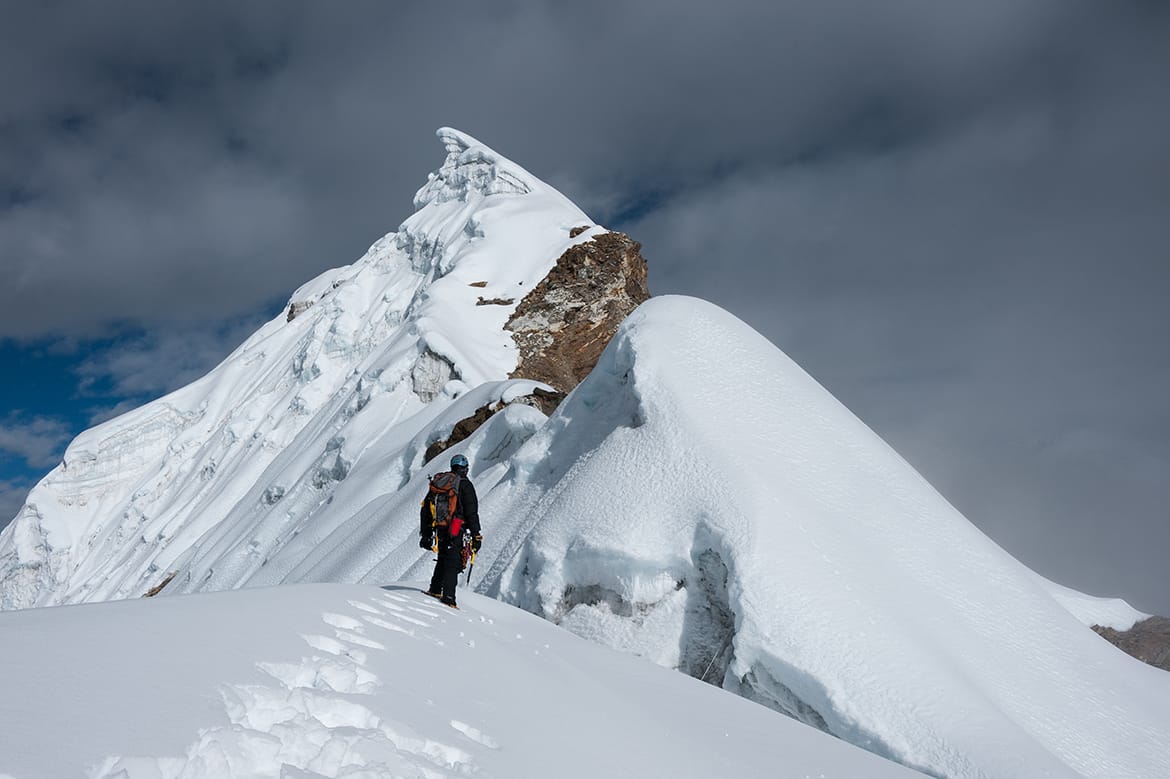
Each pass has different terrain. Renjo La has steep rocky sections and views of the Gokyo Lakes and surrounding peaks. Cho La can have snow and ice around the pass, while Kongma La involves steep boulder and moraine sections. Snow and ice conditions vary by season, so microspikes or crampons may be useful.

What a Typical Pass Crossing Day Looks Like?

Pass days usually start around 4:00-5:00 AM. You climb slowly and steadily, taking short breaks as needed. The final climb can feel difficult because of the altitude, but reaching the pass gives you wide views of the surrounding Himalayas. After a short break, you begin the descent, which can be just as tiring as the climb.

A pass crossing generally takes around 7 to 10 hours, although longer days are possible depending on the pass, weather, trail conditions, and your pace. Kongma La is often the longest and most demanding crossing.

What Makes High Pass Days Different From Normal Trekking Days?

  • Longer days: Pass crossings involve several hours of climbing and descending above 5,000 meters.
  • No teahouses: There are no regular stops on the passes, so carry enough water, snacks, and essentials.
  • Rough terrain: You may encounter loose rocks, boulders, scree, moraine, snow, and ice.
  • Cold and wind: Temperatures can drop well below freezing before sunrise, while strong winds are common around the exposed passes.
  • Changing weather: Snow, cloud, wind, and poor visibility can develop quickly, so guides monitor conditions throughout the crossing.

What Happens If a Pass Is Unsafe to Cross?

Your guide checks the weather, visibility, snow, ice, trail conditions, and the group’s condition before attempting a crossing. If conditions are unsafe, the group may wait for better weather or take an alternative route, if available. How long you can wait depends on the conditions and your itinerary.

If the pass remains impassable, your guide will choose the safest available option. This may mean retracing part of the route, taking an alternative valley route, or changing the itinerary. The priority is always to cross safely rather than force a pass in dangerous conditions.

Which Direction Is Better, Kongma La First or Renjo La First?

You can do the Everest Three High Passes Trek in either direction. Our 17-day itinerary follows the clockwise route. You cross Renjo La first, while the anti-clockwise route crosses Kongma La first. Neither direction is automatically better. The main difference is how the altitude gain and major passes are spread across the trek.

The clockwise route takes you through Namche Bazaar, Thame, and Lungden before crossing Renjo La to Gokyo. This gives you a quieter start through the Thame and Bhote Koshi valleys before joining the main Everest route. You also get the views of Gokyo Lakes and the surrounding peaks early in the trek. The main challenge is that you reach a high pass relatively early (on day 6).

Meanwhile, the anti-clockwise route reaches the Everest Base Camp area before crossing Kongma La, followed by Cho La and Renjo La. This gives you more time on the main trekking route before your first high pass, Kongma La. Your choice should therefore depend on your preferred scenery, route flow, and how comfortable you are with an earlier high-altitude pass crossing.

How Does the Clockwise Route Handle Acclimatization?

Our 17-day Three Passes package does not rush you straight to the high passes. You spend an acclimatization day at Namche Bazaar (3,440 m) on Day 3, then continue to Thame (3,800 m) on Day 4 and Lungden (4,380 m) on Day 5. You cross Renjo La (5,360 m) on Day 6 and descend to Gokyo. By taking a few days to move higher, your body has more time to adjust before the first pass.

You get another acclimatization day at Gokyo on Day 7. The plan includes an early morning hike to Gokyo Ri (5,357 m) before returning to Gokyo to sleep. You then head to Thangnak on Day 8 and cross Cho La (5,420 m) on Day 9. So, you are not going from one high pass straight into another without a break.

After Cho La, you continue through Lobuche, Everest Base Camp, and Kala Patthar before taking on the final pass. Kongma La (5,535 m) comes on Day 13, by which point you have already spent several days at high altitude. Overall, our clockwise itinerary gives you two acclimatization days and several gradual altitude gains before the three major pass crossings.

What Happens If Someone Gets Altitude Sickness

If you develop Acute Mountain Sickness (AMS) during our Three Passes Trek, your guide will first assess your symptoms and may check your oxygen saturation and other vital signs. For mild symptoms such as headache, dizziness, nausea, or unusual tiredness, you may be asked to rest, drink fluids, and stop trekking while your condition is monitored. If your symptoms do not improve or start getting worse, you may need to descend to a lower altitude. Continuing’s not safe. 

If symptoms are severe or suggest HACE or HAPE, your guide will arrange urgent medical assistance and may arrange helicopter evacuation, depending on your condition, location, weather, and available rescue services. The most important thing is to tell your guide as soon as you feel unwell. Do not try to push through worsening symptoms just to stay on schedule or complete a pass. Your safety comes first.

What Is the Best Time of Year to Do the Everest Three Passes Trek?

The best time for the Everest Three High Passes Trek is spring (March to May) and autumn (late September to November). These months generally bring clearer skies, more stable weather, and better trail conditions for crossing the high passes. October and November are particularly popular because the monsoon has ended and visibility is usually excellent. Spring is warmer in the lower valleys, with rhododendrons blooming along the trail, but snow can still remain on the higher passes.

Which Month Is Best for Crossing All Three Passes?

October is one of the best months for crossing all three passes. The weather is generally stable, visibility is good, and the trails are often in good condition after the monsoon. November is also a good option, although temperatures drop as winter approaches. If you prefer spring, late April and May usually offer better conditions than the earlier months. There is more daylight, and some winter snow starts to melt.

However, no month can guarantee that Kongma La, Cho La, and Renjo La will be open. Conditions can change after fresh snowfall or strong storms, so your guide will check the trail and weather before each crossing.

Why Pass Conditions Can Change During the Same Season?

Even during the best trekking months, conditions on Renjo La, Cho La, and Kongma La can change quickly. Several weather patterns and high-altitude effects can affect snow, ice, wind, and visibility.

  • Afternoon Wind and Cloud: Mountain weather is usually more stable in the morning. As the day progresses, winds can pick up, and clouds can build around the passes, reducing visibility. This is why pass crossings usually start early.
  • Freeze-Thaw Conditions: Snow and ice can melt during warmer afternoons and freeze again overnight. This can leave icy sections on the trail the following morning, particularly during spring and late autumn.
  • Western Disturbances: These are weather systems that move eastward from the Mediterranean and bring unexpected snowfall to the Himalayas, particularly during winter and the transition into spring. Fresh snow can cover the trail and make a pass harder or unsafe to cross.
  • Fresh Snowfall and Trail Conditions: A heavy snowfall can change the condition of a pass within hours. Loose snow can cover rocks, hide icy sections, and make navigation more difficult. Your guide may delay the crossing or change the route if conditions are not safe.

For this reason, the conditions you normally expect in a particular month are not guaranteed. Your guide will check the weather and trail conditions before each crossing and adjust the plan if needed.

Looking for an Easier Everest Trek?

If three high passes feel too demanding, explore alternative Everest treks that offer incredible Himalayan views with different difficulty levels.

What Permits Are Required for the Everest Three Passes Trek?

For the Everest Three High Passes Trek, you need two main permits: the Sagarmatha National Park Entry Permit and the Khumbu Pasang Lhamu Rural Municipality Permit. You don’t need a separate permit to cross Renjo La, Cho La, or Kongma La.

Note: Our Everest Three High Passes Trek package includes the Khumbu Pasang Lhamu Rural Municipality Permit. We arrange them; you don’t need to obtain them yourself.

Sagarmatha National Park Entry Permit

This permit grants you legal access to Sagarmatha National Park, a protected UNESCO World Heritage site that encompasses the entire upper Khumbu region, including all three passes.

Details Information
Permit Fee
  • Foreign Nationals: NPR 3,000 incl. VAT (~USD 20)
  • SAARC Nationals: NPR 1,500 (~USD 10)
Where to Get It
  • Nepal Tourism Board, Kathmandu, or Monjo checkpoint
Validity
  • Single entry and exit
Coverage
  • Entire 17-day Three High Passes Trek

Khumbu Pasang Lhamu Rural Municipality Permit

It’s a local fee set by the regional government to support trail maintenance, rescue services, and waste management in the Khumbu region.

Details Information
Permit Fee
  • NPR 3,000 (~USD 20)
Where to Get It
  • Lukla or Monjo
Validity
  • Up to 4 weeks
Coverage
  • Entire 17-day Three High Passes Trek
Payment
  • Cash in Nepali Rupees (NPR)

Note: NPR is the official currency for all permit payments, and USD figures above are approximate conversions only, calculated at the current exchange rate. The exact NPR amount is what’s collected at the checkpoint; USD equivalents will shift with the exchange rate, so treat them as a rough guide rather than a fixed price.

True Tales from the Three Passes Trail

Trip Advisor Logo

Three Passes Journey, Challenge and Camaraderie

I went into this trek looking for a physical challenge and came back with so much more. I hiked solo, but the group I joined (organized by HC Treks) was full of wonderful humans from all over. We pushed each other, cheered each other on, and shared stories over dal...
Trip Advisor Logo

Three Passes Journey, Challenge and Camaraderie

I went into this trek looking for a physical challenge and came back with so much more. I hiked solo, but the group I joined (organized by HC Treks) was full of wonderful humans from all over. We pushed each other, cheered each other on, and shared stories over dal bhat every night. Crossing Renjo La at sunrise was a spiritual moment I’ll never forget. If you want to feel truly alive, do this trek.

Trip Advisor Logo

Everest Trek That Changed My Perspective

Wow, where do we even start? As a couple who love to travel, we thought we’d seen it all, but the Everest Three Passes Trek took us to a whole new level! It was a wild ride that pushed us both mentally and physically, but honestly, it brought us closer...
Trip Advisor Logo

Everest Trek That Changed My Perspective

Wow, where do we even start? As a couple who love to travel, we thought we’d seen it all, but the Everest Three Passes Trek took us to a whole new level! It was a wild ride that pushed us both mentally and physically, but honestly, it brought us closer together in ways we never expected. HC Treks made sure everything was seamless, and our guide’s infectious energy kept the whole group buzzing with excitement. Seriously, we were all like a little family out there!

And let’s talk about the views, absolutely mind-blowing! It felt like we were walking through a postcard every single day. One of the highlights? The sunrise at Gokyo Ri. I can’t even describe how peaceful it was; it’s one of those moments that just sticks with you. We still chat about it, and it always brings a smile to our faces. If you’re looking for an adventure that’ll challenge you and create unforgettable memories, this trek is it! Trust us, you won’t regret it!

Trip Advisor Logo

Three Passes, Endless Thrills

Honestly, I wasn't sure what to expect when I signed up for this adventure, but the experience completely blew me away. Joining a HC Treks group turned out to be the best decision we clicked instantly, like hiking with long-lost friends. Our guides struck that perfect balance between being completely...
Trip Advisor Logo

Three Passes, Endless Thrills

Honestly, I wasn't sure what to expect when I signed up for this adventure, but the experience completely blew me away. Joining a HC Treks group turned out to be the best decision we clicked instantly, like hiking with long-lost friends. Our guides struck that perfect balance between being completely professional while making everything feel effortless. And the moments? Oh, the moments were magic: waking up to watch the sunrise paint the peaks gold, sharing laughs with the surprisingly sassy yaks along the trail (those guys have personality!), or warming up with sweet milk tea in a cozy mountain teahouse halfway across the world.

This wasn't just another trek, it was like hitting the reset button for my soul. Watching morning mist curl through silent valleys, swapping stories with fellow adventurers under star-packed skies (seriously, you've never seen stars like this), and pushing beyond my comfort zone only to discover I could go further than I ever imagined. If you're looking for more than just pretty views (though trust me, those alone would be worth it), and want an experience that'll stick with you long after your boots dry out, this is it.

Trip Advisor Logo

Not Just a Trek, a Mind-Blowing Everest Experience

I’ve done a handful of treks before, but let me tell you, nothing compares to the Everest Three Passes Trek. Seriously, it took my breath away both literally and figuratively! One moment, I was wandering through lush, pine-scented valleys, and the next, I was staring up at towering ice walls....
Trip Advisor Logo

Not Just a Trek, a Mind-Blowing Everest Experience

I’ve done a handful of treks before, but let me tell you, nothing compares to the Everest Three Passes Trek. Seriously, it took my breath away both literally and figuratively! One moment, I was wandering through lush, pine-scented valleys, and the next, I was staring up at towering ice walls. And those glacial lakes? They looked like something straight out of a dream so stunning and glassy, I half-expected to see a mermaid swimming by!

I signed up for this adventure solo, but I quickly found myself part of an amazing little group through HC Treks. We clicked right away! We laughed, struggled, and shared snacks like we were old friends. It felt like an adult adventure camp, but with epic mountain views! Our guide was an absolute gem, he knew the route like the back of his hand and could sense when we needed a break, a chocolate bar, or just a little pep talk. Seriously, he was like our personal cheerleader!

By the end of the trek, I didn’t just check off a bucket-list item; I walked away with a crew of lifelong friends and memories that’ll stick with me forever. Would I do it again? Oh, in a heartbeat! If you’re looking for an adventure that’ll leave you breathless in the best way possible, this is it. Trust me, you won’t regret it!

Trip Advisor Logo

Team Vibes, Tough Trails, Everest Made It Worth It

We were a group of five (family + a friend), and this trek blew us away. We were worried it might be too much for us, but HC Treks kept the pace just right and encouraged us all the way. The mix of challenge, culture, and nature is perfect. Everest...
Trip Advisor Logo

Team Vibes, Tough Trails, Everest Made It Worth It

We were a group of five (family + a friend), and this trek blew us away. We were worried it might be too much for us, but HC Treks kept the pace just right and encouraged us all the way. The mix of challenge, culture, and nature is perfect. Everest Base Camp was amazing, but honestly, the passes were the real stars, especially Cho La with its icy trail and jaw dropping views. We’ve done other group hikes, but this one felt special from start to finish.

Trip Advisor Logo

Beyond the Ordinary, into the Heart of Three Passes

This isn’t your average trek, it's physically demanding, especially at the passes, but that’s what made it unforgettable. I trekked solo but ended up joining a group organized by HC Treks, and it was such a supportive environment. Our guide was a legend, calm, funny, and incredibly knowledgeable about the...
Trip Advisor Logo

Beyond the Ordinary, into the Heart of Three Passes

This isn’t your average trek, it's physically demanding, especially at the passes, but that’s what made it unforgettable. I trekked solo but ended up joining a group organized by HC Treks, and it was such a supportive environment. Our guide was a legend, calm, funny, and incredibly knowledgeable about the region. Every day felt like an accomplishment, and the scenery was unreal. Gokyo Lakes and Renjo La were personal highlights.

EXCELLENT
Tripadvisor star 1Tripadvisor star 2Tripadvisor star 3Tripadvisor star 4Tripadvisor star 5
Based on 16 reviews
Posted on Tripadvisor Tripadvisor
Elena R profile picture
Elena R
Tripadvisor star 1Tripadvisor star 2Tripadvisor star 3Tripadvisor star 4Tripadvisor star 5Verified
Perfect experience I highly recommend booking at HCT. Prior to the treck I felt supported with all my questions and during my time there everybody was immensly friendly and helpful and genuinly wanted to make sure I had the best time. Thank you very much for this amazing experience
Posted on Tripadvisor Tripadvisor
Pankaj R profile picture
Pankaj R
Tripadvisor star 1Tripadvisor star 2Tripadvisor star 3Tripadvisor star 4Tripadvisor star 5Verified
A fantastic and memorable experience that I would like to repeat in the not too distant future. My friend Kulvinder and I had discussed some time ago about doing a trek in Nepal. The lure of majestic mountains, valleys, rivers, lakes, and varied scenery finally drew us, along with another friend, Binesh, to embark on the Annapurna Trek with Tilicho Lake with Himalayan Challenge Treks. From the moment we were collected at the airport by our guide Chatur Man Tarang, to the end of the trek, we were not only provided with useful advice and information, but Chatur also infused the trek with his own special brand of humour. The two porters, 'Ashish' and 'Rajan', quickly became friends and helped fill in the quiet evenings by joining in a few games of Dhumble. The treks were challenging for us, 65+ year olds. Still, Chatur and the porters were always encouraging and provided helpful advice on how to deal with the various challenges of walking up and down safely, dealing with the low oxygen air at altitude, staying safe in rockfall areas, and dealing with the incoming traffic of ponies and local residents carrying bulky goods from one place to another. The locations were absolutely stunning and the local rambling through villages, visiting the Buddhist Stupas and Gumbas and enjoying the hospitality of the tea houses along the trek routes remains truly memorable. I hope to return sometime soon to pick up where we left this trek.
Posted on Tripadvisor Tripadvisor
Macarios profile picture
Macarios
Tripadvisor star 1Tripadvisor star 2Tripadvisor star 3Tripadvisor star 4Tripadvisor star 5Verified
Scenic Wonder! I had the best time doing the ABC trek! As a solo traveler everything was organised accordingly (transport, hotel, guide, porter, guesthouse, meals) H.C.Y was very responsive in communication from pre trip to the actual trip itself.
Posted on Tripadvisor Tripadvisor
Finn H profile picture
Finn H
Tripadvisor star 1Tripadvisor star 2Tripadvisor star 3Tripadvisor star 4Tripadvisor star 5Verified
Great trekking company I did the Mardi Himal trek with Himalayan challenge treks and loved it! Our guide Ram was great with over 25 years of experience of leading treks throughout Nepal. He had a great sense of humour and worked extremely hard. I would recommend this company if you're thinking about trekking in Nepal.
Posted on Tripadvisor Tripadvisor
Lucy H profile picture
Lucy H
Tripadvisor star 1Tripadvisor star 2Tripadvisor star 3Tripadvisor star 4Tripadvisor star 5Verified
Mardi himal We did the Mardi himal walk with the most amazing guide ram! He is super friendly and will make you laugh!! He is filled with knowledge that will give you insight into Nepal and he will look after you very well. Everything was so easily organised and made our travels super easy. Would recommend challenge treks to everyone !
Posted on Tripadvisor Tripadvisor
Dilara E profile picture
Dilara E
Tripadvisor star 1Tripadvisor star 2Tripadvisor star 3Tripadvisor star 4Tripadvisor star 5Verified
Himalayas I would like to thank the team who hosted us very well from the beginning to the end of the trip and ensured that we completed it with minimal fatigue.
Posted on Tripadvisor Tripadvisor
Fatma Ö profile picture
Fatma Ö
Tripadvisor star 1Tripadvisor star 2Tripadvisor star 3Tripadvisor star 4Tripadvisor star 5Verified
This trip is so beautiful with Himalayan Challenge Treks It was an incredibly beautiful trip...it was difficult but this mental feeling made everything easy.. Our loving tour guide was there for us around the clock❤️ Without Himalayan Challenge Treks it's half as beautiful. Thank you.. Namaste
Posted on Tripadvisor Tripadvisor
Filiz I profile picture
Filiz I
Tripadvisor star 1Tripadvisor star 2Tripadvisor star 3Tripadvisor star 4Tripadvisor star 5Verified
Unforgettable Trip to Heaven It was such an amazing trip .once in a life time experience.The company and the guides organizing this trekking trip are so proffesional that they have made everything perfect and easy for all team. Nature is unique holly magnificent. You are as if you are in a different holly land. The scenery and view also worthseeing . Thank you for Himalyan Challenge Treks.
Posted on Tripadvisor Tripadvisor
davidhaverkamp profile picture
davidhaverkamp
Tripadvisor star 1Tripadvisor star 2Tripadvisor star 3Tripadvisor star 4Tripadvisor star 5Verified
Day walk with Shirish Some time ago my wife and I did a short day walk with Shirish Tuladhar of Himalayan Challenge Treks and enjoyed the day immensely. We were in Katmandu for only about a week and so had no time for a multi-day trek. Shirish was a great guide and very patient (as I was recovering from surgery and moving rather slowly.) This was pre-Covid, while we were living in Malaysia, but while moving back to the US/EU I found Shirish's card and wanted to commend him and HCT. +David+
Posted on Tripadvisor Tripadvisor
Adam profile picture
Adam
Tripadvisor star 1Tripadvisor star 2Tripadvisor star 3Tripadvisor star 4Tripadvisor star 5Verified
Fantastic Tailor Made Honeymoon After establishing an excellent connection with Shirish online, we worked to put together a bespoke itinerary which was absolutely perfect for what we wanted on our honeymoon. Shirish and his team (Ram and Raju) delivered a trip which far exceeded our expectations. Their local expertise provided a personal touch to our trip which made it incredibly special and unique. I thoroughly recommend Nepal as it has so much to offer visitors. We experienced white water rafting, trekking in the Annapurna foothills, sunrises over snow topped mountains, paragliding over Pokhara, safari in Chitwan, the history and culture of Kathmandu and much, much more. The Nepalese people are incredibly friendly and welcoming. I put my trust in Shirish and his team and they delivered something professional, personal and so wonderfully memorable that the trip to Nepal will always have a very special place in our hearts.

Comfort During Everest Three Passes Trek

The Everest Three High Passes Trek uses teahouse accommodation and local meals throughout the route. You will have a bed, hot food, and basic facilities, but comfort becomes more limited as you climb higher. Around Lungden, Thangnak, Dzongla, Lobuche, and Gorak Shep, expect simpler rooms, shared bathrooms, limited hot water, and fewer food choices.

What Are Teahouses Like?

Teahouses are small, family-run lodges with simple bedrooms and a shared dining area. Most rooms have two beds with mattresses, pillows, and blankets. Rooms are generally unheated, while the dining room is usually the warmest place to sit, with a stove running during meal times.

Comfort depends on where you stay overnight. Lukla, Phakding, and Namche Bazaar have more comfortable lodges. At these villages, some lodges even offer private rooms, attached bathrooms, hot showers, Wi-Fi, and charging. As you move toward Thame, Lungden, and Gokyo, facilities become simpler. Shared bathrooms become more common.

At higher stops such as Thangnak, Dzongla, Lobuche, and Gorak Shep, expect basic rooms, shared bathrooms, and fewer facilities. Hot showers, charging, and Wi-Fi may be available for an extra fee, but they become less reliable as you climb. Gorak Shep (around 5,164 m) is one of the highest overnight stops, so cold rooms and basic facilities are part of the experience. You’ll need a warm sleeping bag for these higher overnight stays.

What Food Is Available During the Trek?

Teahouses along the Three Passes route serve a mix of Nepali, Tibetan, and basic Western dishes. Food choices are broader at lower elevations and become simpler as you climb higher. Dal bhat, noodles, fried rice, pasta, momos, soups, potatoes, eggs, and porridge are common throughout the route.

Altitude What You Can Usually Find
Lower elevations (Lukla, Phakding, Namche) Dal bhat, momos, noodles, fried rice, pasta, pizza, sandwiches, eggs, pancakes, porridge, soups, and bakery items
Mid elevations (Thame, Lungden, Gokyo) Dal bhat, noodles, fried rice, pasta, momos, potatoes, soups, eggs, porridge, and Tibetan bread
Higher elevations (Thangnak, Dzongla, Lobuche) Dal bhat, noodles, pasta, fried rice, potatoes, soups, eggs, porridge, and simple snacks
Highest stop (Gorak Shep) Mostly basic meals such as dal bhat, noodles, fried rice, pasta, potatoes, soups, eggs, porridge, and Tibetan bread

How Much Do Food and Accommodation Cost at Different Altitudes?

Prices generally increase as you go higher because supplies have to travel farther into the mountains. Namche and other lower villages have more options and competition, while places such as Lungden, Thangnak, Lobuche, and Gorak Shep have fewer lodges and higher operating costs.

Expense Typical Cost
Teahouse room NPR 500-2,000+
Main meal NPR 800-1,500+
Hot shower NPR 200-800+
Device charging NPR 200-500+
Wi-Fi NPR 300-700+

Note: Prices may vary by village, season, lodge, and altitude, so these are only general estimates. Our 17-day Three Passes package includes accommodation and three meals a day. You will mainly need extra cash for things such as hot showers, charging, Wi-Fi, snacks, drinks, and other personal expenses.

Your Other Everest High Pass Option

The Three Passes route isn’t the only way to explore Everest’s high passes. Discover another itinerary built around a different trekking experience.

How to Prepare Yourself For the Three Passes Trek

Panoramic Himalaya view Everest Three Passes Treks

The Three Passes Trek is demanding, so preparing properly before you arrive in the Everest region can make the trek much easier.

  • Start training 2-3 months ahead: Focus on endurance, leg strength, and getting comfortable with long days on your feet.
  • Build your cardio: Hiking, stair climbing, running, cycling, or similar activities can improve your stamina.
  • Do longer hikes: Include longer weekend hikes and gradually work up to 6-8 hours of walking with a daypack.
  • Pack for cold conditions: Bring warm layers, gloves, a hat, good trekking boots, and a suitable sleeping bag.
  • Prepare for snow and ice: Snow or ice can occur around the high passes, especially Cho La. You may need microspikes, depending on conditions.
  • Break in your boots: Wear your trekking boots during training hikes so you know they are comfortable before the trek.
  • Test your backpack: Carry the pack you plan to use and adjust the weight and fit during your training hikes.

Why Rest Days Are Part of the Adventure, Not Lost Trekking Days

The rest days in Namche Bazaar and Gokyo are mainly there to help your body adjust to the increasing altitude. On Day 3, you can take an acclimatization hike around Namche before returning to sleep at the same elevation. At Gokyo on Day 7, the itinerary includes an early morning hike to Gokyo Ri (5,357 m) before returning to Gokyo.

These days aren’t completely inactive, but keep the pace easy and avoid exhausting yourself. Proper acclimatization can reduce the risk of altitude sickness and improve your chances of handling the high passes ahead. Listen to your body, stay hydrated, eat properly, and tell your guide if you develop symptoms such as headache, nausea, dizziness, or unusual fatigue.

Packing Essentials for Everest Three Passes Trek

Pack light but prepare for cold, snow, long walking days, and basic teahouse facilities at higher elevations.

Footwear & Traction

  • Trekking boots: Sturdy, comfortable, and well broken-in.
  • Microspikes: Useful for icy or snowy sections.
  • Gaiters: Helpful for snow, dust, and loose gravel.
  • Trekking socks: 4-5 pairs, plus one warm pair for sleeping.
  • Blister patches: Useful for long trekking days.

Clothing & Layers

  • Base layers: 2-3 sets of thermal tops and bottoms.
  • Trekking clothes: 3 quick-dry shirts and 2 pairs of trekking pants.
  • Fleece or warm mid-layer: For colder sections.
  • Waterproof jacket and pants: For rain, snow, and wind.
  • Down jacket: For cold mornings and evenings.
  • Gloves and hats: Bring both lightweight and warm options.

Backpack & Sleeping Gear

  • Trekking backpack: Around 40-50L with a rain cover.
  • Sleeping bag: Rated to around -15°C.
  • Trekking poles: Useful on steep climbs and descents.
  • Headlamp: Essential for early morning pass crossings.

Water & Electronics

  • Water purification: Tablets, drops, or a suitable filter.
  • Water bottles: Carry enough water for long trekking days.
  • Power bank: A 10,000-20,000 mAh power bank is useful.
  • Charging cables: Bring the cables and adapters you need.

Personal Items & Documents

  • First-aid kit: Basic medication, blister care, bandages, and rehydration salts.
  • Altitude medication: Carry it only if recommended by your doctor.
  • Sun protection: Sunglasses, sunscreen, and lip balm.
  • Toiletries: Wet wipes, tissues, hand sanitizer, and a quick-dry towel.
  • Cash: Carry enough Nepali rupees for personal expenses.
  • Documents: Passport, permits, insurance details, and emergency contacts.

Temperature through the months at Three Passes

Altitude Variations During Everest Three Passes Trek

Altitude in:

Why Book With Us

HCTreks offers unforgettable Himalayan adventures with expert guidance and 24/7 support.

expert travel guides

Expert Travel Guides

Experienced, licensed guides ensuring safety and memorable journeys.

safety

Safety First

Your safety is our top priority throughout the journey.

customizable-trips

Customizable Trips

Tailor your trek based on preferences, fitness, and time.

Sustainability

Eco-Friendly Tourism

We promote sustainable, zero-waste, eco-friendly trekking experiences.

competitive-price

Competitive Price

Top-notch service at affordable, transparent, and competitive rates.

route-updates

Route Updates

Receive daily weather forecasts and route updates for safety.