
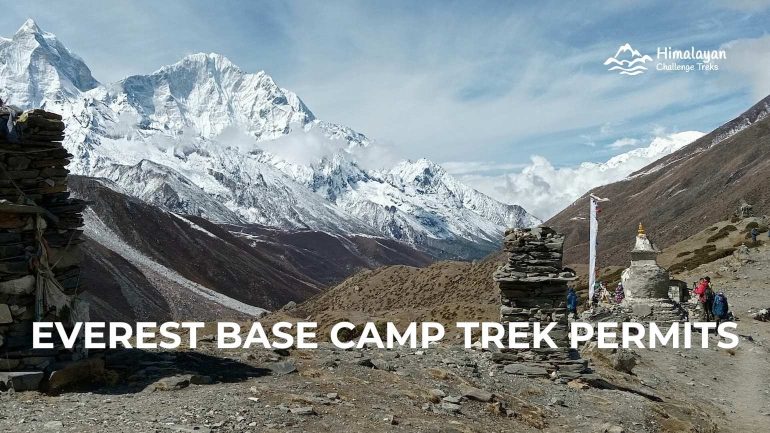
If you’re planning to trek to Everest Base Camp via the standard Lukla route in 2026, you’ll need two mandatory permits: the Sagarmatha National Park Entry Permit and the Khumbu Pasang Lhamu Rural Municipality Permit. These permits allow you to enter the Everest region legally and are checked at multiple points along the trail. Unlike many other trekking routes in Nepal, the TIMS card is no longer required for any Everest trek.
The cost of the Everest Base Camp Trek permits depends on your nationality. Most foreign trekkers pay a total of NPR 6,000 (approx. USD 40) for both permits. For SAARC nationals, the national park entry fee is discounted by 50% and the municipality fee by 33%, bringing the total to about NPR 3,500 (approx. USD 23). Obtaining them is also pretty straightforward. You can obtain the Sagarmatha National Park permit in Kathmandu or Monjo, while the Khumbu Rural Municipality permit must be purchased at the trail checkpoints in Lukla or Monjo.
In the sections below, you’ll find a complete breakdown of permit costs, where and how to obtain each permit, the documents you’ll need, checkpoint locations, validity details, and the latest Everest Base Camp permit updates for 2026.
Note: All permit fees listed in this guide are official NPR rates. USD equivalents are approximate reference values only and should not be considered fixed prices due to currency exchange fluctuations.
Everest Base Camp Trek Permits at a Glance
| Permit | Foreign Nationals | SAARC Nationals | Approx. USD | Validity | Where to Obtain |
|---|---|---|---|---|---|
| Sagarmatha National Park Entry Permit | NPR 3,000 | NPR 1,500 | USD 10 (SAARC) / USD 20 (Foreign) | Valid for one trek entry into the national park | Nepal Tourism Board office in Kathmandu or Monjo Checkpoint |
| Khumbu Pasang Lhamu Rural Municipality Permit | NPR 3,000 | NPR 2,000 | USD 13 (SAARC) / USD 20 (Foreign) | Valid for up to 4 weeks in the Khumbu region | Lukla (on arrival) or Monjo Checkpoint. Not available in Kathmandu |
Sagarmatha National Park Entry Permit
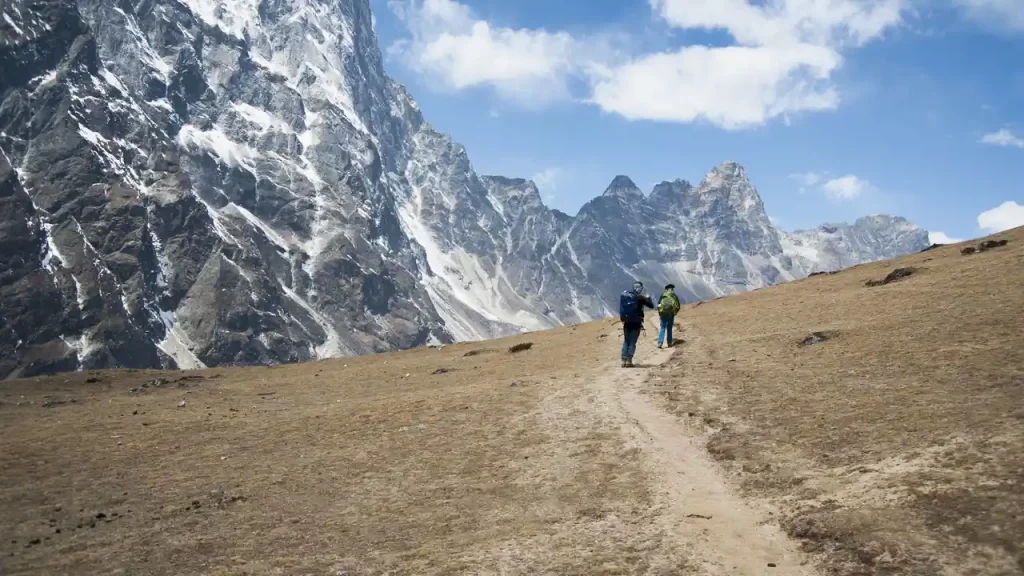
The Sagarmatha National Park Entry Permit is required for all trekkers entering the protected area, which covers approximately 1,148 square kilometers of Himalayan terrain. It includes Mount Everest, Everest Base Camp, Namche Bazaar, Tengboche, Dingboche, Lobuche, and other major settlements along the route. The park was established in 1976 and recognized as a UNESCO World Heritage Site in 1979. Every trekker entering the park must obtain this permit before passing through the main entry checkpoint.
The permit revenue collected from trekkers is used to support:
- Conservation of fragile Himalayan ecosystems and alpine biodiversity
- Trail and bridge maintenance, including erosion control and safety upgrades
- Waste management, cleanup programs, and environmental protection initiatives
- Wildlife monitoring and habitat conservation for species like the snow leopard
- Visitor facilities, signage, and park administration services
- Sustainable tourism management and visitor flow regulation in the Everest region
Sagarmatha National Park Permit Cost for 2026
| Nationality | Fee (NPR) | Approx. USD |
|---|---|---|
| Foreign Nationals | NPR 3,000 | USD 20 |
| SAARC Nationals | NPR 1,500 | USD 10 |
| Nepali Citizens | NPR 100 | Less than USD 1 |
| Children (Under 10) | Free | Free |
Where to Obtain the Sagarmatha National Park Permit
You can obtain this permit from two locations:
Nepal Tourism Board Office, Kathmandu
Many trekkers prefer arranging their permits before flying to Lukla. The Department of National Parks and Wildlife Conservation (DNPWC) counter in Bhrikutimandap provides it.
- Wait time: 15 to 30 minutes. It can take up to an hour during peak trekking seasons (March-May and September-November) due to group tour bookings.
Sagarmatha National Park Entry Gate, Monjo
Trekkers who do not obtain the permit in Kathmandu can purchase it directly at the Sagarmatha National Park entry gate in Monjo before entering the protected area.
- Wait time: 5 to 15 minutes. The process is very fast, but queues can form if multiple flights from Lukla land at the same time.
Both options provide the same permit, but arranging it in advance in Kathmandu helps avoid queues and delays once the trek begins.
Khumbu Pasang Lhamu Rural Municipality Permit
The Khumbu Pasang Lhamu Rural Municipality Permit is a local entry permit required for all trekkers entering the Everest (Khumbu) region. It was introduced by local authorities to support tourism management, infrastructure development, and maintenance of trekking facilities along the route.

This permit replaced the older TIMS-based system for the Everest region. Its fees now directly contribute to local services and trekking trail upkeep used by trekkers throughout the journey.
Khumbu Rural Municipality Permit Cost for 2026
| Category | Cost (NPR) | Approx. USD |
|---|---|---|
| Foreign Nationals | NPR 3,000 | ~USD 20 |
| SAARC Nationals | NPR 2,000 | ~USD 13 |
| Children under 10 | Free | Free |
Where to Get the Khumbu Rural Municipality Permit
You can obtain this permit at:
Lukla Municipality Permit Counter
This is the primary permit point used by most trekkers and is located along the main exit route from Lukla Airport. It typically handles the highest volume of visitors, especially when multiple flights or helicopters arrive around the same time.
- Wait time: 10 to 20 minutes. Waiting times depend entirely on how many flights or helicopters land at the same time.
Monjo Checkpoint
This serves as a secondary checkpoint, mainly used by trekkers entering the region via overland routes such as Jiri, Phaplu, or Salleri. It generally has shorter queues.
- Wait time: 5 to 15 minutes.
Tip: Collect it immediately after landing in Lukla to avoid long queues caused by incoming flights. If you’re trekking via Jiri or Salleri, pick it up at the Monjo checkpoint before continuing the route.


How to Obtain Permits For Everest Base Camp
Getting both the Sagarmatha National Park entry permit and Khumbu Pasang Lhamu Rural Municipality permits isn’t complex if you have the right documents and cash ready. Most trekking agencies also handle everything for you if you book through them, so the process is even easier. It mainly concerns independent trekkers.
Here’s a simple step-by-step guide on how to get the permits independently.
Step 1: Gather required documents
Bring these to the permit counters:
- Original passport (6+ months validity)
- Nepal tourist visa
- Passport photocopies (2-3)
- 2-4 passport-sized photos (useful even if not always requested)
- Travel insurance with high-altitude evacuation coverage (up to 6,000m)
- NPR cash for permit fees
Note: Local permit counters at Lukla and Monjo digitize registrations via webcam/passport scanners on-site. Photos and photocopies are no longer strictly required at the automated Lukla/Monjo counters as they scan your passport digitally, but carrying 2 copies is recommended for backup)
Step 2: Get your permits in order
- First: Sagarmatha National Park Entry Permit (Kathmandu or Monjo)
- Then: Khumbu Municipality Permit (Lukla or Monjo)
Step 3: Carry permits on the trail
Permits are checked at Lukla, Monjo, and Namche Bazaar. Store them in a waterproof pouch to protect from rain/snow.
Payment note: All fees must be paid in cash in Nepalese Rupees (NPR). Make sure to carry enough from Kathmandu.
Can You Apply for Everest Base Camp Trek Permits Online?
No, individual independent trekkers cannot obtain Everest Base Camp permits online. The local government authorities in the Khumbu region do not provide a public digital payment portal or online application system for solo travelers. Independent trekkers must register and pay in person using cash at the physical trail checkpoints or designated offices.
However, if you book a guided trek with Himalayan Challenge Treks, our team can fully arrange the necessary permits and administrative formalities on your behalf. By using our authorized agency access, we secure your paperwork well before you arrive, saving you time and entirely simplifying the process.
Permit Checkpoints Along the Everest Base Camp Route
There are 4 main permit checkpoints on the standard Everest Base Camp route. Longer variations, such as the Gokyo Lakes loop, may include an additional regional checkpoint.
Here is the usual order of checkpoints along the standard EBC trek:
| Checkpoint Location | Permit Checked | Main Purpose |
|---|---|---|
| Lukla (Trail gateway) | Khumbu Municipality Permit | Tracks trekker entry and collects local development fees |
| Monjo (Park entry gate) | Sagarmatha National Park Permit (and Khumbu Municipality Permit for overland trekkers) | Confirms entry into the protected national park zone |
| Namche Bazaar (Police checkpoint) | Both permits | Security checks, safety monitoring, and regulation enforcement |
| Phunki Thenga (High-altitude checkpoint) | National Park Permit verification | Final verification before higher-altitude sections |
Why Does Nepal Have So Many Checkpoints?
Nepal uses a multi-layered checkpoint system in the Everest region for three main reasons:
- High-altitude safety and tracking: Helps authorities monitor trekker movement for emergency response during disasters such as avalanches, earthquakes, or severe weather.
- Environmental protection: Enforces conservation rules within Sagarmatha National Park, including restrictions on unauthorized activities like drone use.
- Local funding and management: Ensures collection of permit fees that support trail maintenance, bridge repairs, waste management, and community development projects.
What Happens If You Trek To Everest Base Camp Without a Permit?
If you trek in the Everest region without the required permits, you will be stopped at official checkpoints such as Lukla or Monjo and will not be allowed to continue until the issue is resolved. This can result in extra charges or penalties, and in some cases, you may need to return to the nearest official office to complete the permit process.

Unauthorized equipment, including drones, may also be confiscated by authorities in regulated areas like Namche Bazaar. In addition, missing checkpoint records can affect emergency tracking systems used for rescue operations, and your travel insurance may not provide coverage if you are trekking without valid permits.
Recent EBC Permit Changes and 2026 Updates
One of the most common sources of confusion for trekkers is outdated information regarding Everest Base Camp permits.
The most significant change remains the replacement of the TIMS Card requirement within the Everest region. Many older websites still list TIMS as mandatory, but trekkers on the standard Everest Base Camp route now use the Khumbu Pasang Lhamu Rural Municipality Permit instead.
For most trekkers, only two permits are required throughout the trek:
- Sagarmatha National Park Entry Permit
- Khumbu Pasang Lhamu Rural Municipality Permit
Note that permit fees and administrative procedures can occasionally change before major trekking seasons. Trekkers should therefore verify current requirements before traveling to Nepal. We also advise you to confirm permit rules if you plan to follow alternative approaches, such as the Jiri or Salleri routes, as additional permits may apply.
Additional Permit for the Jiri Route
Most trekkers reach Everest Base Camp from Lukla by flying directly. However, those taking the traditional overland routes from Jiri, Shivalaya, or Salleri pass through additional conservation areas before entering the Khumbu region, which requires an extra permit: Gaurishankar Conservation Area Permit.
Gaurishankar Conservation Area Permit Cost (2026)
| Category | Cost (NPR) | Approx. USD |
|---|---|---|
| Foreign Nationals | NPR 3,000 | ~USD 20 |
| SAARC Nationals | NPR 1,000 | ~USD 7 |
| Nepali Citizens | NPR 100 | Less than USD 1 |
| Children below 10 years | Free | Free |
The total permit cost for the Jiri Route for foreign nationals would be approximately NPR 9,000 (~USD 60).
Where to Get the Gaurishankar Permit
You can obtain the Gaurishankar Conservation Area Permit in Kathmandu at the Nepal Tourism Board office or at designated entry points such as Shivalaya. However, it is strongly recommended to purchase it before entering the trail boundary. Obtaining it after crossing into the conservation area may result in on-site penalty fees.
Do You Need a Guide for Everest Base Camp in 2026?
Officially, Nepal Tourism Board regulations require foreign trekkers to hire a licensed guide for trekking in Nepal. However, the Everest Base Camp (EBC) route is treated differently in practice, and independent trekking is still commonly allowed in the Khumbu region if you hold the two required permits.

However, we highly recommend hiring a guide, as many trekkers still do for safety, navigation, and logistical support, especially at high altitudes. If you book through an agency, all permits and guide arrangements are typically handled in advance.
Ready to trek to Everest Base Camp?
For most trekkers, obtaining Everest Base Camp permits is a simple part of trip preparation. The standard route requires only two permits, and the combined cost remains relatively small compared to the overall cost of the trek. Whether you plan to trek independently or join a guided group, understanding permit requirements in advance helps prevent delays and ensures a smoother trekking experience in the Khumbu region.
If you are planning your adventure, our 14-Day Everest Base Camp Trek includes logistical support, experienced guides, and assistance with permit arrangements so you can focus on the journey ahead.


