
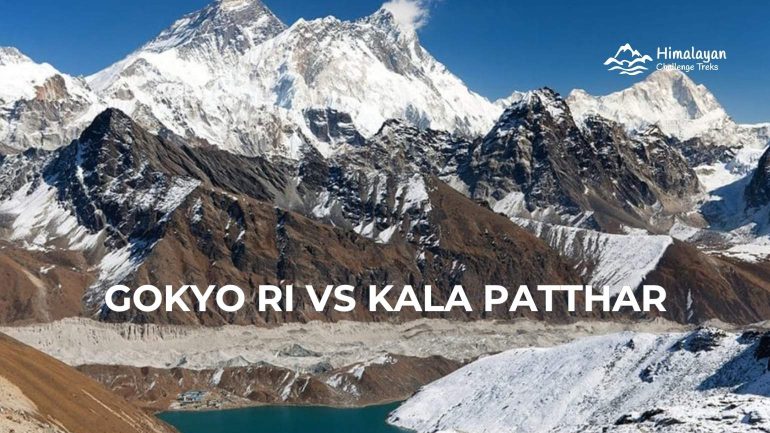
Gokyo Ri and Kala Patthar are two of the best viewpoints in the Everest region, Nepal. Kala Patthar (5,545 meters) sits on the classic Everest Base Camp route and offers a close-up view of Everest, Nuptse, and Changtse. Its proximity to the peaks makes Everest feel huge, but the view is less expansive. Whereas Gokyo Ri (5,357 meters) lies in the Gokyo Valley, away from the main EBC trail, and overlooks the turquoise Gokyo Lakes and Ngozumpa Glacier.
When comparing Gokyo Ri vs Kala Patthar, it comes down to the view you prefer. Gokyo Ri offers a wider panorama of four 8,000-meter peaks: Everest, Lhotse, Makalu, and Cho Oyu. It also gives you lakes and glaciers alongside the mountains. Therefore, Kala Patthar is better for a close-up Everest view, while Gokyo Ri is the better choice for a wider, more varied landscape.
Gokyo Ri vs Kala Patthar at a Glance
Gokyo Ri vs Kala Patthar comes down to the views, route, difficulty, and overall trekking experience. Gokyo Ri offers a wider panorama with lakes and glaciers, while Kala Patthar gives you a closer view of Everest on the classic EBC route.
Here’s how the two viewpoints compare:
| Comparison | Gokyo Ri | Kala Patthar |
|---|---|---|
| Altitude | 5,357m (17,575ft) | 5,545m (18,192ft) trekking point |
| Location | Gokyo Valley, west of the main EBC trail | Standard EBC route, above Gorak Shep |
| Everest view | Wider and more distant, with Lhotse, Makalu, and Cho Oyu | Closer and more dramatic, with Nuptse and Lhotse |
| Scenery | Gokyo Lakes, Ngozumpa Glacier, and 360° mountain views | Khumbu Glacier, Everest, Nuptse, and the iconic Base Camp valley |
| Route | Gokyo Valley via Dole and Machhermo | Standard EBC trail via Tengboche and Dingboche |
| Climb from village | ~600m from Gokyo | ~400m from Gorak Shep |
| Difficulty | Moderate to hard; longer route with gradual gains | Moderate; shorter route with a steeper climb |
| Crowds | Generally quieter | Busier, especially around sunrise |
| Photography | Wide panoramas, lakes, glaciers, and multiple peaks | Close-up Everest and dramatic mountain shots |
| Best for | Scenic variety and quieter trails | Classic EBC experience and close-up Everest views |
Gokyo Ri
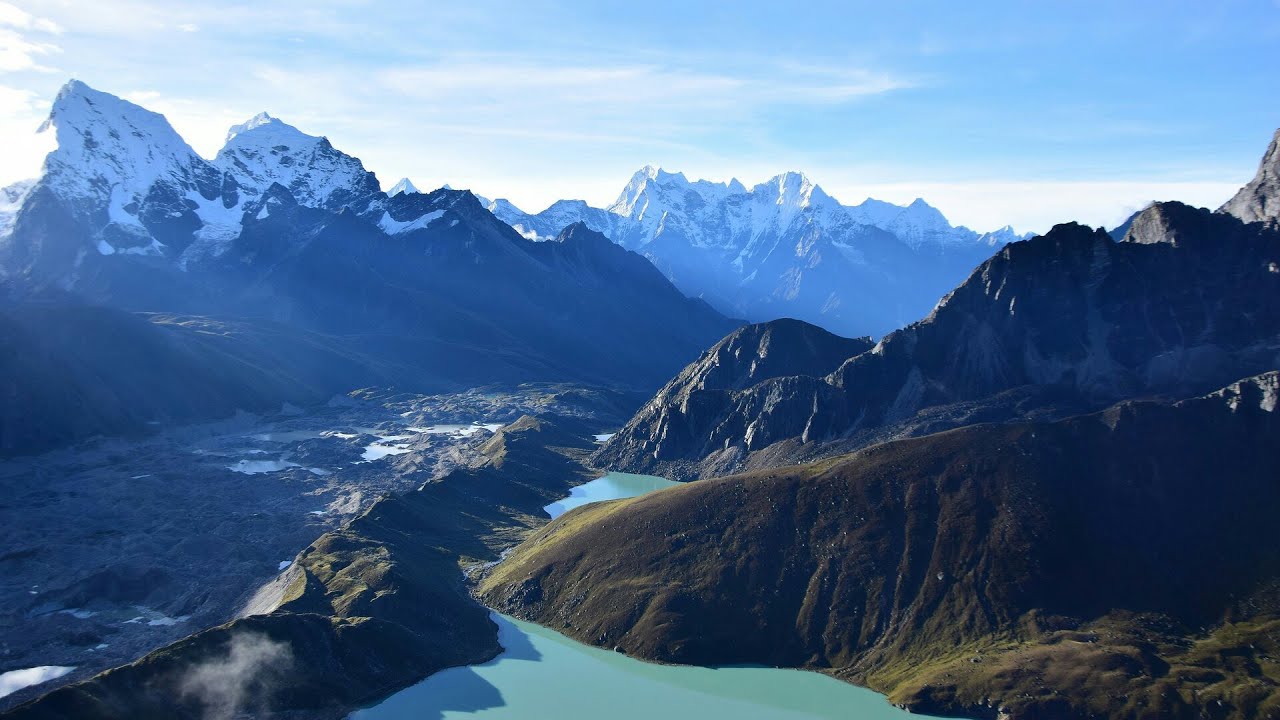
Gokyo Ri sits above Gokyo village (4,750m) in the Gokyo Valley, beside the massive Ngozumpa Glacier and the turquoise Gokyo Lakes. The climb is steep but non-technical, so you won’t need any specialized mountaineering gear. It usually takes 2-3 hours from the village and reaches 5,357m, where the available oxygen is roughly half that at sea level.

Unlike Kala Patthar, Gokyo Ri looks toward Everest from a greater distance and an adjacent valley. This creates a wider Himalayan panorama rather than a view dominated by one peak. From the summit, you can see Everest, Lhotse, Makalu, and Cho Oyu, along with Nuptse and Pumori. The lakes and glaciers below add more color and depth to the mountain scenery.
What Makes Gokyo Ri Special?
- Four 8,000m Peaks: Offers views of Everest, Lhotse, Makalu, and Cho Oyu from one viewpoint.
- Gokyo Lakes Vista: The turquoise glacial lakes create a striking foreground below the summit.
- Wide Panorama: Its distance from the main peaks gives you a broad, open view of the Himalayas.
- Quieter Trail: The Gokyo Valley route is generally quieter than the main EBC trail.
- Unique Route: Reached through the Gokyo Valley or as part of the challenging Three Passes Trek or the Gokyo Lake Trek.
- Great for Photography: Combines mountains, glaciers, and lakes in the same frame.
- Alternative Viewpoint: The Fifth Gokyo Lake and Scoundrel’s Viewpoint offer another perspective if clouds affect the view from Gokyo Ri.
- Ideal Trekker Profile: Best for trekkers who want scenic variety, quieter trails, and wide multi-peak views rather than just a close-up view of Everest.
Kala Patthar
Kala Patthar rises above Gorak Shep (5,164m) on the standard Everest Base Camp route. The rocky climb up is steep and takes roughly 1.5-3 hours to reach the viewpoint. Since Everest is not clearly visible from Everest Base Camp because of Nuptse, Kala Patthar provides the classic close-up view of the world’s highest peak that trekkers want.

The climb reaches around 5,545m, taking you into very thin high-altitude air. The reward is a dramatic view of Everest, with Nuptse, Lhotse, and Pumorifilling the surrounding skyline. Sunrise hike is especially popular, as early light can illuminate the peaks.
What Makes Kala Patthar Special?
- Close-Up of Everest, world’s highest mountain: Offers one of the closest walkable viewpoints of Mount Everest on the EBC trek.
- Dramatic Mountain Setting: Everest appears large and imposing alongside Nuptse, Lhotse, and Pumori.
- Iconic Sunrise: Early morning light can create striking views of Everest and the surrounding peaks.
- Classic EBC Experience: Its location above Gorak Shep makes it a popular viewpoint on the standard EBC itinerary.
- Historic Appeal: Kala Patthar is one of the most famous viewpoints in the Everest region.
- Ideal Trekker Profile: Best for trekkers whose main goal is to see Everest up close, follow the classic EBC route, and experience a famous Himalayan viewpoint even if the trail is busier.


Gokyo Ri vs Kala Patthar Detailed Comparison
Gokyo Ri and Kala Patthar offer different trekking experiences despite being in the same Everest region. The route, difficulty, Everest views, sunrise, photography, crowds, and cost all affect which one is a better fit for you. Here’s how they compare across these key factors.
Gokyo Ri vs Kala Patthar Trek Route
At Himalayan Challenge (HC) Treks, we offer both the Gokyo Ri Trek and the Everest Base Camp Trek. Both itineraries start from Kathmandu/Manthali and fly to Lukla, sharing the trail to Namche Bazaar before taking different routes. The Gokyo Ri Trek lasts 11 days and heads through Dole and Machhermo into the Gokyo Valley, while the EBC Trek which lasts 14 days continues through Tengboche, Dingboche, Lobuche, and Gorak Shep before reaching Kala Patthar.
Here’s a side-by-side comparison of the two itineraries to help you see how the routes, trekking days, and key stops differ.
| Day | Gokyo Ri Trek | Everest Base Camp Trek |
|---|---|---|
| 1 | Fly Kathmandu/Manthali to Lukla and trek to Phakding | Fly Kathmandu/Manthali to Lukla and trek to Phakding |
| 2 | Trek to Namche Bazaar (3,440m) | Trek to Namche Bazaar (3,440m) |
| 3 | Acclimatization day in Namche | Acclimatization day in Namche |
| 4 | Trek to Dole (4,200m) | Trek to Tengboche (3,860m) |
| 5 | Trek to Machhermo (4,470m) | Trek to Dingboche (4,410m) |
| 6 | Trek to Gokyo (4,790m) | Acclimatization day in Dingboche |
| 7 | Rest and acclimatization at Gokyo; early morning Gokyo Ri climb | Trek to Lobuche (4,940m) |
| 8 | Trek to Phortse | Trek to Gorak Shep and Everest Base Camp |
| 9 | Trek to Namche Bazaar | Hike to Kala Patthar and trek to Pheriche |
| 10 | Trek to Lukla | Trek to Tengboche |
| 11 | Fly back to Kathmandu | Trek to Namche Bazaar |
| 12 | — | Trek to Phakding |
| 13 | — | Trek to Lukla |
| 14 | — | Fly back |
Is Gokyo Ri Harder Than Kala Patthar?
No, Gokyo Ri is not objectively harder than Kala Patthar, but it does require more cumulative leg endurance on summit morning. Gokyo Ri involves a larger vertical climb, with about 600 meters of ascent from the village of Gokyo. In comparison, Kala Patthar requires about 400 meters of ascent from Gorak Shep. However, Kala Patthar can feel harder because of its higher starting point, steeper terrain, and thinner air.
- Starting altitude: Kala Patthar starts from Gorak Shep at around 5,164m, while Gokyo Ri starts from the village of Gokyo at around 4,750m. The lower starting point makes the Gokyo Ri climb easier on the lungs.
- Trail: Kala Patthar has a steeper, rockier final section, while Gokyo Ri follows a more gradual trail with switchbacks.
- Acclimatization: The Gokyo route gains altitude more gradually, while the EBC route involves several days at very high elevations before the Kala Patthar climb.
Neither climb is technical, and you don’t need mountaineering gear. It’s just that Kala Patthar puts more strain on your breathing and legs over a shorter, steeper climb, while Gokyo Ri requires more sustained effort over a longer ascent.
Which Has Better Views of Mount Everest?
It depends on the kind of Everest view you want. Kala Patthar sits much closer to Everest, giving you a dramatic, close-up view of the mountain. From the viewpoint, Everest rises behind Nuptse, while Lhotse and Pumori add to the surrounding skyline. The closer distance makes the peaks feel larger and more imposing, but the view is less expansive.
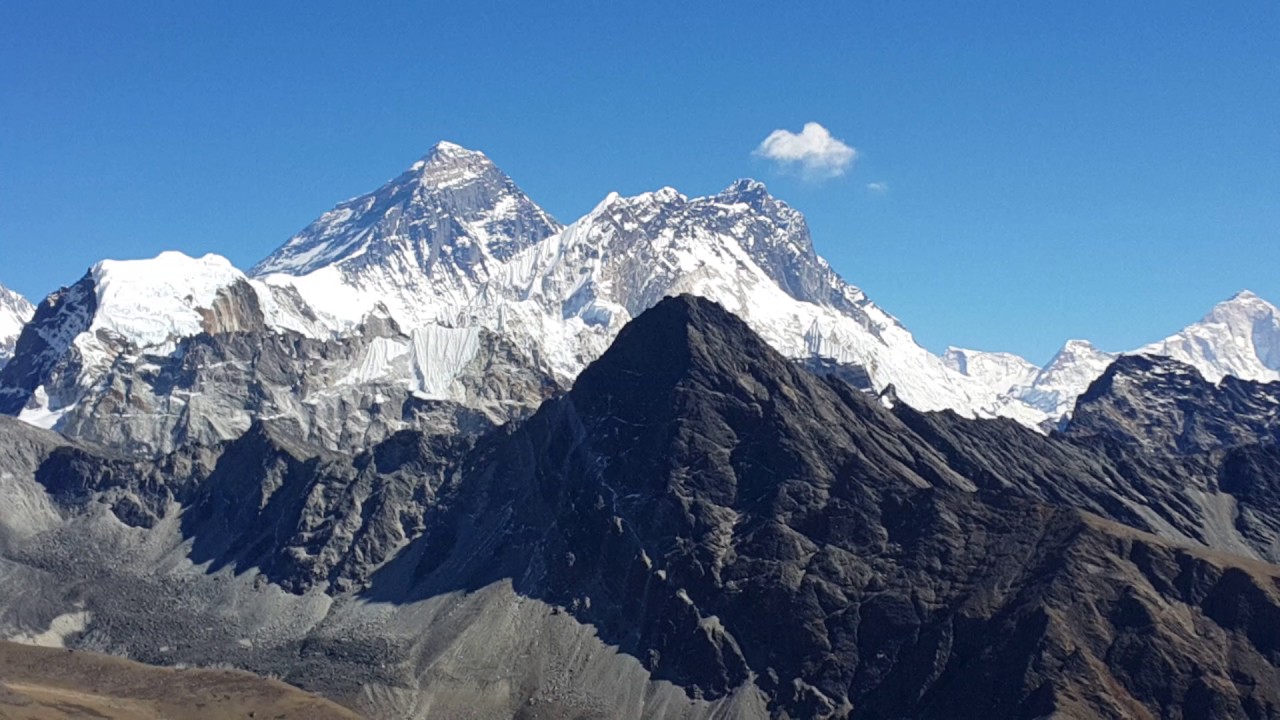
Gokyo Ri sits farther west in the Gokyo Valley, offering a wider perspective of Everest and the surrounding peaks. From the summit, you can see Everest, Lhotse, Makalu, and Cho Oyu in the same panorama, with the Gokyo Lakes and Ngozumpa Glacier below. So, Kala Patthar offers a closer and more dramatic Everest view; Gokyo Ri offers a wider Himalayan panorama.
What Is the Best Sunrise Viewpoint, Gokyo Ri or Kala Patthar?
Gokyo Ri is the better sunrise viewpoint for lighting and overall scenery, while Kala Patthar is the more famous sunrise spot. Kala Patthar is part of most standard EBC itineraries, so trekkers often make the pre-dawn climb from Gorak Shep to watch sunrise over Everest. However, the sun rises behind the Everest-Lhotse massif from this viewpoint, which can leave Everest in shadow during the first light.

In contrast, Gokyo Ri offers a wider and more visually striking sunrise. From the summit, you can view the morning light lighten up Everest, Lhotse, Makalu, and Cho Oyu, while the turquoise Gokyo Lakes and Ngozumpa Glacier add color to the foreground. The viewpoint is also quieter than Kala Patthar, making the sunrise moment more peaceful.
Many experienced guides recommend Kala Patthar at sunset instead, when the evening light can illuminate Everest’s face more directly. For a morning summit, Gokyo Ri has the edge for scenery, lighting, and photography.
Gokyo Ri vs Kala Patthar for Photography
Gokyo Ri is better viewpoint if you want variety of landscapes for photography. Kala Patthar is better for dramatic, close-up mountain shots since it allows you to be much closer to Everest. Hence, it works best for tighter compositions where the mountain dominates the frame. You can capture Everest alongside Nuptse and Lhotse, with the Khumbu Glacier and Icefall below. Since the scene is dominated by rock, snow, and ice, the result is dramatic and high-contrast. However, the landscape offers less variety, and the viewpoint can be crowded, especially around sunrise.
In comparision, Gokyo Ri offers more elements in a single frame. Because of its wider perspective, you can photograph the turquoise Gokyo Lakes, Ngozumpa Glacier, and several major Himalayan peaks together, including Everest, Lhotse, Makalu, and Cho Oyu. The summit is also generally quieter, so photographers have more space and time to compose their shots. Therefore, Gokyo Ri is the stronger viewpoint for wide and varied landscapes, whereas Kala Patthar is better for close, dramatic shots of Everest.
Which Trek Has Fewer Crowds, Gokyo Ri or Kala Patthar?
Gokyo Ri is significantly less crowded than Kala Patthar, offering a quieter trekking experience away from the busy main EBC trail. It follows the Gokyo Valley route, so you leave the main trail and continue through Dole and Machhermo. As a result, fewer people reach the valley and its viewpoint. From Dole onward, the trails feel much quieter, and you may have long stretches with few other trekkers around.
Meanwhile, Kala Patthar sits on the standard Everest Base Camp route and receives far more trekkers, porters, and yak traffic, especially during the peak trekking months of October and April. The trail has a lively, social atmosphere, but the small summit can become crowded on clear mornings as trekkers gather for sunrise and photographs.
How Much Does Gokyo Ri Cost Compared to Kala Patthar and EBC?
Gokyo Ri and Kala Patthar are fairly similar in cost as standalone treks. The final price depends on the route, number of days, accommodation, guide services, and what your package includes. A combined Gokyo-Cho La Pass-EBC trek costs more because it adds extra trekking days, meals, and accommodation. The permit fees are the same for both routes. Foreign trekkers pay NPR 3,000 for the Sagarmatha National Park Entry Permit and NPR 2,000 for the Khumbu Pasang Lhamu Rural Municipality Permit.
For a real-world comparison, at HC Treks, the 11-day Gokyo Ri Trek costs USD 2,500, currently discounted to USD 2,245. Its 14-day Everest Base Camp Trek with Kala Patthar costs USD 2,800, currently discounted to USD 2,570. The EBC trek costs more mainly because it adds three days to the itinerary and includes both Everest Base Camp and Kala Patthar.
Note: Discounted prices are subject to change and may vary based on the current offer and booking date.
When Is the Best Time to Climb Gokyo Ri or Kala Patthar?
Spring (March to May) and autumn (September to November) are the best seasons for both Gokyo Ri and Kala Patthar. These months offer clearer mountain views, more stable weather, and better trekking conditions. Winter can bring heavy snow, freezing temperatures, and trail closures at higher elevations, while the summer monsoon brings cloud, rain, and landslide risks on lower trails.
Autumn vs. Spring
Both seasons work well, but each has its own advantage:
- Autumn (September-November): Usually offers the clearest skies and sharpest mountain visibility. The monsoon has cleared dust from the atmosphere, making it especially good for long-distance photography from both viewpoints.
- Spring (March-May): Brings warmer temperatures and blooming rhododendrons across the lower valleys. Afternoon haze can increase as the season progresses, so early morning climbs are best for clear mountain views.
Shoulder-Season Timing for Fewer Crowds
If you want fewer people, early December or late February to early March can be worth considering. Early December often still has clear, crisp weather, although temperatures drop sharply. Winter conditions begin easing by late February and early March, before the main spring trekking crowds arrive.
These shoulder periods can make a noticeable difference at Kala Patthar, which is usually busier, while the quieter Gokyo Valley can feel even more peaceful.
Can You Visit Both Gokyo Ri and Kala Patthar on the Same Trek?
Yes. You can visit both Gokyo Ri and Kala Patthar on our 15-day Everest Base Camp Trek via Gokyo Lake package by crossing Cho La Pass (5,420m). The route takes you through the Gokyo Valley first, then over Cho La into the Khumbu Valley before continuing to Everest Base Camp and Kala Patthar. This creates a circuit rather than making you retrace the same trail.
Is It Worth Doing Both Gokyo Ri and Kala Patthar?
Yes, doing both is worth it if you have enough time, fitness, and experience for a longer high-altitude trek. The combined route lets you experience Gokyo Ri, Everest Base Camp, and Kala Patthar in one trip. Additionally, Cho La Pass crossing adds another major highlight to the journey. You also avoid having to choose between the two viewpoints.
The only issue is that this combined route is longer, harder, and more expensive. Crossing Cho La involves a significant high-altitude climb, and the extra days mean more time on the trail. Therefore, trekkers with limited time or little high-altitude experience may be better off choosing one viewpoint, while those with around two weeks or more and good preparation can get much more from combining both.
Which Is Better for You, Gokyo Ri or Kala Patthar?
There’s no single better option. It depends on what you want from the trek.If you want the classic Everest experience, Kala Patthar is probably the better pick. If you care more about lakes, glaciers, wide mountain views, and quieter trails, Gokyo Ri may be more your thing.
Here’s a simple way to choose:
- Choose Kala Patthar if you want the classic EBC itinerary, have limited time or budget, and want an iconic close-up view of Everest.
- Choose Gokyo Ri if you prefer scenic variety, quieter trails, turquoise lakes, glaciers, and wide mountain panoramas.
- Choose both if you have two weeks or more, good fitness, and some high-altitude trekking experience. You’ll get Gokyo Ri, Cho La Pass, Everest Base Camp, and Kala Patthar in one trip.
Conclusion
Gokyo Ri and Kala Patthar offer two different ways to experience the Everest region, so there is no clear winner. Kala Patthar is the better fit for trekkers who want the classic EBC route, a shorter itinerary, and an iconic close-up view of Everest. Gokyo Ri suits those who prefer quieter trails, turquoise lakes, glaciers, and a wider Himalayan panorama.
Both viewpoints are non-technical, but you’ll need proper acclimatization and good fitness to trek comfortably at these elevations. And if you have enough time and want the full Khumbu experience, you don’t have to choose. The Cho La Pass route lets you visit Gokyo Ri, Everest Base Camp, and Kala Patthar in one unforgettable ultimate trek.


