

The total Annapurna Circuit Trek Cost ranges from USD 1,090 to 2,500 per person for a standard 10- to 14-day itinerary, depending on whether you trek in a group, book a private service, or hire independent support staff under current national trekking rules.
Joining a multi-person group on the Annapurna Circuit Trek lowers individual expenses because overhead costs for licensed guides, porters, and private four-wheel-drive vehicles are shared equally among all participants. Solo trekkers pay more when traveling alone due to dedicated guide fees, single room occupancy surcharges, and unshared vehicle charters. Groups of 8 to 10 trekkers lower individual pricing to USD 1,090 per person while maintaining safety standards and agency oversight.
Annapurna Circuit Trek Permit Costs
You only need one Annapurna Circuit Trek permit, i.e., ACAP (Annapurna Conservation Area Permit), for which foreign nationals pay NPR 3,000 (approximately USD 20 to 22) per person, as established by NTNC Official Fee Schedules. SAARC nationals pay NPR 1,000 (approximately USD 7.50), while children under 10 years of age enter free of charge. These permits grant single-entry access and are non-transferable.
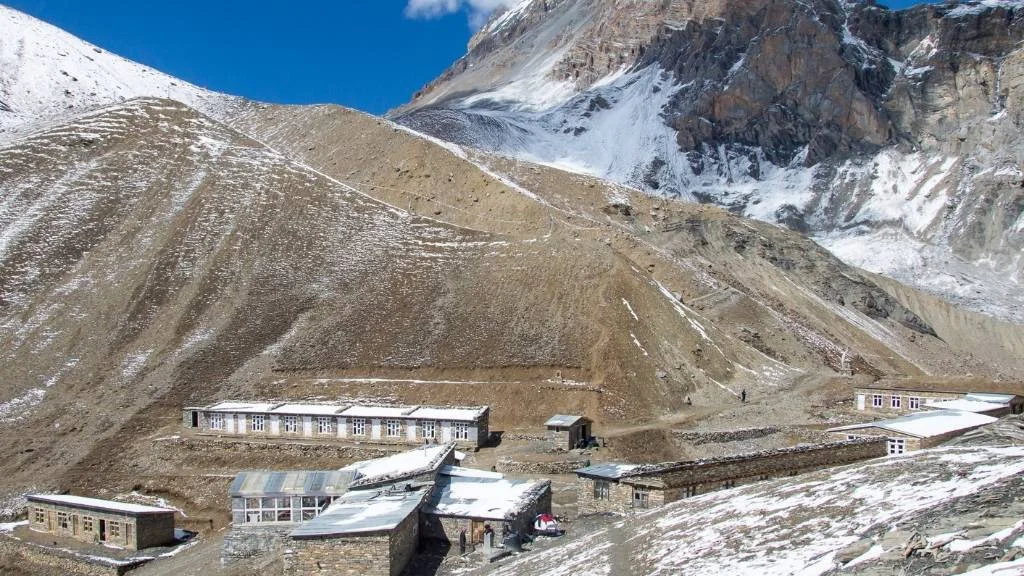
Crossing the Annapurna Conservation Area needs official government permits managed by the National Trust for Nature Conservation (NTNC) and the Nepal Tourism Board (NTB). Officials check permits at checkposts including Besisahar, Dharapani, Chame, Manang, Muktinath, Kagbeni, Jomsom and Birethanti.
Is a TIMS Card Required for the Annapurna Circuit?
No. A TIMS card is currently not inspected at Annapurna checkposts, and checkposts verify your ACAP. NTB’s revised TIMS provision of 31 March 2023 still lists the route, but, as confirmed with TAAN, no agreement on checkpost inspection has been signed. Rules can change, so HC Treks confirms the current requirement before every departure.
You still need the Annapurna Conservation Area permit, and some villages on the way ask for a small local entry fee too. Rules can change from season to season. Before you set off, it is smart to ask us or the permit office in Kathmandu or Pokhara what you need to carry.
Who Pays for Permits on a Guided Annapurna Circuit Trek?
On a guided package trek, the organizing agency covers all permit fees, government taxes, and processing paperwork within the upfront price. Agency staff collect your passport details and arrange your permit cards before departure.
If you organize an independent trek, you must pay for permits directly at Nepal Tourism Board counter offices in Kathmandu or Pokhara. Purchasing permits at mountain entry checkpoints results in a double fee penalty, raising the ACAP cost to NPR 6,000.

Food and Accommodation Costs on the Annapurna Circuit
Accommodation prices are low, but daily food costs rise as you climb higher because supplies must be carried up by porters, mules, or local tractors. Lodge rooms cost between NPR 500 and NPR 1,000 (USD 4 to 7) per night for twin beds. If you eat meals at a different teahouse, owners charge an elevated room fee of NPR 1,500 to NPR 2,000 per night.
Daily food and hot beverage expenses average USD 25 to 35 per person (NPR 3,300 to NPR 4,600). At lower elevations like Besisahar (820 m), a standard plate of Dal Bhat costs NPR 500 (USD 3). Near High Camp (4,880 m), the same meal costs NPR 1,000 to NPR 1,200 (USD 6.50 to 8.00) due to high transport overhead.
| Item | Lower Elevation (800 m – 2,500 m) | High Elevation (3,500 m – 4,900 m) |
|---|---|---|
| Twin Room | USD 4 – 5 | USD 6 – 8 |
| Breakfast (Oatmeal / Eggs) | USD 3 – 5 | USD 6 – 8 |
| Lunch / Dinner (Dal Bhat) | USD 3 – 4 | USD 7 – 8 |
| Pot of Black Tea | USD 1 – 2 | USD 3 – 4 |
Guide and Porter Costs for the Annapurna Circuit Trek
A licensed trekking guide charges between USD 25 and 35 per day. This rate covers guide wages, food, lodge accommodation, high-altitude medical insurance, and safety equipment. A porter charges USD 18 to 25 per day to carry up to 20 kg of trekker luggage.
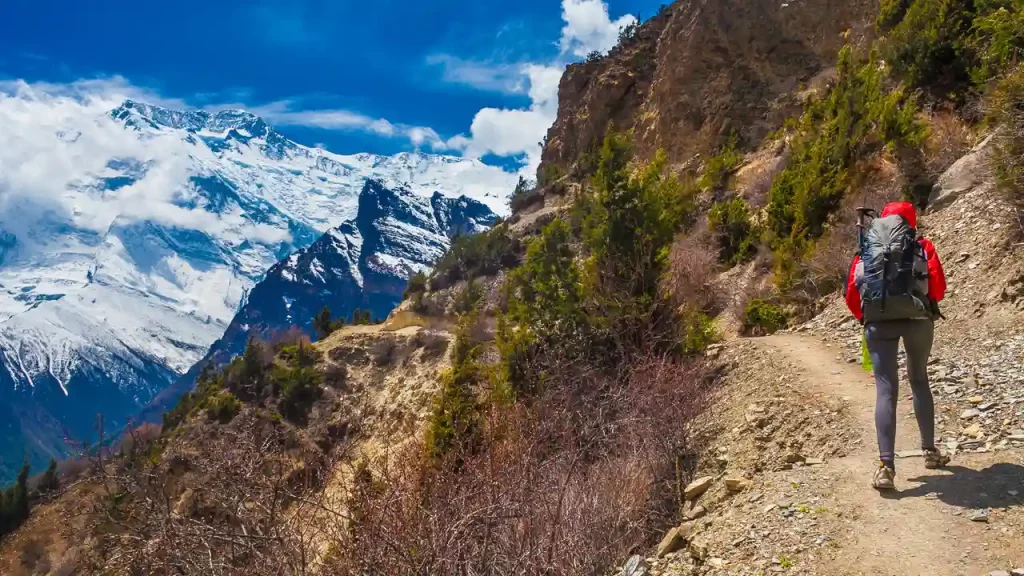
Under official safety guidelines introduced by the Nepal Tourism Board Mandate, foreign trekkers must hire a certified, licensed guide when trekking within protected mountain areas. Hiring legal staff keeps trekking routes safe and provides legal jobs for local Himalayan communities.
Can You Share a Guide or Porter to Reduce Costs?
Sharing support staff reduces daily expenses without lowering safety protocols. Two trekkers can share one porter by placing 10 kg each into a single 20 kg duffel bag. This cuts individual porter costs to USD 9 to 12 per day.
Small groups of two to four trekkers can share a single licensed guide. Splitting a USD 30 daily guide wage among three people reduces the individual guide cost to USD 10 per day.
Is Hiring a Guide Worth the Extra Cost?
A licensed guide handles trail logistics, monitors altitude adaptation, arranges emergency medical evacuations, and secures lodge rooms during busy autumn and spring seasons.
“Crossing Thorong La Pass in winter conditions needs continuous monitoring of snowpack and wind speed, something a map or mobile phone application cannot calculate for you,” notes Pasang Sherpa, 38, lead mountain guide with verified status under the Nepal Mountain Guide Association.
Transportation Costs for the Annapurna Circuit

Ground transportation costs depend on whether you select public buses, shared local jeeps, private four-wheel-drive vehicles, or domestic flights between Jomsom and Pokhara.
| Route Sector | Transport Choice | Average Cost (USD) |
|---|---|---|
| Kathmandu to Besisahar | Public Local Bus | 8 – 10 |
| Kathmandu to Besisahar | Express Tourist Bus | 12 – 15 |
| Kathmandu to Besisahar | Private Jeep Charter | 150 – 180 |
| Besisahar to Dharapani | Shared Local Jeep | 25 – 35 |
| Besisahar to Chame | Private Four-Wheel Drive | 180 – 220 |
| Muktinath / Jomsom to Pokhara | Shared Local Jeep / Bus | 25 – 35 |
| Jomsom to Pokhara | Domestic Flight | 125 – 155 |
| Pokhara to Kathmandu | Express Tourist Bus | 12 – 25 |
| Pokhara to Kathmandu | Domestic Flight | 100 – 120 |
Note: When arranging transport schedules and group departure dates, team support from HC Treks provides pre-booked private jeeps and verified drivers.

Equipment, Clothing, Insurance, and Other Preparation Costs
Make sure you have warm clothes for high altitudes and full medical insurance before starting your trek. High-altitude travel insurance must cover emergency helicopter evacuation up to 6,000 m elevation. An insurance policy meeting high-altitude requirements costs between USD 120 and 250 for a two-week trekking duration.
Trekking Gear You Need to Buy or Rent
Purchasing new technical gear in your home country can add USD 600 to 1,200 to pre-trip expenses. Renting technical equipment in Thamel (Kathmandu) or Lakeside (Pokhara) reduces initial preparation costs.
| Equipment Item | Purchase Cost (USD) | Rental Rate per Day (USD) |
|---|---|---|
| Down Jacket (-10°C rating) | 120 – 300 | 1.50 – 2.50 |
| Four-Season Sleeping Bag | 150 – 350 | 1.50 – 2.50 |
| Trekking Poles (Pair) | 30 – 80 | 1.00 – 1.50 |
| Ankle-Support Boots | 100 – 220 | Not recommended for rental |
| 35L – 45L Trekking Backpack | 60 – 150 | 1.50 – 2.00 |
Hidden Costs of the Annapurna Circuit Trek
Unexpected daily expenses along the trail can cost an extra USD 10–20 per day if you don’t plan for them:
- Hot Showers: Teahouses charge NPR 300 to NPR 600 (USD 2 to 3.5) for gas or solar water heating above Chame.
- Battery Charging: Electricity for power banks and phones costs NPR 200 to NPR 500 (USD 1.5 to USD 3) per device at high elevation.
- Wi-Fi Access: Teahouses above Manang charge NPR 300 to NPR 500 (USD 2 to USD 2.70) for satellite internet access.
- Drinking Water: Treated or bottled water costs NPR 100 per liter at low altitudes, reaching NPR 400 (USD 2.5) per liter near Thorong Phedi.
- Support Staff Tipping: Standard tips for your guide and porter are around USD 100–150 per trekker for the entire trek.
- Emergency Horse Hire: Renting a horse from Thorong Phedi to Thorong La Pass costs USD 150 to 200 during extreme tiredness.
Annapurna Circuit Trek Cost by Trekking Package Type
Trekking packages vary based on logistics management, group size, and included amenities.
Independent Annapurna Circuit Trek Cost
An independent trek with a directly hired licensed guide costs USD 2,000 per person for 14 days. This covers permits, public transit, guide daily wages, basic meals, and twin-share teahouse rooms. You pay daily lodge bills in local cash yourself.
Guided Annapurna Circuit Trek Cost
A standard guided package through a registered agency costs between USD 1,090 and USD 1,350 per person. This includes permits, licensed guide and porter wages, ground transfers, three meals daily, teahouse rooms, and pre-departure hotel nights in Kathmandu.
Private Annapurna Circuit Trek Cost
A customized private trek costs between USD 1,800 and USD 2,500 per person. This option includes private four-wheel-drive jeep transfers, customized daily walking itineraries, upgraded hotel stays in Kathmandu and Pokhara, dedicated guide ratios, and higher luggage weight allowances.
What Is Included Excluded in an Annapurna Circuit Trek Package?
| Category | Standard Inclusions | Standard Exclusions |
|---|---|---|
| Permits | ACAP fees | Nepal tourist visa fees (USD 50 for 30 days) |
| Staff | Certified guide & porter wages | Guide & porter tipping gratuities |
| Accommodation | Teahouse room lodging | Hot showers, Wi-Fi, battery charging |
| Meals | Breakfast, lunch & dinner daily | Bottled drinks, alcohol, soft drinks |
| Transport | Public / shared ground transfers | Optional domestic flight sectors |
| Insurance | Staff medical & rescue insurance | Personal high-altitude travel insurance |
How Much Cash Should You Carry on the Annapurna Circuit?
Plan to carry between NPR 35,000 and NPR 50,000 per person, which is about USD 240 to USD 340. Change your money in Kathmandu or Pokhara before you head to the trailhead and ask for a mix of small notes, such as NPR 100, NPR 500, and NPR 1,000, because teahouse owners in the mountains cannot give change for big bills. Meals, rooms, hot showers, and phone charging all add up, so it helps to keep a little extra for the days you want a treat.
Do not count on finding a cash machine on the way, because there are none between Besisahar and Jomsom. Card machines in mountain teahouses are also offline when the power goes out or the signal drops. Cash is the only thing you can rely on out there, so pack more than you think you need and keep it in a safe place in your bag.
Does Trekking in Peak Season Cost More?
Yes, it does, though not in every way. The government permit fees and the daily pay for licensed guides stay the same all year. What changes is the cost of getting around and staying on the way. Autumn (September to November) and spring (March to May) are the busiest months, and when many trekkers want the same things, prices go up.
Private jeeps and short flights between Jomsom and Pokhara cost more in these months because seats fill fast. In busy villages like Manang and Thorong Phedi, teahouses ask you to eat your meals at the place where you sleep. The room price is fixed, so your food becomes the main cost. Book your transport early and keep some extra cash handy, and your peak season trek will stay smooth and fair.
How to Reduce Your Annapurna Circuit Trek Cost Without Compromising Safety
- Use Water Purification Tablets: Chlorine dioxide tablets save USD 30 to 50 on water purchases while eliminating plastic waste.
- Rent High-Altitude Gear: Renting heavy down jackets and sleeping bags in Thamel saves hundreds compared to buying gear at home.
- Choose Dal Bhat: Traditional Dal Bhat offers free refills of rice, lentil soup, and vegetable curry, providing high calories per dollar.
- Trek in a Small Group: Joining 4 to 8 trekkers divides guide wages, porter fees, and jeep charter expenses among multiple people.
- Bring a Solar Power Bank: Recharging mobile devices with a portable solar panel avoids daily teahouse battery charging charges.
Example Annapurna Circuit Trek Budget for One Person
The budget table below shows the costs for a 12-day trek for two trekkers sharing guides, porters, and transport:
| Cost Item | Expense (USD) |
|---|---|
| ACAP Permits | 20-22 |
| Licensed Guide (Shared 1:2, 12 Days) | 300 |
| Porter (Shared 1:2, 12 Days) | 216 |
| Teahouse Room Lodging (12 Nights) | 60 |
| Daily Meals & Hot Drinks | 336 |
| Ground Transport | 90 |
| Gear Rental & Incidental Expenses | 85 |
| Support Staff Tips | 100 |
Conclusion
Planning your budget carefully provides you with a safe and well-organized trek through the central Himalayas of Nepal. Make sure to include the costs of permits, guides, food, transport, and other daily expenses to avoid unexpected costs along the way. For help with your trek, experienced local guides, and clear prices based on your group size, contact Himalayan Challenge Treks (HC Treks) to plan your trip easily.


