To trek the Annapurna Circuit, you only need a single Annapurna Conservation Area Permit (ACAP) permit fee is 3,000 NPR (approximately USD 20-23), and a TIMS card is not required for this route. If you arrive at an entry checkpost like Dharapani or Besisahar without a permit, authorities can impose a 100% fine, doubling your fee to 6,000 NPR in cash on the spot. Even worse, administrative errors or mismatched passport data can halt your progress at the gates.
Understanding the exact legal framework, official government pricing, and application steps makes sure your trek proceeds without interruption. Managed by the National Trust for Nature Conservation, the permit system protects local ecosystems and manages trail safety around high-altitude passes. This guide breaks down every official rule, fee table, checkpoint location, and entry policy so you can secure your paperwork correctly.
Which Permits Do You Need for the Annapurna Circuit Trek?
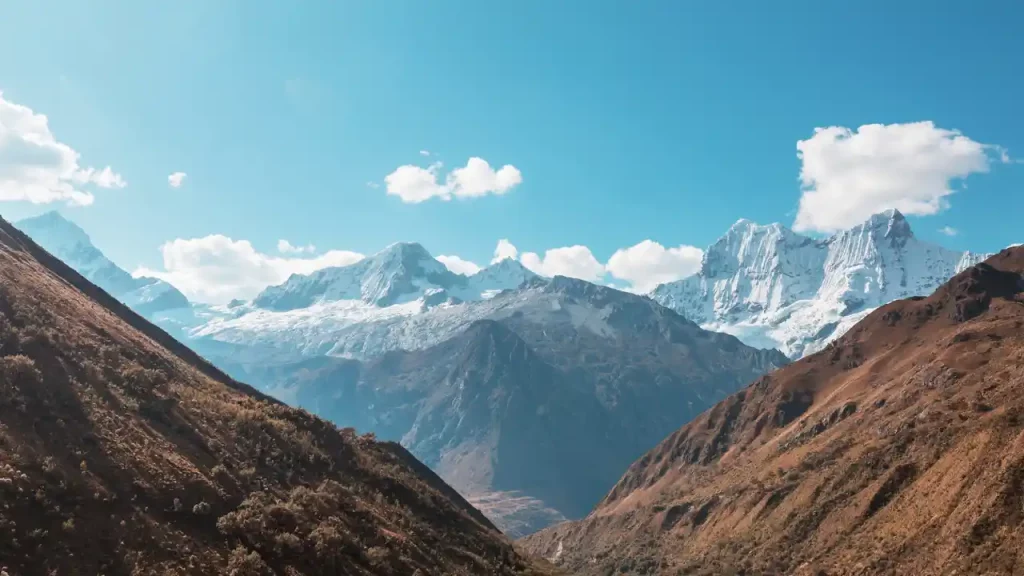
The standard Annapurna Circuit route follows the rules of the National Parks and Wildlife Conservation Act, 1973. These rules help protect wildlife and nature while managing the number of tourists visiting the area.
Annapurna Conservation Area Permit (ACAP)
The Annapurna Conservation Area Permit (ACAP) is the mandatory entry document for the standard Annapurna Circuit route. Established in 1986, the Annapurna Conservation Area is the largest protected area in Nepal, covering 7,629 sq km.
The entry fee depends on your nationality, not on how many days you trek. Once issued, your permit remains valid for a single entry into the conservation area, regardless of whether your itinerary lasts ten days or thirty days. However, if you exit the conservation area boundary and enter again later, you must purchase a new permit. The official fee for the Annapurna Conservation Area Permit (ACAP) is detailed below:
| Nationality Category | Fee in Nepalese Rupees | Fee in USD Equivalent |
|---|---|---|
| Foreign Nationals | 3,000 NPR | 22 USD to 23 USD |
| SAARC Nationals | 1,000 NPR | 7.50 USD to 8 USD |
| Children Under 10 Years Old | Free (0 NPR) | 0 USD |
| Nepali Citizens | Free (0 NPR) | 0 USD |
Is a TIMS Card Required for the Annapurna Circuit Trek?
No. A TIMS card is currently not inspected on the Annapurna Circuit, and checkposts verify your ACAP rather than a TIMS card.
Here is the background. The Trekkers’ Information Management System (TIMS) was historically run by the Nepal Tourism Board (NTB) and the Trekking Agencies’ Association of Nepal (TAAN). NTB’s revised TIMS provision of 31 March 2023 lists the Annapurna Circuit among routes where a licensed guide and an agency-issued TIMS card are required (NPR 2,000 for foreigners, NPR 1,000 for SAARC nationals, available only through registered agencies). As confirmed with TAAN, no agreement (MoU) between TAAN and NTB on TIMS inspection at checkposts has been signed. In practice, Annapurna checkposts do not inspect TIMS cards, and NTNC’s online ACAP application does not ask for one.
Many travel websites still tell trekkers to buy a TIMS card alongside the ACAP. For this route, that advice is outdated. Rules can change, so Himalayan Challenge Treks (HC Treks) confirms the current requirement before every departure.
At every active checkpost such as Besisahar, Dharapani, Chame, Manang, Muktinath, and Birethanti, checkpoint officers verify your Annapurna Conservation Area Permit (ACAP) and guide credentials, but they do not request a TIMS card.
Do You Need a Guide for the Annapurna Circuit?
Yes, a guide is required, and the NTNC online permit form says so itself. The form has no agency field, and guide details are optional. NTB’s TIMS page still lists the Annapurna Circuit under its licensed-guide provision, but no checkpost inspection mechanism is currently in place.
A licensed guide still adds real value on this route. They help with acclimatization decisions before Thorong La (5,416 m), weather and route conditions, emergency coordination, and permit paperwork. At HC Treks, every Annapurna Circuit itinerary includes a licensed guide.
Do You Need a Restricted-Area Permit for the Annapurna Circuit?
You do not need a Restricted-Area Permit (RAP) for the standard Annapurna Circuit Trek. The traditional trail, starting from Besisahar, passing through Manang, crossing Thorong La Pass, and descending through Muktinath, Jomsom, and Tatopani, lies entirely outside restricted zones.
However, if you plan to extend your itinerary into adjacent side valleys, strict restricted-area regulations apply. These special permits require booking through a registered local agency, mandatory licensed guides, and separate government fees.

Where to Get Annapurna Circuit Trek Permits?
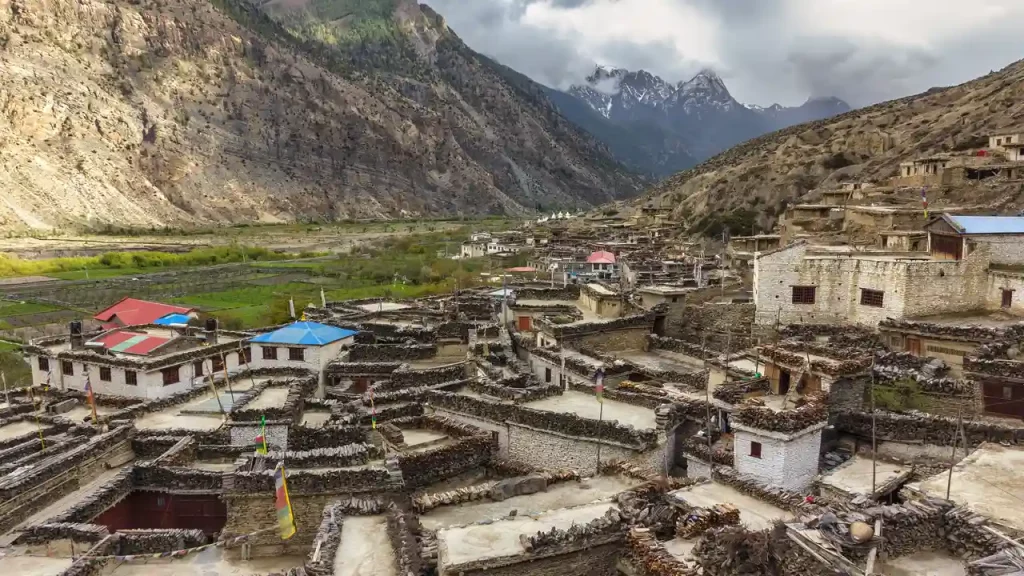
You can obtain your Annapurna Conservation Area Permit (ACAP) through official government counters in urban hubs or via an online application system before entering the trail. You can secure your permit at the following official locations:
- Kathmandu Entry Permit Counter: Located inside the Nepal Tourism Board complex at Bhrikutimandip, Kathmandu. Operating hours are Sunday through Friday from 9:00 AM to 5:00 PM (closed on public holidays). Payment at the counter is accepted in cash in Nepalese Rupees.
- Pokhara Entry Permit Counter: Located at the NTNC Service Center in Damside, Pokhara. Operating hours run Sunday through Friday from 9:00 AM to 5:00 PM. Payment at this counter is cash-only in Nepalese Rupees.
- Official NTNC Online e-Permit Portal: Accessible worldwide via the official web portal. You can submit your application, upload documents, and complete payment electronically using a Visa or Mastercard.
Note: If you arrange your trek with HC Treks, our team verifies your documentation, handles the government application, pays all fees in advance, and delivers your official stamped permit before departure.
Documents Required for Annapurna Circuit Trek Permits
To complete your application for the Annapurna Conservation Area Permit (ACAP), you must provide the following items:
- Valid Original Passport: Your passport must have at least 6 months of remaining validity from your planned entry date into Nepal.
- Passport Photocopies: At least two clear physical copies of your passport bio-data page when applying in person at city counters.
- Passport-Sized Photographs: Two recent physical passport photographs (standard 35mm x 45mm size with a light background). For online applications, a digital JPEG photo is required.
- Nepal Entry Visa: A valid Nepal tourist visa stamp or official entry documentation.
- Trekking Itinerary Details: Planned entry date, exit date, primary entry point (such as Besisahar), and exit point (such as Birethanti or Pokhara).
- Payment Method: Cash in Nepalese Rupees (3,000 NPR per person) for counter applications, or a Visa/Mastercard for online submissions.
How to Apply for Annapurna Circuit Trek Permits Step by Step Online?
Follow these step-by-step instructions to secure your permit application electronically through the official portal:
- Navigate to the government e-permit portal at
epermit.ntnc.org.npon a computer or mobile device. - Choose Annapurna Conservation Area Project (ACAP) from the drop-down menu of protected areas. One application can include up to five trekkers.
- Fill in your full name, nationality, date of birth, gender, and passport number exactly as they appear on your official travel document.
- Choose ‘Trekking’ as the purpose, ‘Annapurna Conservation Area Project (ACAP)’ as the area, then select your trekking region and enter your start and exit dates.
- Upload a clear photo for each person (maximum 1 MB).
- Select your payment method. Paying online via Visa or Mastercard incurs an additional 2.9% payment gateway charge, bringing the total online payment to approximately 3,087 NPR. Alternatively, select counter payment to process form data online and pay cash in person.
- Once approved, your official permit document is generated as a PDF file. Your permit is emailed to you, and you can also retrieve it from the “Print Permit” page. Print at least two copies to carry.
If you choose an in-person application at the Nepal Tourism Board in Kathmandu or Pokhara, visit during operating hours, complete the paper registration form, present your passport and photos, pay 3,000 NPR in cash, and collect your permit once it is issued.
Do Tilicho Lake and Thorong La Pass Require Different Permits?
Neither Tilicho Lake nor Thorong La Pass needs any additional permit beyond your standard Annapurna Conservation Area Permit (ACAP). The Tilicho Lake side trip leaves the main circuit at Manang, passes Khangsar and Shree Kharka, and climbs to Tilicho Base Camp (about 4,150 m) before reaching Tilicho Lake (4,919 m).
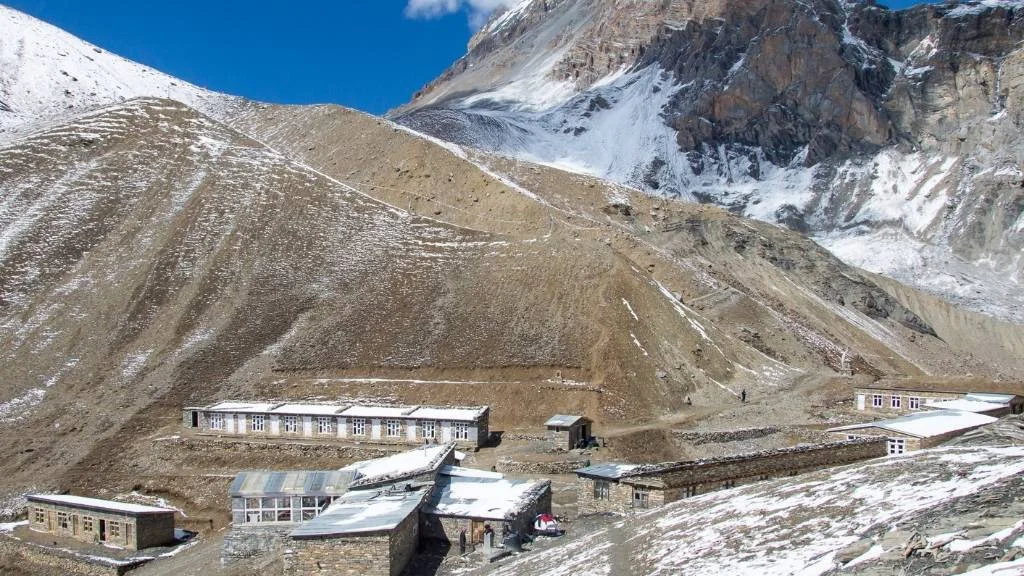
Because this entire side loop sits geographically inside the boundary of the Annapurna Conservation Area, your primary ACAP covers the trip entirely.
Similarly, Thorong La Pass (5,416 m) is the physical high point of the Annapurna Circuit. Crossing the pass connects the Manang District to the Mustang District. While you will pass local checkposts on both sides of the pass, your single ACAP document is the only paper inspected.
| Key Trail Milestone | Altitude in Meters | Specialized Permit Needed? | Covering Permit Document |
|---|---|---|---|
| Besisahar Trailhead | 760 m | No | ACAP Entry Permit |
| Tilicho Lake Side Route | 4,919 m | No | ACAP Entry Permit |
| Thorong La Pass Crossing | 5,416 m | No | ACAP Entry Permit |
| Muktinath Temple Area | 3,710 m | No | ACAP Entry Permit |
| Jomsom Airport Hub | 2,720 m | No | ACAP Entry Permit |

Permit Rules for Different Annapurna Circuit Routes
The main Annapurna Circuit goes around the entire Annapurna mountain range, while shorter routes and alternative trails follow the same permit rules. The permit rules for different trekking routes in the region are as follows:
- Full Annapurna Circuit Loop (Besisahar to Nayapul): Requires a single ACAP (3,000 NPR). Covers all entry points from Lamjung through Manang, Mustang, Myagdi, and Kaski districts.
- Short Circuit (Besisahar to Jomsom with Flight Out): Requires a single ACAP (3,000 NPR). Your permit is verified at entry in Besisahar and checked again before boarding domestic flights at Jomsom Airport.
- Annapurna Circuit Combined with Annapurna Base Camp: Requires a single ACAP (3,000 NPR). Because both the circuit and base camp trails lie inside the same conservation boundary.
- Annapurna Circuit Combined with Poon Hill Extension: Requires a single ACAP (3,000 NPR). The Ghorepani Poon Hill trail lies inside the southern ACAP zone.
Annapurna Circuit Permit Checkpoints and Common Problems
Major active checkpoints on the Annapurna Circuit include:
- Besisahar Checkpoint: Located in Lamjung District as the primary entry registration point for trekkers.
- Dharapani Checkpoint: Situated at 1,860 m, this post registers trekkers entering the upper Marsyangdi River valley.
- Chame Checkpoint: Located in the district headquarters of Manang (2,670 m), it verifies physical permit documents and guide credentials.
- Manang Village Checkpost: Situated at 3,540 m, where officers verify safety logs before trekkers head toward Tilicho Lake or Thorong La Pass.
- Kagbeni Muktinath Checkpoint: Located on the Mustang side at elevations of 2,800 m to 3,710 m, it marks the boundary of the restricted area leading north toward Upper Mustang
- Jomsom Checkpoint: Located near the airfield and bus station (2,720 m) to register outbound trekkers.
- Birethanti Checkpoint: Located near the southern exit of the conservation area in Kaski District, this is the final checkout point for the circuit.
What Happens if Your Permit Details Are Incorrect?
If your physical permit contains typos, incorrect passport numbers, or mismatched nationality data, checkpoint officers will pause your progression. Minor spelling errors in your name can be resolved if your passport photo matches the administrative log. However, incorrect passport numbers can cause serious problems with permit approval.
If a passport number on your permit does not match your physical passport, checkpoint officers cannot verify your identity in the official database. In such instances, you may be required to purchase a new permit at double the price (6,000 NPR) or wait until local officers contact the main head office in Kathmandu or Pokhara for manual verification.
Common Permit Mistakes to Avoid
- Buying Permits at Trail Checkposts: Get your permit in Kathmandu, Pokhara, or online beforehand to avoid fines.
- Carrying Only Digital Copies: Carry at least two printed copies, as checkpoints require physical permits for stamping.
- Losing Your Permit: Keep your paper permit safe, as you may need to show it at entry and exit points.
- Exiting and Re-Entering the Area: ACAP permits provide single entry, so returning after leaving may require a new permit.
Annapurna Circuit Permits for Independent and Guided Trekkers
Foreign trekkers in mountain conservation areas of Nepal, including the Annapurna Conservation Area, must follow Nepal Tourism Board rules and travel with a licensed guide arranged through an authorized agency. Although solo trekkers can buy their ACAP permit online, checkpoints such as Dharapani, Chame, and Kagbeni also check the guide’s official license and permit requirements.
| Trekker Category | Permit Application Method | Licensed Guide Requirement | Enforcement Level at Checkpoints |
|---|---|---|---|
| Guided Group Trekkers | Agency arranges all permits in advance | Included via agency license | Fully compliant, rapid checkpost clearance |
| Independent Foreign Trekkers | Self-application online or at city counter | Legally required under NTB rules | Checkpoints check guide credentials on the trail |
| SAARC Nationals | Online or counter self-application | Legally required under standard rules | Verified against SAARC passport or ID |

Annapurna Circuit Permit Rules Compared With Other Nepal Treks
The table below compares entry fees, mandatory permits, and regulatory requirements across primary trekking routes in Nepal:
| Trekking Region | Mandatory Permits Required | Total Official Fee (Foreigner) | Restricted Area Rules |
|---|---|---|---|
| Annapurna Circuit | ACAP Permit | 3,000 NPR (~20-23 USD) | Standard route has no restricted area fee |
| Everest Base Camp | Khumbu Municipality Permit + Sagarmatha NP Permit | 5,000 NPR (~33 USD) | No restricted area fee |
| Manaslu Circuit | MCAP + ACAP + Manaslu RAP | 3,000 NPR + 3,000 NPR + RAP: USD 100 for the first 7 days in Sept–Nov (then USD 15/day); USD 75 for the first 7 days in Dec–Aug (then USD 10/day) | RAP mandatory, with a registered agency and guide |
| Langtang Valley | Langtang National Park Permit | 3,000 NPR + 2,000 NPR (~32 USD) | No restricted area fee |
| Upper Mustang | ACAP Permit + Upper Mustang RAP | 3,000 NPR + 500 USD (10 days) | Restricted Area Permit mandatory |
Conclusion
Securing your Annapurna Circuit Trek Permits is a simple process once you understand the requirements. You only need one central document: the Annapurna Conservation Area Permit (ACAP), which costs 3,000 NPR for foreign nationals and 1,000 NPR for SAARC citizens.
If you want to bypass paperwork queues, navigate regulations smoothly, and enjoy an uninterrupted trek, let our expert team handle the details. Reach out to HC Treks today to organize your Annapurna Circuit Trek with all permits, professional guides, and mountain logistics fully managed.